Editor’s Note: Aug. 27, 2026: This tracker has been updated to reflect the most recent earnings reports. KFC has been removed from the graphs as Yum Brands did not provide an update for its U.S. operations.
Sales momentum grew at a number of chains during Q2 2026. Chipotle’s sales growth accelerated in the quarter, Starbucks’ turnaround gained steam and Burger King outperformed its burger competitors. But other brands like Wingstop, Sweetgreen and Wendy’s extended their same-store sales declines.
In QSR pizza, sales were lackluster across the board, with minimal gains at Domino’s, deepening declines at Papa Johns and continued losses at Pizza Hut. The coffee sector saw strong performance all around, with Dutch Bros, Black Rock Coffee Bar and Starbucks all seeing sales gains.
In fast casual, Cava’s comps growth continued with strong traffic gains, and Chipotle’s “Recipe for Growth” initiative delivered its best same-store sales result since 2024. Sweetgreen’s traffic troubles moderated, but Wingstop’s comps decline continued. Cyclospora and Salmonella cast a shadow over the sector’s relative success, as consumers pulled back from restaurants serving fresh produce, but the full sales impact of the epidemics will not be clear until next earnings season.
Many casual chains had a strong quarter with continued growth for Chili’s and Texas Roadhouse. At Darden, Olive Garden saw modest growth and LongHorn Steakhouse crossed the $1 billion sales mark.
But price sensitivity and a volatile macroeconomic environment mean competition over diner occasions remains fierce, with no sign of change in the near future. Check out how 23 major brands have performed in the past eight quarters. These charts will be updated in subsequent quarters.
Quick-service restaurant U.S. same-store sales
Burger King’s turnaround gained momentum, with the chain hitting its fifth-consecutive quarter of same-store sales growth, reaching 8.5% in Q2 — the best out of all the major QSR chains during the second quarter. The brand’s long-term investments in store performance and marketing helped set the stage for its ongoing, successful menu innovation. During the first half of the year, the chain launched a campaign centered on the guest experience. It also updated its Whopper with new ingredients, leading to a 20% increase in Whopper sales volume during the second quarter.
Sister brand Popeyes, however, experienced the inverse of Burger King’s success, notching its sixth-consecutive same-store sales decline. RBI attributed Popeyes’ weakness to an overreliance on limited-time offers, lack of a compelling value proposition and a diminished focus on its core menu. The chain is trying to improve operations, refocus on its core menu and boost its value proposition going forward, RBI CEO Josh Kobza said, but is still early in its turnaround progress.
At Yum Brands, Taco Bell continued its winning streak with 7% same-store sales growth. Once more, Taco Bell’s success was built on a continuation of its value- and LTO-based strategy, which continues to draw in price-sensitive consumers. Taco Bell started the third quarter in “its strongest position ever,” Yum Brands CEO Chris Turner said during an earnings call.
However, the chain experienced traffic declines in the days and weeks following a Cyclospora outbreak tied to shredded lettuce from Taylor Farms served at some of its restaurants during the summer. Turner said the chain benefited from better consumer awareness that this was an industry-wide issue rather than an outbreak specific to the brand.
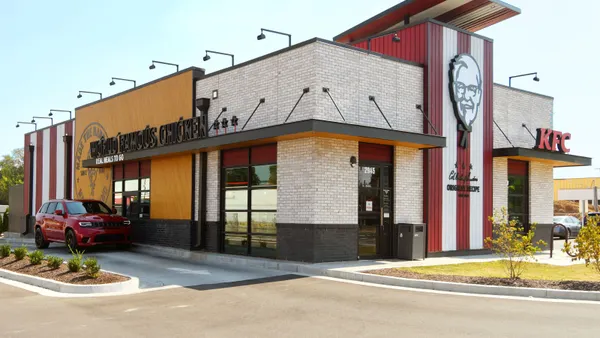
KFC’s systemwide sales declined 2%, and Yum announced it would stop reporting the specific comps performance of KFC U.S. market because it accounts for only 12% of the brand’s global sales. Restaurant Dive has removed KFC’s performance from the graphs above, but will continue to include an analysis of the chain’s sales performance in this tracker going forward because of its scale and brand power in the U.S.
During the quarter, KFC deployed a global rebranding strategy emphasizing sauces, boneless chicken offerings, modernization of its stores and new brand identity. However, it is too soon to see a significant shift in its sales at this time.
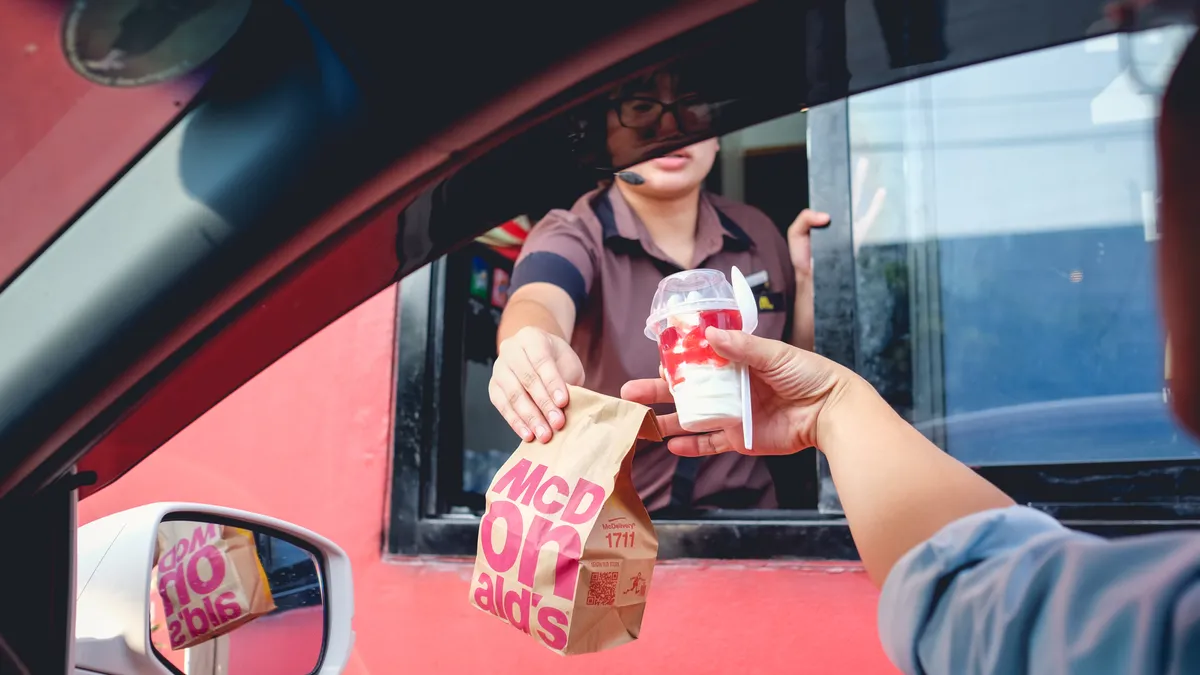
McDonald’s 0.8% comparable sales growth was among the chain’s weakest recent quarters, as traffic declined across the country. CEO Chris Kempczinski said the chain suffered execution problems related to new menu deployments, like its expanded McCafé beverage line up, led to longer ticket times and decreased consumer satisfaction.
Changes to its value menu, like removing some digital offers and Buy One Add One for $1 accounted for two-thirds of the chain’s traffic underperformance. The Golden Arches will use its loyalty program and digital tools to grow traffic by offering “digital flash deals” and more personalization to high-frequency guests.
Wendy’s continued its streak of same-store sales declines with negative 7% during the second quarter. Newly appointed CEO Robert Wright laid out initial plans for a turnaround strategy to help cure anemic traffic and sales. While he didn’t provide specifics, Wright outlined five major focuses: strengthening Wendy’s menu with better food quality and better value, creating distinctive branding and marketing, improving operational excellence, providing a better digital experience and ensuring its restaurants are “an engine for growth.”
Coffee chains U.S. same-store sales
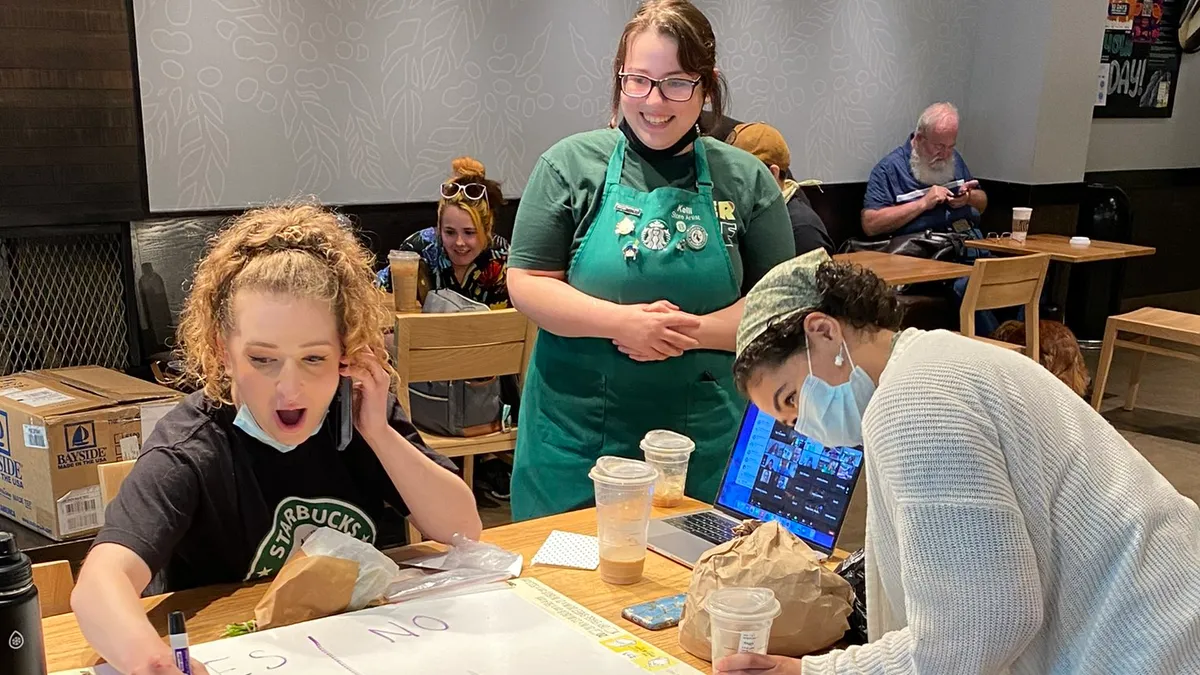
The publicly traded coffee chains had a strong quarter, with Starbucks posting 7.9% comps growth and a 4.2% traffic increase in its fiscal Q3 as its turnaround gained traction. The coffee giant even raised its comps projections for the year.
This strength derived from the brand’s Green Apron Service Mode and operational fixes, CEO Brian Niccol said on the company’s earnings call. Investments in stores and labor paid off in better managerial retention, Niccol said, which corresponds strongly with sales growth.
Starbucks also hit its remodel goal for the fiscal year and raised its target for remodels, which could help boost sales further as the new experiential designs have generally increased sales and on-premise dwell-times.
This performance seems poised to continue, as the brand’s Unicorn Frappucino promotion in August drove its strongest North American sales weekend ever, outdoing last year’s Bearista Cup promotion and holiday menu launch.
Dutch Bros also had a strong Q2, with its food menu driving attachment and cementing the brand as part of consumers’ morning routines. The coffee chain opened 48 stores in the quarter — a pace it sustains thanks to its operator candidate pipeline — and is working to increase density in new markets. That density, combined with rapidly growing brand awareness, could help the chain continue its run of comps growth, now 13 quarters long.
Additionally, Dutch Bros is planning to buy as many as 65 locations from Salad and Go as part of that brand’s bankruptcy process and convert them into coffee shops.
Black Rock Coffee Bar hit 200 stores in the quarter and posted 4.2% same-store sales growth.
CEO Mark Davis said on the chain’s earnings call that its company-operated model allowed it to maintain consistency and control of the guest experience while maintaining a steady pace of menu innovation.
Pizza delivery restaurant U.S. same-store sales
Domino’s continued to outperform other pizza chains, but its same-store sales growth was minimal compared to Q2 2025. Order counts are up, however, thanks to growth in third-party delivery channels that are bringing in customers Domino’s would normally not have.
CEO Russell Weiner tied much of its sales declines to the macroeconomy, adding that the issues the chain saw in the second quarter were largely fixable. A rollout of Slice Sauce didn’t resonate with customers, for example, since the messaging wasn’t compelling enough. The chain improved messaging around its Best Deal Ever Offer, which included Stuffed Crust, and reported an improvement in guest awareness. The chain will also roll out single-serving pizza on Aug. 31, which could help drive more occasions.
Pizza Hut is in the process of being sold in two transactions, with its non-China business going to LongRange Capital. Pizza Hut’s systemwide sales were down 5% thanks to the closure of underperforming stores and a 2% drop in same-store sales. Once the transaction closes, Pizza Hut will continue without its Global CEO, Aaron Powell, who is set to resign.
Papa Johns’ same-store sales declines deepened during the second quarter with the metric falling by 8.3%. The chain has been working to improve its value perception by providing more personalized offers, creating a better customer experience and gaining new customers through aggregator marketplaces, CEO Todd Penegor said during an earnings call.
The chain has seen “encouraging signs of progress,” with Papa Rewards membership growing and improvements to restaurant-level economics due to supply chain savings and restaurant portfolio optimization, Penegor said. Earlier this year, the chain began to close hundreds of underperforming locations.
“We felt the impacts of the softer consumer backdrop and highly promotional QSR environment, which have continued to challenge our financial performance,” Penegor said. “And while our focus is unrelenting, it's clear that our transformation is taking longer than expected.”
Fast casual restaurant U.S. same-store sales
Many fast casual brands have seen increased sales growth across the first two quarters of 2026, following a sectoral slowdown in 2025.
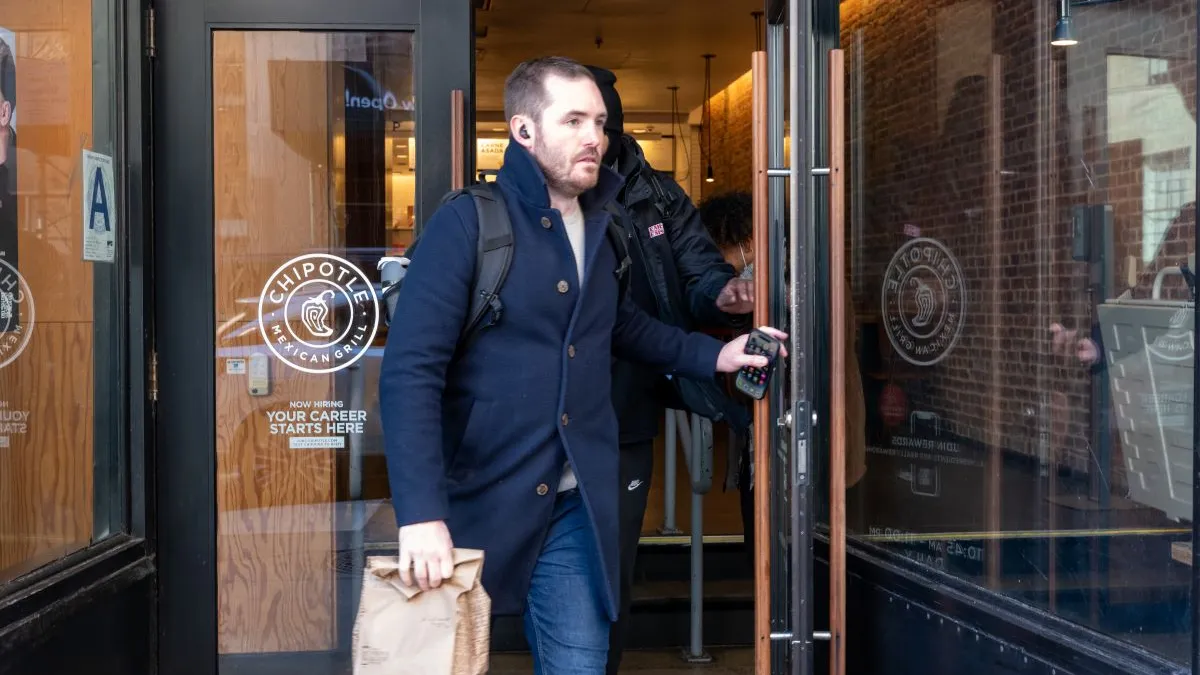
Chipotle’s same-store sales growth sped up in the quarter, reaching 2.2% year over year — its strongest quarterly comps growth since 2024. The chain benefitted from its new “Recipe for Growth” plan, which launched in February. That plan focuses on menu innovation — including an increased LTO cadence — improving operations through new equipment deployment and capturing high-ticket group dining occasions.
Cava’s 9% same-store sales growth beat publicly traded fast casuals, as the Mediterranean chain’s continued investments in labor, pricing restraint and the guest experience paid off.
CFO Tricia Tolivar said the chain’s strong value proposition, which includes keeping prices below the Consumer Price Index, has preserved its value perceptions across income cohorts and demographics. The brand’s locations in lower-income trade areas had particularly strong sales performance, Tolivar said.
Cava raised wages and added a new assistant general manager role, two moves that could help it retain talent and cultivate an internal pipeline for growth. The brand needs experienced managers to aid in its continued rapid expansion.
Shake Shack reported positive same-store sales during the second quarter and comparable traffic growth of 2%, per a shareholder letter. It also opened 16 new, company-operated locations. Michelle Hook, the chain’s CFO, said in the letter that this pace of development marked the chain’s strongest Q2 for new openings.
But other fast casual brands saw their comps suffer in the quarter. Wingstop’s 7.5% drop was its fifth-consecutive quarterly decline, but new openings offset the sales slide on a systemwide basis. The chain opened 102 net units in the quarter.
Consumer pullback and worse-than-anticipated macro pressures contributed to the sales decline, CEO Michael Skipworth said during an earnings call. CFO Alex Kaleida said the brand’s higher-income trade areas are outperforming its lower-income ones, indicating uneven problems for its customer base.
Sweetgreen, which has struggled with significant sales declines for several quarters, saw its losses moderate in the quarter. Menu innovation, including its rollout of wraps, helped drive sales uplift at the chain, CEO Jonathan Neman said on an earnings call.
Efforts to improve restaurant-level operations through training and management led to early improvements and a return to traffic growth in test markets including Seattle and New York.
But the chain’s stabilization efforts were undermined by a broad consumer pullback from fresh produce as a result of the Cyclospora outbreak — although Sweetgreen does not serve iceberg lettuce, the green that’s linked to thousands of cases through Taylor Farms and Taco Bell.
Casual restaurant U.S. same-store sales
Applebee’s sales momentum started out slow in April. That month, it was lapping one of its strongest 2-for-$25 promotions, the Sizzlin’ Skillets, in the same year-ago period, Dine Brands CEO John Peyton said during an earnings call. However, sales momentum improved due to its All You Can Eat and Poolio with Don Julio campaigns, Peyton said.
“This is our barbell strategy and our marketing playbook in action, an accessible, value-driven all-you-can-eat campaign anchored in affordability, paired with a culturally resonant higher-priced indulgence that drove traffic and generated social buzz among the younger audience,” Peyton said, adding that these campaigns helped grow food and beverage sales, with liquor sales up 10.5% during the promotion period.
Applebee's also had success with menu innovation, including Loaded Potato Waves — its strongest new appetizer since the COVID-19 pandemic — and other new items, he said.
IHOP outperformed Black Box Intelligence sales and traffic metrics for the third-consecutive quarter, Peyton said. Value and product innovation, culture-driven marketing and improved guest experiences are helping build momentum at the chain, he said.
During the second quarter, comparable sales rose 1.5%, driven by a new value-focused ad campaign that brought in guests, and deliberate check-driving initiatives that pushed average ticket up. The chain continues to drive awareness of its premium offerings and LTOs that help drive average check. IHOP has improved table turn times by four minutes compared to the end of last year and Google ratings continue to improve, Peyton said.
First Watch continued to increase its same-store sales, but traffic fell by 0.4%. However, the chain’s traffic did improve sequentially, and increased year over year in June. The chain is expanding its marketing strategy to improve traffic and brand awareness, which is helping improve return rates for new customers. While the chain saw an increase in food costs during the quarter due to premium summer items like Chipotle Steak and Queso Hash, those limited-time offers were major sales drivers.
Texas Roadhouse continues to be one of the top-performing casual chains, with same-store sales up 6.2% during the second quarter, including a 3% increase in traffic, CEO Gerald Morgan said in an earnings call. Per store average weekly sales also exceeded $175,000 for the first time in the company’s history, he added. During the first half of the year, Mother’s Day, Father’s Day and Valentine’s Day drove strong daily sales. Roughly 90% of its restaurants set daily restaurant sales records on at least one of those three days.
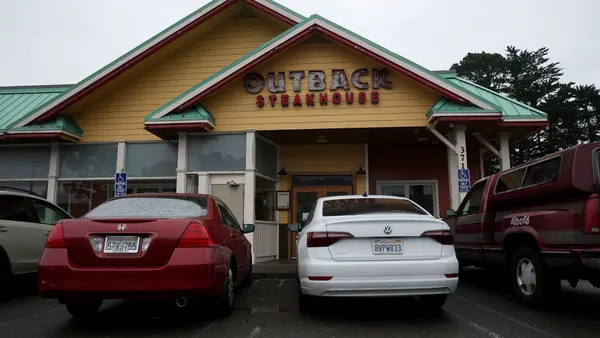
Outback Steakhouse returned to positive same-store sales during the second quarter, with the metric up 1.4% after two quarters of declines. While comparable sales were up, traffic declined by 280 basis points, Bloomin’ CEO Michael Spanos said during an August earnings call. The chain is driving traffic and loyalty through its Aussie 3-Course offering, which starts at $14.99. About 60% of guests are trading up from this entry price point to higher-priced items and 20% are trading up on the dessert option, Spanos said.
The chain also remains focused on its turnaround strategy, which includes delivering a “remarkable dining experience,” driving brand relevancy, reigniting a “culture of ownership and fun,” and investing more in its restaurants, Spanos said.
Olive Garden’s same-store sales jumped 2.4%, while traffic was positive during fiscal Q4 2026, Darden CFO Rajesh Vennam said during a June earnings call. The chain is in the midst of several initiatives designed to appeal to core guests. For example, its lighter portion menu has helped drive incremental sales, Darden CEO Rick Cardenas said.
Chili’s marked its 21st consecutive quarter of same-store sales growth in fiscal Q4 2026 as the chain continued to outpace the industry, Brinker CEO Kevin Hochman said during an earnings call. The company continues to have success with menu innovation, marketing and value initiatives. Earlier this year, the chain launched its Big Crispy chicken sandwiches and is now selling 55 sandwiches per day compared to 20 daily pre-launch, an increase of 175%, Hochman said.
“The customer reviews and social media comments have been excellent, declaring Chili's victorious for size, price, value and taste versus fast food,” Hochman said. “The Big Crispy is now a signature sandwich and another important chapter in our Better Than Fast Food story that will continue to position Chili's uniquely as a restaurant destination.”
Correction: A previous version of these charts incorrectly labeled same-store sales for Olive Garden.