Dive Brief:
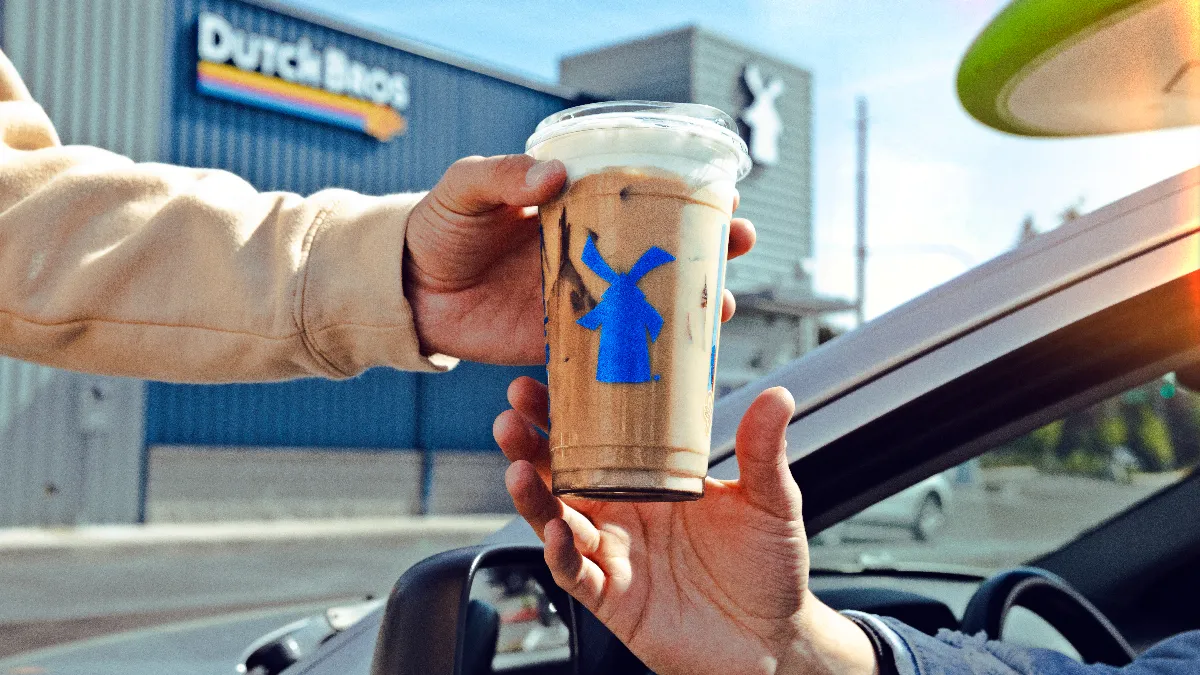
- Dutch Bros achieved an impressive 31% increase in revenue, driven by an 8.3% same-store sales gain and a 5.1% increase in transactions in Q1 2026, per the brand’s earnings release.
- The brand’s performance was especially strong in its company-operated shops, which comprise about 72% of its 1,177-store system. Company stores grew their sales by 10.6%, primarily through a 6.9% increase in transactions.
- The coffee company’s continued sales growth, when combined with a similar jump in sales at segment leader Starbucks, signal the coffee segment’s strength relative to other restaurant sectors at a moment when many consumers have become particularly price sensitive.
Dive Insight:
Dutch Bros is taking market share in the coffee and energy drink markets, President and CEO Christine Barone said on the chain’s Q1 earnings call. In particular, the rollout of food items and mobile ordering have helped the brand make itself a staple of consumers’ mornings.
“As we look at that routinized coffee behavior, especially in that morning daypart, the roll out of food, the rollout of mobile order [are] really important to that, and we're seeing really great growth in that daypart,” Barone said.
As of Q1, the chain had its food menu deployed in about 485 shops, Barone said, with food attachment rates exceeding what the chain had initially projected.
Dutch Bros also continued to open new units, including 41 in the quarter, and 165 over the past 12 months, according to the earnings release. That it has managed to combine this pace of expansion — 16.3% year-over-year unit growth — with strong sales growth likely indicates growing consumer awareness of the brand, in addition to strong demand for caffeinated beverages.
William Blair analyst Sharon Zackfia said in a research note that Dutch Bros’ “unaided brand awareness” has more than doubled in the last 18 months. Barone said this increase has been driven by a combination of community events, paid ad-spending and social media engagement, which have increased the chain’s ambient presence.
Simultaneously, infill in markets is helping drive growth at nearby stores through increased awareness, Zackfia wrote.
Barone said that in Texas, where the chain has spent considerable time building up brand awareness and achieving market density, comparable sales increased by a dramatic 20%.
The chain is also building substantial customer loyalty, with rewards members accounting for 74% of all transactions, Zackfia noted. At Starbucks, according to a transcript of the chain’s investor day event, rewards member transactions account for 60% of company-operated revenue. While the comparison of transactions to revenue is imperfect, it does show the intensity of Dutch Bros’ loyalty engagement.
Barone said the brand has more room to grow with rewards customers.
“We're still in the early innings of being able to do more personalized segmentation. We started out the program by doing broad offers. We then started doing win-back campaigns. We're now doing frequency-level campaigns,” Barone said.
Limited-time offers are another major sales driver for the chain, Barone said, adding that Dutch Bros has increased the velocity of its LTOs by 30%. Recent LTOs included indulgent fare, like the Brown Butter Chocolate Chip, Fruit Punch with a Sour Candy Straw, and Kool Blue beverages the brand launched in February.
These launches reflect a greater emphasis on LTOs at Dutch Bros, and within the QSR segment more broadly, which has struggled to find reliable ways to overcome consumer price sensitivity. Barone said Dutch Bros has increased the velocity of its LTOs by 30%.
“Innovation like this is a testament to our ability to spot and activate trends early, bringing unique yet accessible innovation to market in a way only Dutch Bros can,” Barone said.