Dive Brief:
- Burger King managed a 5.8% increase in comparable U.S. sales, while Popeyes saw a 6.5% drop, the biggest shifts in comps at both chains in multiple years, according to Restaurant Brands International’s Q1 2026 earnings release.
- CEO Josh Kobza said Popeyes’ results were worse than expected, on the company’s earnings call.
- Kobza said RBI is undertaking new strategic initiatives at Popeyes meant to return the brand to comps growth in the second half of the year.
Dive Insight:
RBI executives stayed tight-lipped about the difficulties at Popeyes during the earnings call, but at the company’s February investor day, Peter Perdue, the brand’s new U.S. president, said the chain’s sales troubles in recent quarters originated from three interlocking shortfalls. First, Perdue said, the brand’s reliance on LTOs proved a misstep.
“We tried to bring new guests in, which we did, but they didn't come back. And we had a lot of LTOs that, frankly, just didn't resonate with our core guests. [Because of] the complexity that added our service began to fall further and further short,” Perdue said in February.
Second, the brand lost focus on its core menu products and Louisiana heritage in menu development and messaging, Perdue said. The final straw, Perdue said, was an erosion of everyday value, resulting in weakness with price-sensitive consumers.
Kobza said on the Wednesday earnings call that Popeyes is moving to rectify these issues. Popeyes increased its field support and held a series of general manager rallies in 20 cities over the last two months. Those moves make it easier for Popeyes to ensure restaurant crews are trained up to the brand’s service standards.
The chain has also tightened the specifications for its chicken tender production across one-third of its store system, with the remainder to follow by June, Kobza said. The improvements to tender specifications resulted in meaningful improvements in customer satisfaction with the product. Perdue is also working to improve the brand’s bone-in offerings, Kobza said.
On the value front, Popeyes launched a $5 Faves value offer in Q1, Kobza said, which has improved consumer value perception for the brand. Earlier this week, Popeyes announced it was making its Chicken Wraps permanent; the $3.99 price point and snack-sized portions could help the chain capture new occasions.
These combined changes could take time to drive results, but Kobza said he anticipates the chicken chain returning to positive comps by the year’s end.
Burger King, on the other hand, will work to maintain the momentum generated by its menu strategy, increased marketing and its long-running Reclaim the Flame turnaround program, Kobza said.
Burger King’s performance was driven by four years of investments in the brand’s standards, menu, physical infrastructure and operations, Kobza said. This investment has helped Burger King avoid relying on one-off promotions or limited-time offerings to juice its sales.
“That performance wasn't driven by one collaboration or campaign,” Kobza said.
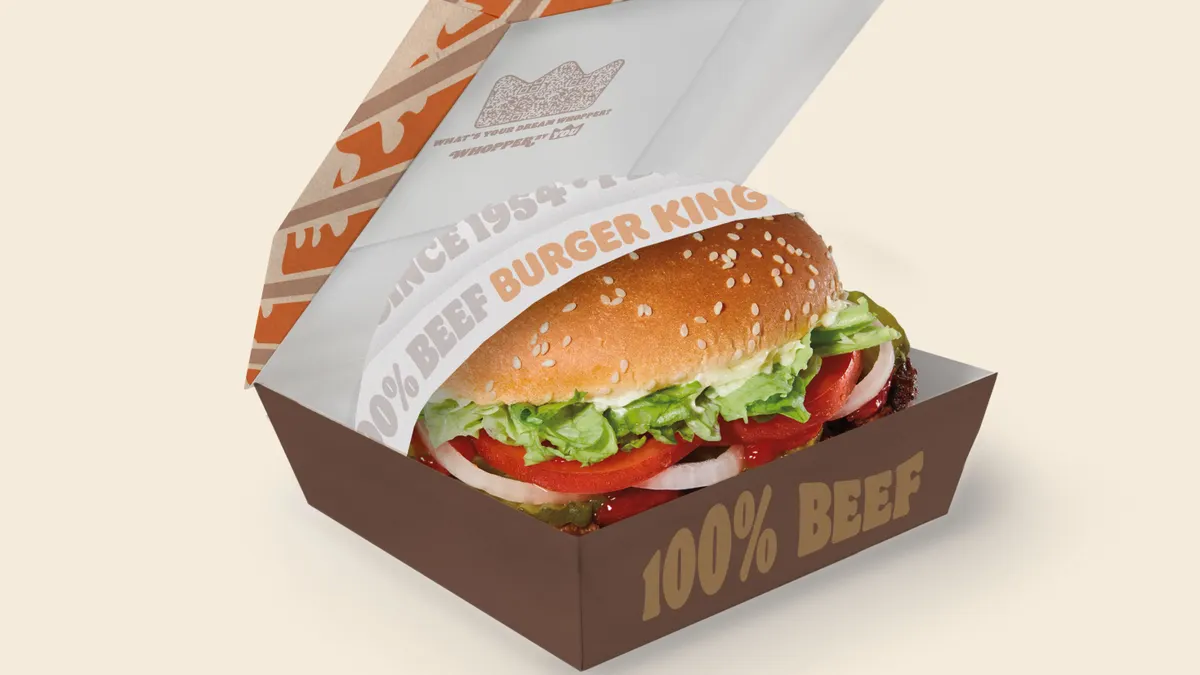
Kobza highlighted the recent work done to improve the Whopper — a new bun and new mayonnaise — as an example of the initiatives the chain can undertake now that it has modernized much of its brand identity.
Recent consumer-facing maneuvers have helped the chain bring back consumers. Kobza highlighted Burger King’s SpongeBob and Mandalorian tie-ins as promotions that drove traffic, especially with families.
The chain also conducted a listening campaign in Q1, with President Tom Curtis taking calls from upwards of 1,500 consumers. The listening campaign, Kobza said, showed consumers possessed significant “latent love” for the chain and wanted it to continue improving.
Burger King will work to sustain its momentum. Kobza said the brand has been showcasing its investments on social media like fixing broken signs, and is planning more menu changes to improve its core offerings.