Dive Brief:
- Papa Johns’ North American comparable sales declined by 6.4% in Q1 2026, according to the chain’s earnings release. Domestic company-owned stores were down by 5.2%, while North America franchised restaurants slid by 6.7%.
- The decline marks the brand’s worst quarterly comps drop in several years.
- CEO Todd Penegor said on a Thursday earnings call that the drop in sales resulted from a combination of lower customer acquisition, trade down from larger and more premium pizzas to smaller pies, and a decrease in side and dessert orders.
Dive Insight:
The chain is taking steps to address the erosion of its side orders and the prevalence of transactions that include just one or two pizzas and no other attachments, Penegor said. It will focus on value offerings and a rebuilt menu innovation pipeline to change its sales trajectory.
On the value front, the brand is using offers like BOGO pizza, $9.99 three-topping pizzas, and the Papa Pairings, which gives consumers the ability to pair specific menu items for $6.99 each, Penegor said.
Penegor alluded to Domino’s declared strategy of forcing other pizza bands to compress margins. Both Pizza Hut and Papa Johns have had to retrench their store systems of late — Papa Johns announced in February that it expected to close up to 300 stores.
Domino’s is looking to increase that competitive pressure by leveraging its higher unit volumes and greater scale to sustain an attritional value battle.
Penegor said Domino’s effort will not work against Papa Johns because of the chain’s comprehensive overhaul strategy.
“We are taking a disciplined approach executing a balanced transformation that extends well beyond price, meeting customers where they are, while improving four-wall margins, elevating our fleet and supporting our franchisees to build this business for the long term,” Penegor said.
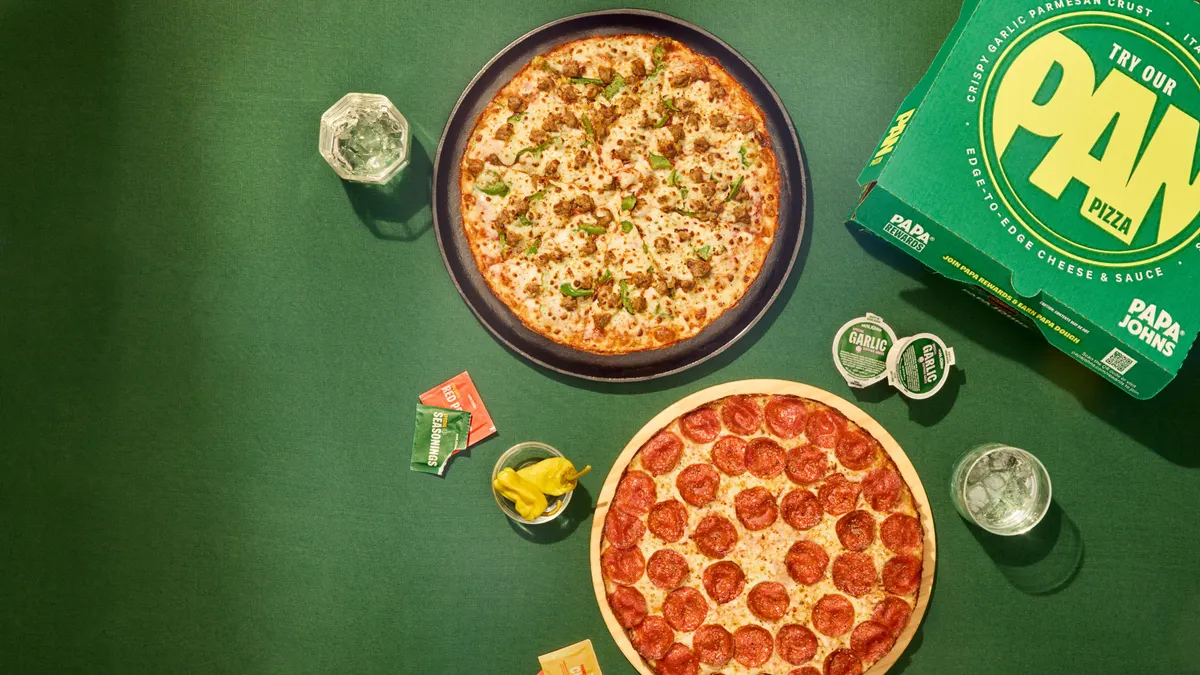
Papa Johns is trying to grow its total addressable market through new menu innovation. The brand added Pan Pizzas, a more premium version of its core item, in January, and added toasted sandwiches in late March. Penegor said the re-order rates for the Pan Pizza have been encouraging, while sandwiches are mixing well.
Sandwiches, in particular, replaced the Papadias and Papa Bites categories. Those items significantly complicated restaurant operations beyond the level justified by their sales, and the early store-level feedback regarding their termination has been positive, Penegor said.
“Those two things — Papadias, Papa Bites — were our biggest rhythm breakers in the restaurant, and really distracted from making great food day in and day out,” Penegor said.
Papa Johns has worked to adapt its operations to integrate the new menu items, Penegor said, ensuring that its Pan Pizzas are fully cooked in a single pass through the ovens. The new sandwiches are also an operationally easy build.
The brand is also trying to boost sales by empowering local advertising cooperatives, which could make its messaging more relevant and targeted in specific markets, Penegor said. That move should improve Papa Johns’ ability to compete at the regional and local levels, and about 50% of its store system is currently backed by local cooperatives.
“Our local operators are aligning around a unified market strategy, accelerating our ability to win at the local level and driving benefits that build throughout the year,” Penegor said.