CHICAGO – A Starbucks coffeehouse on North Cicero Avenue heralds the interior design awaiting thousands of U.S. cafes.
Located about halfway between downtown Chicago and O’Hare International Airport, the coffee shop looks like a standard, if somewhat upscale, QSR box from the street. The cafe features a drive-thru, dining room, parking lot, Starbucks sign and an outdoor patio.
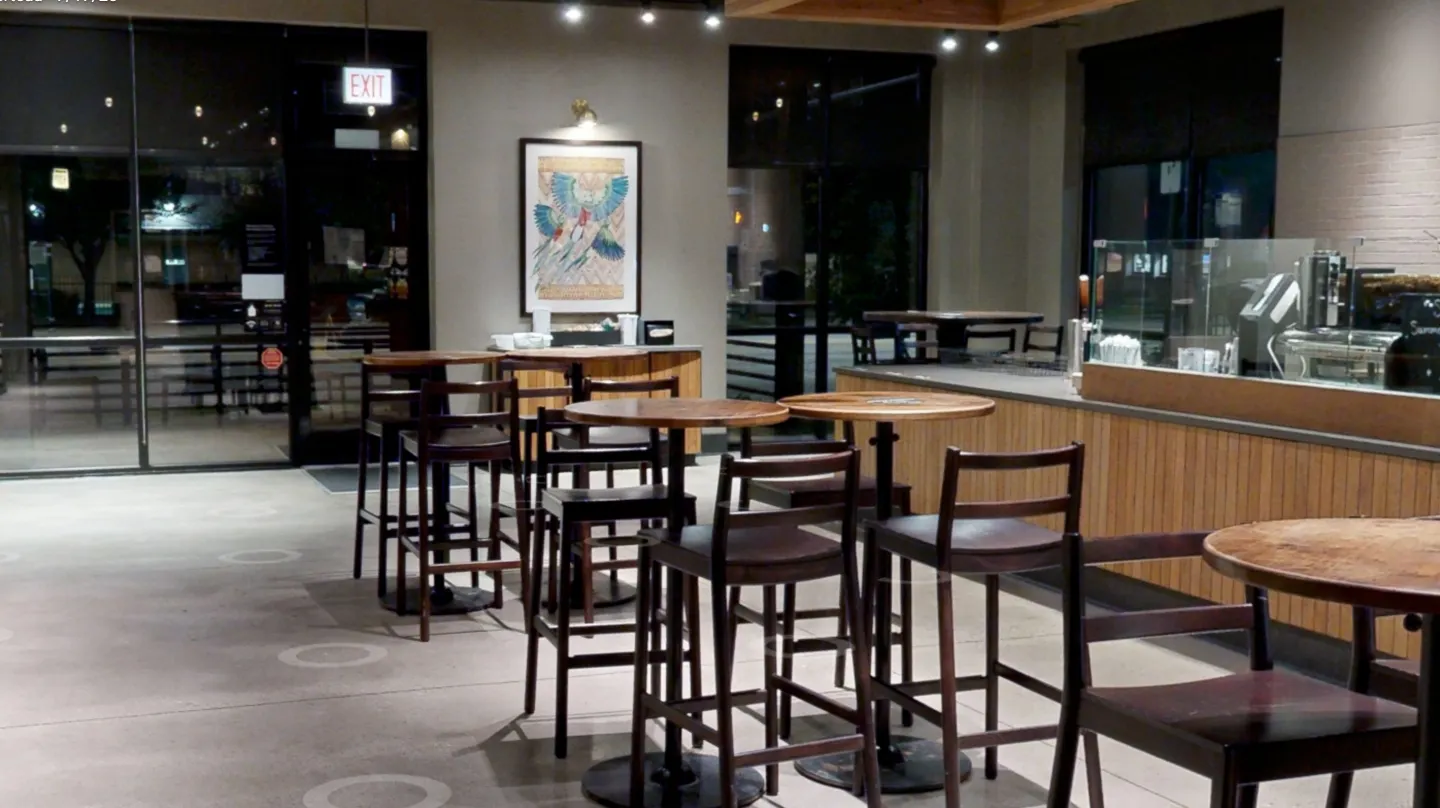
Until recently, the store’s interior echoed the industrial design aesthetic that has defined the last decade of American fast food. The cafe was once decorated with high tables, heavy, hard chairs with little support, cold-colored track lighting, dark gray paint and unadorned windows, according to photos of the location taken before the renovation.
A cafe designed for lingering
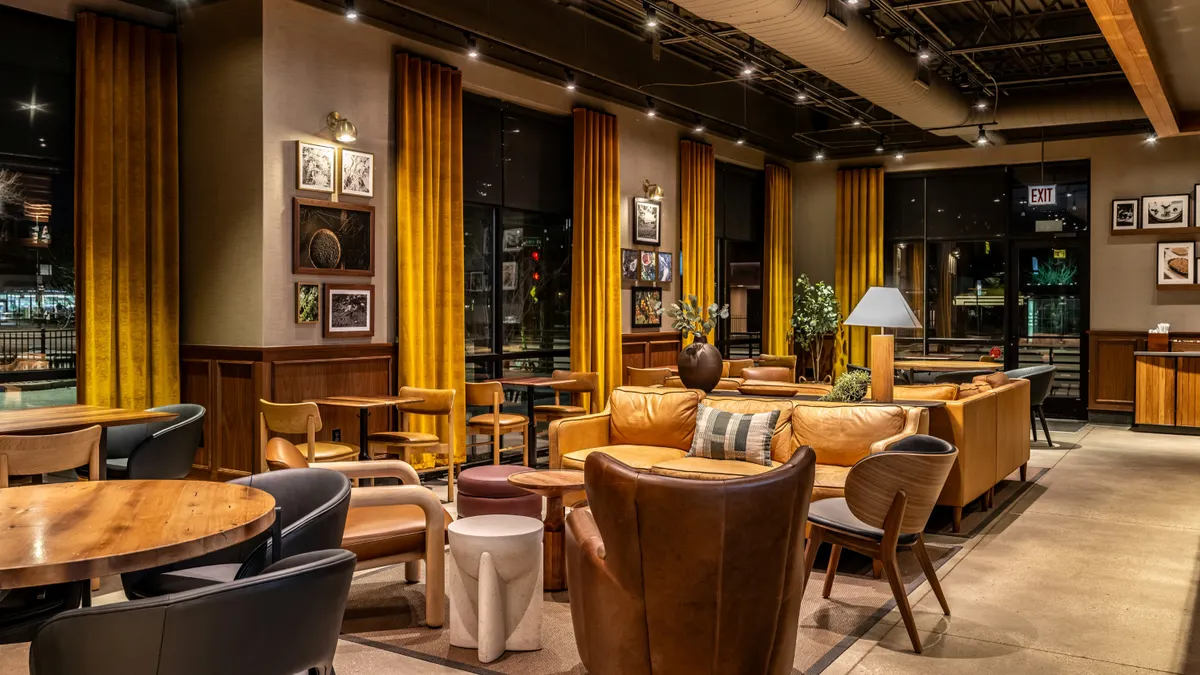
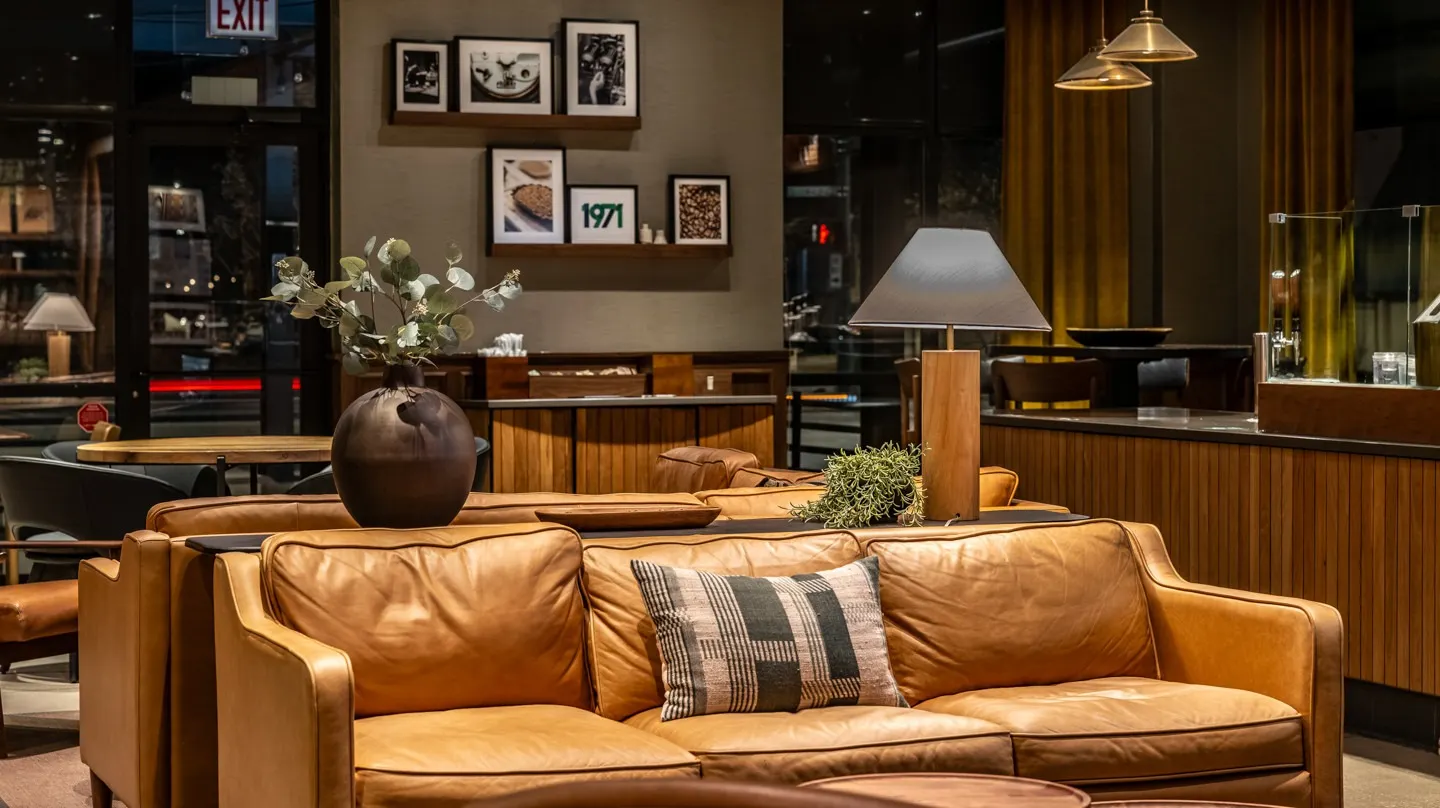
But the Cicero store was one of the early coffeehouse renovations by Starbucks in the Chicago market. Restaurant Dive found the location to be significantly more comfortable than the atmosphere of pre-renovation photos, or similarly decorated stores. The softer and more varied seating, warmer colors and lighting, and an area with couches set up for lounging in the center of the cafe made the store feel more like a neighborhood cafe, albeit one owned by a multi-billion dollar brand.
Most of the furniture now is wood-toned or a warm brown, and often draws from the design language of modernist home furniture, rather than industrial aesthetics.
Large, golden-brown curtains frame the windows, making the interior lighting more inviting. The walls, once a cool gray-brown, look warmer — though that may be an effect produced by the color contrast with furniture, light and new wooden wainscoting that breaks up the previously uninterrupted expanses of wall.
Veronica Mercado, the manager of the Cicero Avenue Starbucks, said the cumulative effect of the changes has been to restore the location’s cafe feeling.
“Those little details made it feel more cozy and more Starbucks,” Mercado said.
Previously, consumers felt unwelcome and wouldn’t spend much time in the cafe, which discouraged groups from meeting there, she said.
“The prior seating that we had, it was the high, hard chairs. So if you're in a meeting, you're working and sitting for more than an hour in those chairs. That was uncomfortable,” Mercado said.
Previously, only tables along the walls had access to outlets, but the renovation added more power sources throughout the cafe. The renovations took about four days, with the location opening at 7 a.m. and closing at 3 p.m. on those days.
There are other experiential aspects at play at the Cicero Starbucks location, as well. Most of the store’s back of house, including its drive-thru vestibule, is visible from the customer seating, so the cafe itself feels well-integrated with the espresso bar and the workflows in the kitchen.
The cafe remains loud: The metal ceiling and concrete floor contribute to a harsh acoustic soundscape when combined with loud pop music, the burble of espresso shots and the screaming of the milk steamer. But that noise, at least the sound of coffee preparation, emphasizes the processes that produce coffee — the craft, as the company would say.
Mercado said more people stay in the cafe, and they stay for longer. Previously, on-premise occasions accounted for about 10% of the location’s sales, but the proportion of in-restaurant traffic has roughly doubled.
This Starbucks cafe has increased its front-of-house labor deployments, and Mercado tries to ensure a worker circulates through the dining room at least every 15 minutes during busy times, and once every 30 minutes in slower dayparts.
Cicero and Berteau before the renovation:
Cicero and Berteau after the renovation
The sensory experience of Starbucks’ on-premise occasion now conveys permanence and some degree of sociality. Instead of plastic cups for cold beverages and paper bags for food, the Cicero location serves its in-cafe drinks in glasses and ceramic mugs, and its food items on porcelain plates, differentiating the experience from the disposability and ephemerality of other QSR occasions. Starbucks began adding ceramic mugs back to its stores in November 2024, in one of the earliest shifts toward an on-premise emphasis under Brian Niccol.
The Cicero and Berteau location now serves as a place for customers to linger, to take meetings and sit with other people.
Restaurant Dive tallied about 46 possible seats in the cafe itself. At the time of the visit, about 10:00 am on a Tuesday, there were 14 on-premise consumers, with 11 working on some sort of laptop, including a group of customers there for a meeting. Most of the consumers present when Restaurant Dive arrived were still in the store, 45 minutes later, when our visit concluded.
On the way out, Restaurant Dive counted five more consumers on the patio.
More renovations to come
The Cicero and Berteau coffeehouse uplift is part of the first major wave of renovations under Back to Starbucks, according to a press release. The turnaround plan itself launched in September 2024, and included significant changes to on-premise experiences, like the return of ceramic mugs and the coffee condiment bar. Renovations launched the next summer. The coffeehouse uplifts started in Los Angeles and New York, with Chicago as the third target market — about 90 stores around the Windy City received uplifts by April, with 200 locations projected to be finished by the end of September.
These changes cost about $150,000 per location and the chain plans to finish about 1,000 in 2026, out of about 11,000 company-operated stores in North America. Niccol said on the brand’s Q2 fiscal 2026 earnings call that the renovations are proceeding on-budget and without closures.
After hitting the 1,000-store mark by year’s end, Niccol said the chain has ambitious goals to get the changes installed “across 8,000-plus stores in very short order.”
That scale would commit Starbucks to spending upwards of $1 billion on remodels largely consisting of aesthetic touches like paint, couches, chairs, lamps, window curtains and wainscoting.
But those changes are an important part of Starbucks’ competitive strategy going forward. While challenger chains like Dutch Bros and, especially, 7 Brew, are rapidly growing their network of small-footprint and high-throughput drive-thru stores, Starbucks' turn back toward an older coffee shop aesthetic could reinforce its premium, experiential brand identity.
Speaking at the Wall Street Journal’s CEO Council Summit in December, Niccol said he expected experience to be Starbucks’ defense against these high-growth chains, and that it could help the brand even with its off-premise pickup orders.
“I do firmly believe that even if you want to come and grab and go, you’d rather grab and go from a place than a soulless experience,” Niccol said.