Dive Brief:
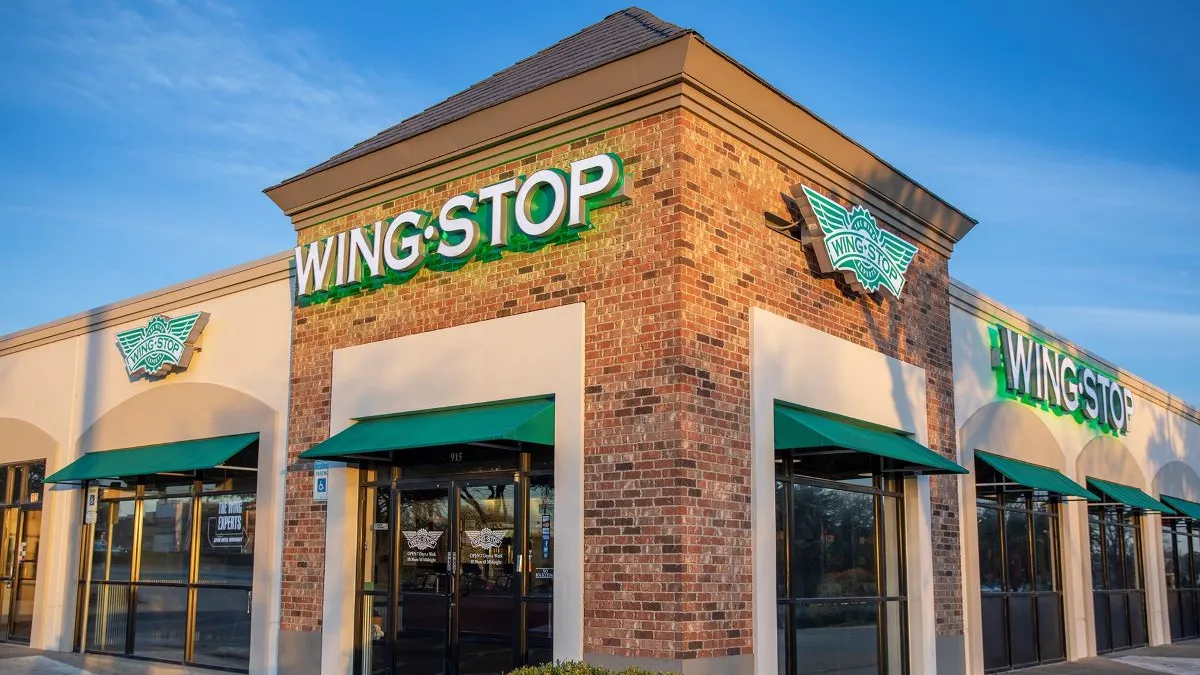
- Wingstop saw weakness with lower-income consumers after gas prices rose following the start of the U.S. war against Iran, CEO Michael Skipworth said on the chain’s first-quarter earnings call.
- Consumer pullback, and temporary store closures due to winter weather, contributed to a significant 8.7% decline in same-restaurant sales, Skipworth said. This drop was offset by 17% year-over-year unit count growth.
- Skipworth said the chain overindexes with lower-income consumers. The price shocks related to the war caused a dip in consumer activity similar to the pullback the brand experienced after Russia’s invasion of Ukraine in 2022.
Dive Insight:
Skipworth said Wingstop expects consumer trends to normalize fairly quickly, despite the price shock. However, the shortfall marks Wingstop’s fourth consecutive decline in same-store sales.
The chain isn’t looking at discounting to reverse its trouble with consumers. Instead, Wingstop is highlighting its existing sandwich and tenders combos, which are priced below $10. Skipworth said Wingstop offers value through abundance, food quality and the guest experience, rather than just a price point emphasis.
Wingstop’s chief financial officer Alex Kaleida said lower-income consumers account for about 25% of transactions. Rather than trading down, Kaleida said, these consumers are actually seeking out large portions.
“They're actually trading up into larger bundles. We've seen the ticket increase, but the items that they're attaching per ticket has changed, that's come down a little bit,” Kaleida said. “So they're almost kind of looking for that abundance quality.”
The chain’s customer acquisition is increasingly skewed toward higher-income consumers in the $50,000 to $100,000 household income range.
Beyond its large orders and its combo meals, the chain will launch a new loyalty program called Club Wingstop, later this year, Kaleida said.
Skipworth said Club Wingstop is “not a traditional discount-driven rewards program.” Instead, it transcends points and discounts through experiences and perks, such as points-sharing and group ordering. The program also uses artificial intelligence to personalize offers, he said.
“This includes generating hundreds of pieces of content that drive relevant and adaptable messages to specific segments in our database,” Skipworth said. “We have features embedded in our Club Wingstop technology that are designed to strengthen the emotional connection to our brand and drive sustained frequency over time.”
The loyalty program can also help the brand preserve its position with low-income consumers.
“Among low-income consumers in our market where we're testing loyalty, their engagement, their frequency, has been sustaining,” Kaleida told analysts.
The chain has been investing to improve operations, including its new kitchen display system, which is helping to reduce ticket times and improve consumer satisfaction. In the long run, this type of improvement could help return the brand to same-store sales growth Skipworth said.