Dive Brief:
- Yum Brands plans to deploy artificial intelligence through its Byte system and to use new menu innovation as ways to win new consumers and occasions, executives said on the company’s Q1 earnings call Wednesday.
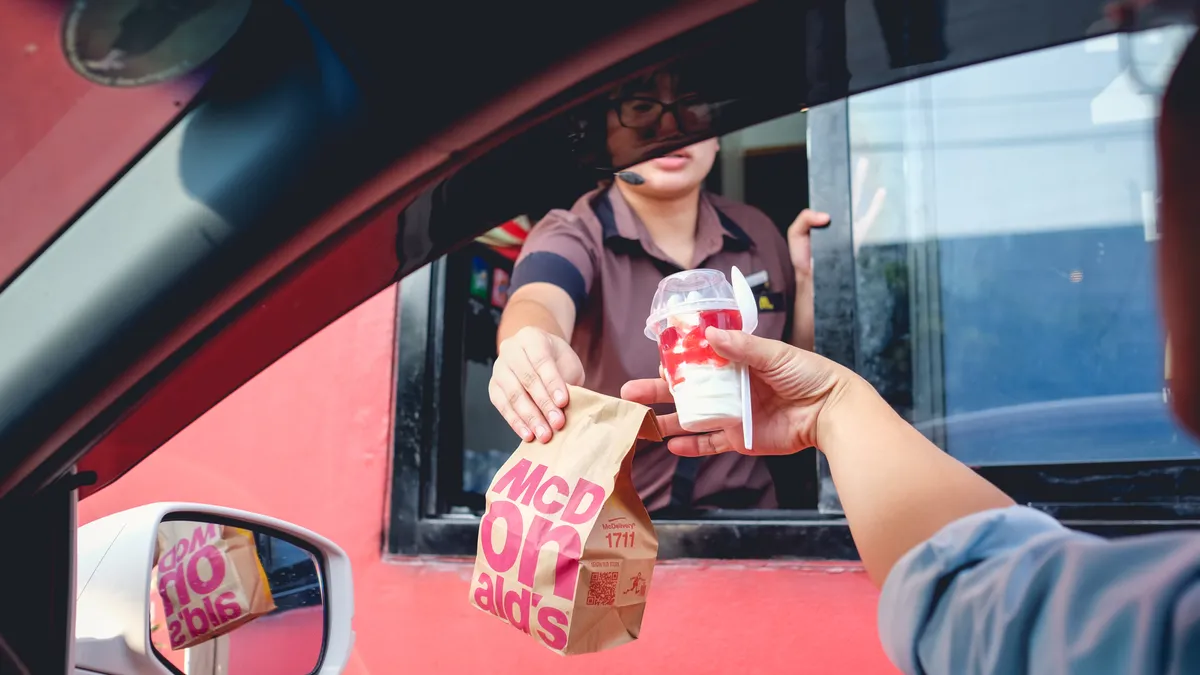
- At Taco Bell, Yum tested dynamically arranged drive-thru digital menu boards, which can use AI to change menu layouts and content on a car-by-car basis, CFO Ranjith Roy said.
- At KFC, which is undergoing a brand turnaround, Yum has created a “global innovation pantry” to help the chain port successful LTOs and menu items from one market to another, CEO Chris Turner told analysts and investors.
Dive Insight:
Roy said the Taco Bell AI-arranged menu boards let the brand derive menu insights rapidly and make significant national adjustments. Taco Bell confirmed the menu board testing will not impact or change store pricing, in an email to Restaurant Dive.
This tool, Roy said, is the cumulative result of Yum’s long-running tech strategy.
“The seamless rollout of these new tech features has been made possible due to the physical and digital assets we have developed and deployed over the years, including the underlying integrated Byte technology and the physical investments in digital menu boards that we and our franchisees rolled out over several years,” Roy said.
Yum is planning similar AI-backed deployments across its other brands. The company is also testing a new kitchen display system powered by Byte, which Roy said results in efficiencies.
Menu innovation, alongside new tech, has long been a major priority for Yum, which operates spinoffs like Saucy by KFC and the Taco Bell Live Más Café as proving grounds for new food and beverage concepts. Saucy, for example, is helping KFC redevelop its sauces and tenders, Turner said.
The KFC global innovation pantry, a sort of flavor exchange program, is bringing greater flexibility to the brand’s menu design. The brand brought its Pickle Mania LTO concept from Canada to the United Kingdom through the innovation pantry, resulting in KFC U.K.’s most successful LTO ever, Turner said.
KFC is also deploying its Kwench beverage platform across a wide number of markets — the U.K., Australia and Canada — with more markets to follow. The U.S. is not necessarily at the forefront of KFC’s beverage innovation, and the market only accounts for about 12% of KFC’s systemwide sales, per the earnings release.
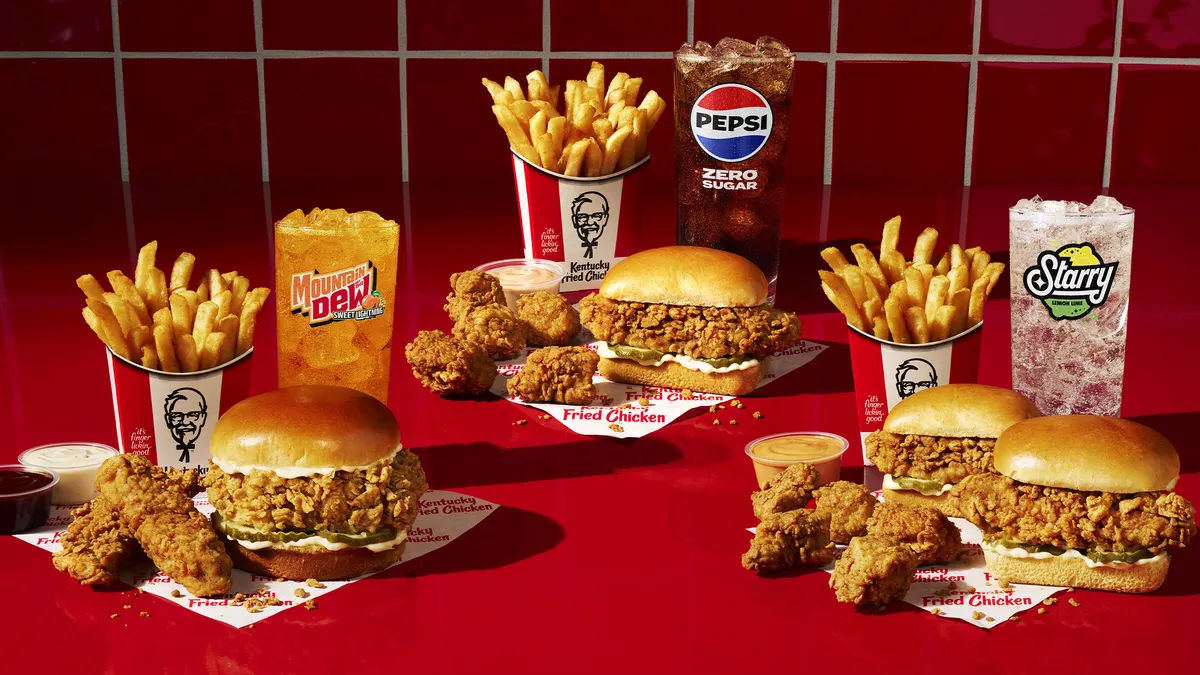
Value plays comprise a significant portion of Yum’s menu strategy, as well. KFC recently rolled out $7, $9 and $11 boxes similar to the Taco Bell Luxe Cravings bundles. In January, Taco Bell overhauled its value menu, adding more items and resulting in enviable performance.
“One-third of all Taco Bell tickets have an item from the [Luxe] value menu,” Turner said. “People are really building meals with a lot of variety using the value menu.”
Given that Taco Bell has served as the inspiration for much of KFC’s ongoing turnaround, similar value plays may be coming to the chicken chain, especially after a quarter of sluggish sales performance.
Yum’s brands again posted divergent same-store sales results in the U.S. in Q1 2026, with Taco Bell and the Habit Burger Grill seeing 8% and 5% growth, respectively, and Pizza Hut experiencing a 4% decline, according to the company’s earnings release. KFC U.S. saw system sales decline by 2%, but Yum did not provide an update on same-store sales for this market.
UPDATE: April 29, 2026: This piece has been updated with additional comment from Taco Bell regarding menu board functions.