Dive Brief:
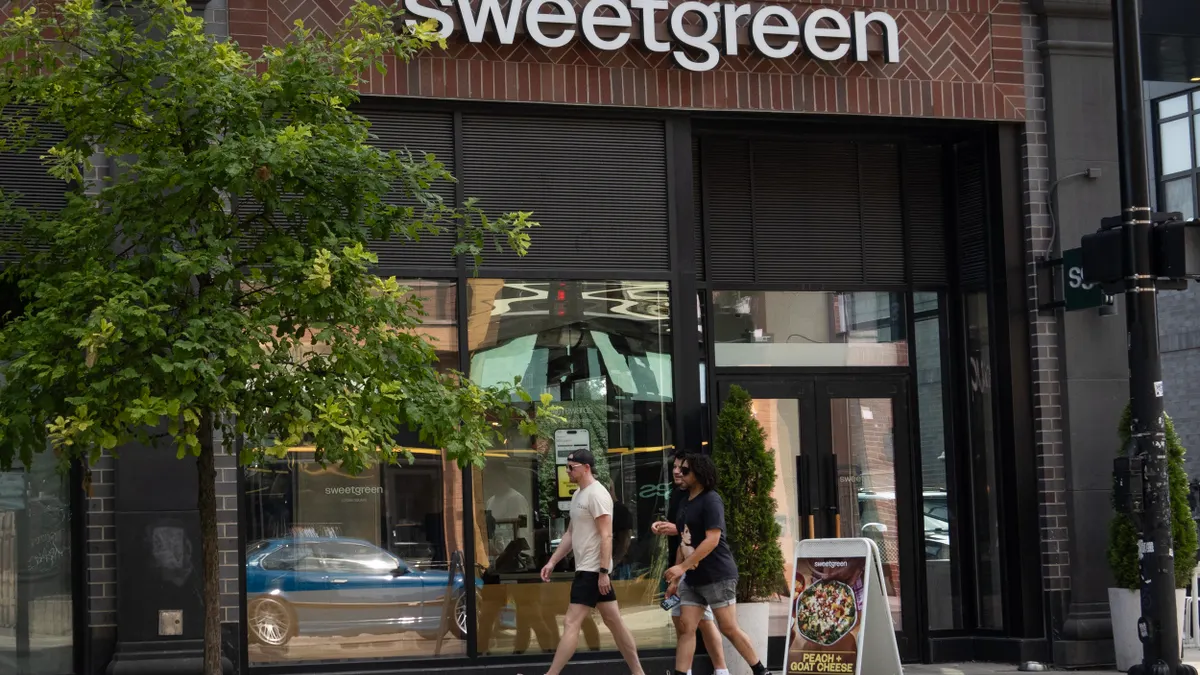
- Sweetgreen’s traffic fell by 11.2% in Q1 2026, accounting for most of its 12.8% same-store sales drop, with unfavorable changes in its sales mix comprising the rest, Chief Financial Officer Jamie McConnell said on the brand’s earnings call on Thursday.
- CEO Jonathan Neman said in a statement the chain was “in the early innings of a transformation that is reshaping the foundation of our business.” Sweetgreen's losses deepened from $28.5 to $34.3 million in Q1.
- Since the chain posted its first same-store sales decline as a public company in Q1 of 2025, traffic losses have steadily worsened, exacerbated by consumer price sensitivity and the addition, and then removal, of operationally complex Ripple Fries.
Dive Insight:
McConnell said the unfavorable sales mix change was a result of “strategic promotional offers to re-engage guests as well as the transition to SG Rewards,” while some of the traffic loss was attributable to winter weather.
Neman said recent changes, like the brand’s launch of its Chicken Sesame Crunch Bowl, and the test market performance of wraps, resulted in incremental traffic growth during April. The nationwide launch of wraps earlier this week could help the brand broaden its customer base and arrest its sliding traffic.
“In April, we improved to about a decline of -8% and we just launched wraps,” McConnell said. “We're excited about our launch from all the results that we saw in the testing, and we expect that Q2 to land around -4%.”
In February, Neman hinted that Sweetgreen would rework its menu pricing in response to increased consumer sensitivity resulting from inflation, including a new “create your own construct” option. On Thursday, he confirmed that a test of a new menu pricing system would begin in June that is "designed to deliver greater price clarity and a more intuitive ordering experience.”
Other recent changes that are part of its Sweet Growth Transformation Plan, like a focus on in-store operations, could also improve the guest experience and boost store-level performance, Neman said. The chain is working on designs and prototypes for its new stores, he said.
But Sweetgreen needs to improve its core operating performance before accelerating unit growth, Neman said, telling analysts to “expect a tempered year of development.”
The chain recently hired Ryan Slemons, a veteran of Amazon and Starbucks, as chief development officer. Neman said the chain was looking to “reinforce discipline around build-out costs and capital allocation,” in its development and “reimagine our spaces, and create better experiences for our guests and team members.”