The first half of 2026 saw multiple major brand turnarounds pick up steam, as well as a sales surge at steakhouse chains. But pizza chains and some legacy QSR brands are feeling significant competitive pressure as consumers search for holistic value.
The continued erosion of QSR’s price advantage relative to fast casual and casual dining has forced the sector into a more competitive position, with brands upgrading their menus and stores to keep abreast of shifting consumer sentiment.
At the same time, coffee chains are reaping the benefits of a long-term shift toward cold, caffeinated-beverages, while overall QSR beverage innovation — including dirty soda launches — has failed to put a dent in coffee brands’ collective dominance.
Every earnings season, Restaurant Dive listens to and reviews earnings calls covering dozens of publicly traded brands, ranging from value-chasing fast food to premium casual dining. We comb through transcripts and earnings reports to collate key measures of statistical performance, and we try to assemble a more qualitative list analyzing who is up and who is down among restaurants. This combination is half science — numbers typically don’t lie — and half art — vibes are hard to measure, but easy to feel. Here are three winners and three losers of Q2 2026’s earnings deluge:
Winners
Coffee
The coffee sector as a whole, or at least, its publicly traded chains, were among the quarter’s major success stories. All three brands tracked by Restaurant Dive — Starbucks, Dutch Bros and Black Rock Coffee Bar — posted same-store sales growth above 4%.
Black Rock Coffee Bar, which had the lowest comps growth out of the three publicly traded firms, posted a 4.2% increase, though this lapped a 10.9% increase in Q2 2025. The brand also hit the 200-store mark. As it expands, Black Rock may see increased customer awareness driving sales.
Dutch Bros led the coffee sector with an 8.3% comps gain. The brand’s sterling success has been driven by a dramatic expansion of its brand awareness across the last seven quarters, which has made it a compelling choice for more consumers. Simultaneously, the brand’s expansion of its food menu to more stores has helped cement its place in consumers’ morning routines, according to its most recent earnings call. The chain has built up a substantial reserve of experienced candidates for managerial positions — about 525 operator candidates — who will help it grow its storecount rapidly.
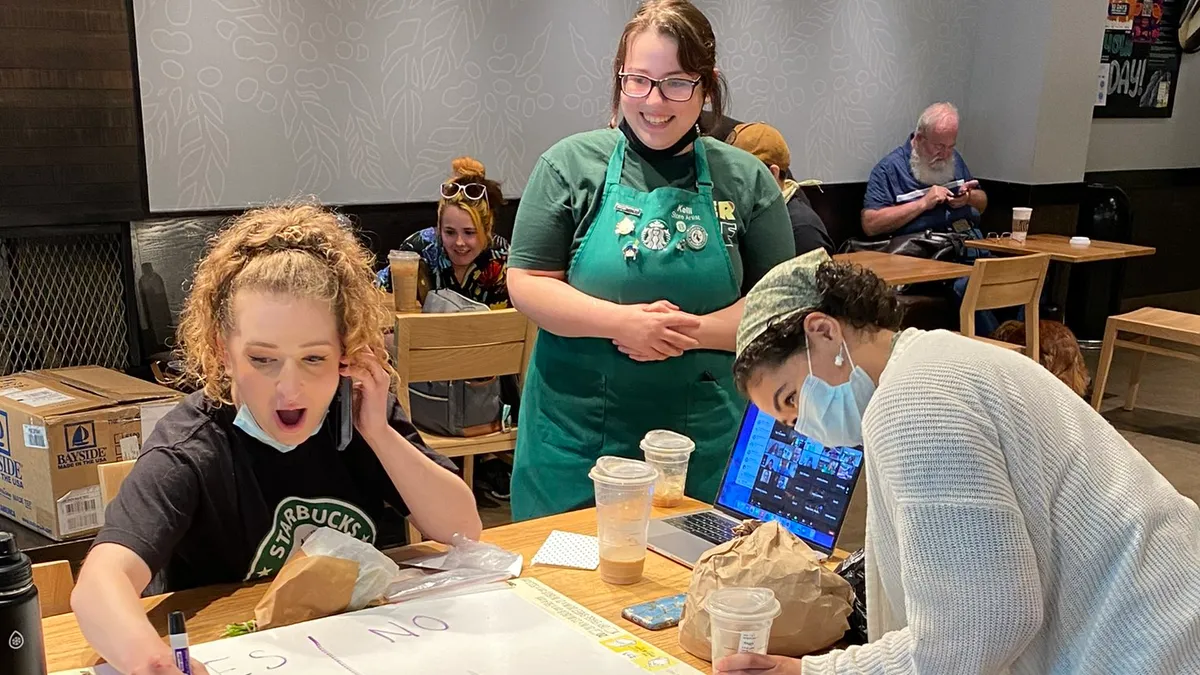
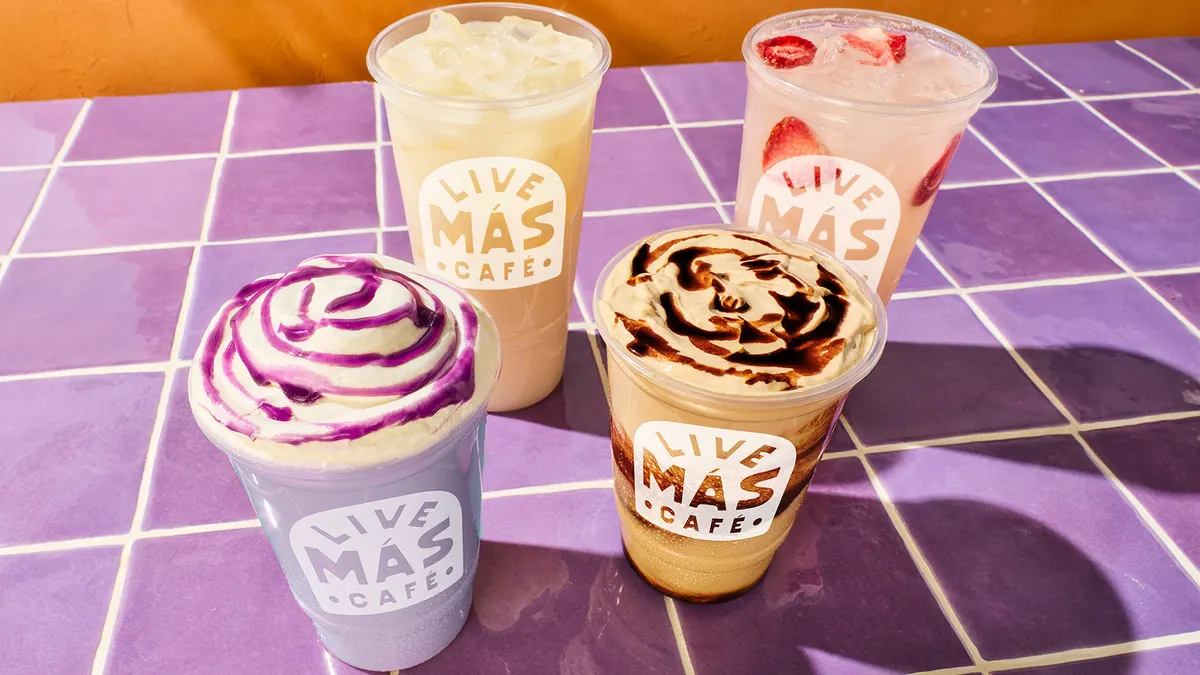
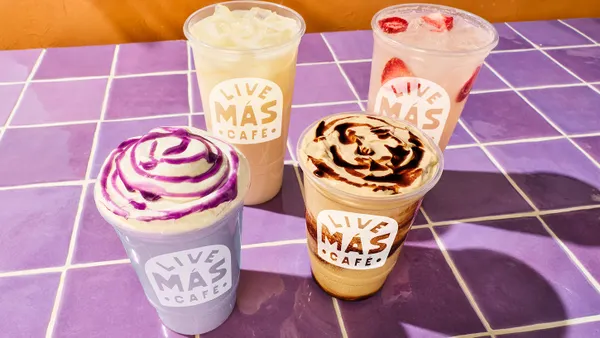
The world’s largest coffee chain performed well in its home market, as investments in labor, marketing and remodels powered Starbucks to its third-consecutive quarter of same-store sales gains, with a 7.9% increase. The chain slowed turnover in managerial positions, exceeded its remodel targets and leveraged a slate of new and limited-time drinks to boost consumer buzz. This performance looks set to continue in Q3 — Starbucks’ fiscal Q4 — with the Unicorn Frappucino LTO driving the chain’s strongest-ever sales weekend.
Underpinning this success is a continued consumer demand for cold, caffeinated beverages, and a willingness to pay a premium for customization and convenience. A recent survey by the National Restaurant Association found greater latent demand for an expansion of the coffee category when compared with other beverage types. The NRA also found younger consumers are more likely to make beverage-only purchases. These factors are likely to continue the expansion of the coffee sector.
Burger King
Burger King’s 2026 has seen the brand move from strength to strength, culminating in a sector-leading 8.5% same-store sales gain.
Some of this success has been long coming: The brand has spent considerable sums remodeling much of its store system since 2022, and even purchased its largest franchisee in 2024 to speed up that process. These remodels have helped drive store-by-store sales gains.
Simultaneously, the brand has overhauled its marketing strategy to focus on guest engagement and promote its core product. It upgraded elements of the Whopper’s recipe and packaging earlier this year, and extended its increased marketing fee.
But some of this success has been contingent on the competitive weakness of its peer competitors. In Q1, when McDonald’s CEO Chris Kempczinski appeared in a stilted promotional video for the Big Arch Burger, Burger King countered with its own video showing President Tom Curtis eating the Whopper in a more naturalistic fashion. This likely helped the chain build awareness of its turnaround and helped translate social media buzz around McDonald’s into sales for Burger King.
Steakhouses
Sales and traffic growth across Longhorn Steakhouse, Texas Roadhouse and Outback Steakhouse proved that when diners eat out, they want an experience. Steakhouses regained popularity over the last year, with about 90% of steak dinners ordered at casual chains, per Cargill data.
The second quarter was particularly strong for Longhorn, which hit $1 billion in quarterly sales for the first time. Same-store sales were up 9.5% and systemwide sales increased by nearly 22%, making it one of the top performing chains during the quarter. Parent company Darden had been investing in improved food quality and its value perception, in light of high beef prices, to make the chain more competitive against grocery stores.
Outback Steakhouse has regained sales momentum following a turnaround plan it initiated last year that improved the quality of its steaks. While traffic was still down during the quarter, Outback’s comparable sales were up 1.4% — the biggest jump in the past eight quarters. The chain is seeing improved food scores after launching its new steak lineup in November, Bloomin’ Brands CEO Micheal Spanos said during an earnings call. Guest satisfaction is also up following a new service model that reduced its servers’ workload from six tables to four during peak hours.
Texas Roadhouse continued its streak of same-store sales growth with a 6.2% gain, including 3% traffic growth. The company has reported momentum on openings, with 20 Texas Roadhouses expected to open this year across the country, CEO Gerald Morgan said during an earnings call. Company-owned restaurants have average weekly sales of over $183,000, and its operators are maintaining their focus on providing “legendary food and legendary service,” Morgan said.
The chain also remains conservative on its everyday value stance and will increase menu prices by 1% during the fourth quarter, which should help “offset structural inflation,” without eroding value, Morgan said.
Morgan has said in past earnings calls that the chain relies on its ability to offer large portions at a reasonable price instead of offering significant discounts.
Losers
Pizza
Pizza Hut likely closed out its career as a public brand this quarter, with Yum’s sale of the chain set to close in Q3. This divestiture follows a long streak of sales problems for the brand, and the decision taken earlier this year to close about 4% of its U.S. store system. Those closures, when combined with a 2% decline in comps, drove down the chain’s U.S. systemwide sales by 5%.
But the pizza sector as a whole had a difficult time.
Earlier this year, Papa Johns launched two new menu categories — premium Pan Pizza and oven-toasted sandwiches — in an effort to drive sales through menu innovation. But these have not worked, and the chain suffered a stinging 8.3% comps decline. That shortfall followed layoffs in the winter and the decision to close underperforming and aging stores, which should theoretically result in some sales transfer. Now the chain is switching up its marketing in hopes of finding some traction.
Domino’s, which struck a gleeful tone regarding its competitors problems earlier this year, managed a 0.9% comps increase, but this was below the company’s expectations. That sales miss by the segment’s leader could indicate deeper problems for QSR pizza.
The pizza category’s woes may stem from structural changes in consumer purchasing habits over the last decade, said Mark Wasilefsky, head of TD Bank’s Restaurant Franchise Finance Group.
“Prior to COVID, you got delivery. You had a choice of pizza or Chinese food from your local Chinese place,” Wasilefsky said. “Mobile ordering was in its infancy, and digital pickup and delivery just didn't exist — really — except for those two genres.”
But the growth of third-party delivery aggregators and the expansion of digital ordering channels in major chains has eroded pizza’s longtime advantage with delivery and takeout consumers.
“It's been rotten for pizza because they had a monopoly, but it's been great for everybody else,” Wasilefsky said.
Wendy's
Wendy’s posted its sixth-consecutive quarter of same-store sales declines during the second quarter, marked by declining traffic. Several franchisees opted out of breakfast to refocus on later dayparts; that shift ended up contributing to the chain’s 12.5% traffic decline in the U.S.
But sales and traffic momentum could shift as the chain heads into 2027.
CEO Robert Wright, who rejoined the chain during the summer, laid out core tenets of a turnaround strategy that will be finalized later this year. Wendy’s is evaluating the breakfast daypart as part of its strategy to strengthen its menu through improved food quality and better value. Additional areas of focus include branding and marketing, operational excellence, better digital experiences and returning to market expansion and domestic unit growth.
“We're optimistic that new leadership can bend the curve on traffic, but remain realistic that direct competitors have also gotten noticeably sharper, and the planned initiatives will take time to bear fruit,” Peter Saleh, managing director and restaurants and food distributors analyst, U.S. Bancorp | BTIG, said in a report.
Popeyes
On paper, Popeyes has it all: The backing of a major multi-brand platform, a protein-heavy menu easily aligned with consumer shifts into chicken, a plethora of sauces and a differentiated flavor profile compared to plain fried chicken.
But the chicken chain is on the ropes against competitors like Raising Cane’s and Zaxbys, which are leveraging their simpler menus in pursuit of national expansion. The brand posted same-store sales declines in seven of the last eight quarters, and its most recent quarter of gains in that metric — Q4 2024 — only saw a 0.1% increase.
RBI leadership has generally attributed the trouble at the brand to a lack of focus and an overreliance on LTOs at the expense of the core menu. And RBI has moved some of the leaders behind Burger King’s resurgence over to Popeyes in hopes of turning its operations around.
Greater investment in restaurant-level training and a reworked chicken tender recipe could get the chain moving in the right direction.
But this pivot may take years — Burger King only returned to consistent same-store sales growth in Q2 2025, more than two years after the start of the Reclaim the Flame program. And with QSR competitors leaning evermore heavily on chicken in their menu design, the competitive ground may well shift under Popeyes feet.