Starbucks posted its third-consecutive quarter of U.S. same-store sales growth in fiscal Q3, with a 7.9% increase driven by 4.2% transaction growth, according to the company’s release.
The company raised its projections for the full year, predicting full fiscal year 2026 U.S. comparable store sales growth of about 6%, an increase of 1% compared to its Q2 projections, per respective earnings releases.
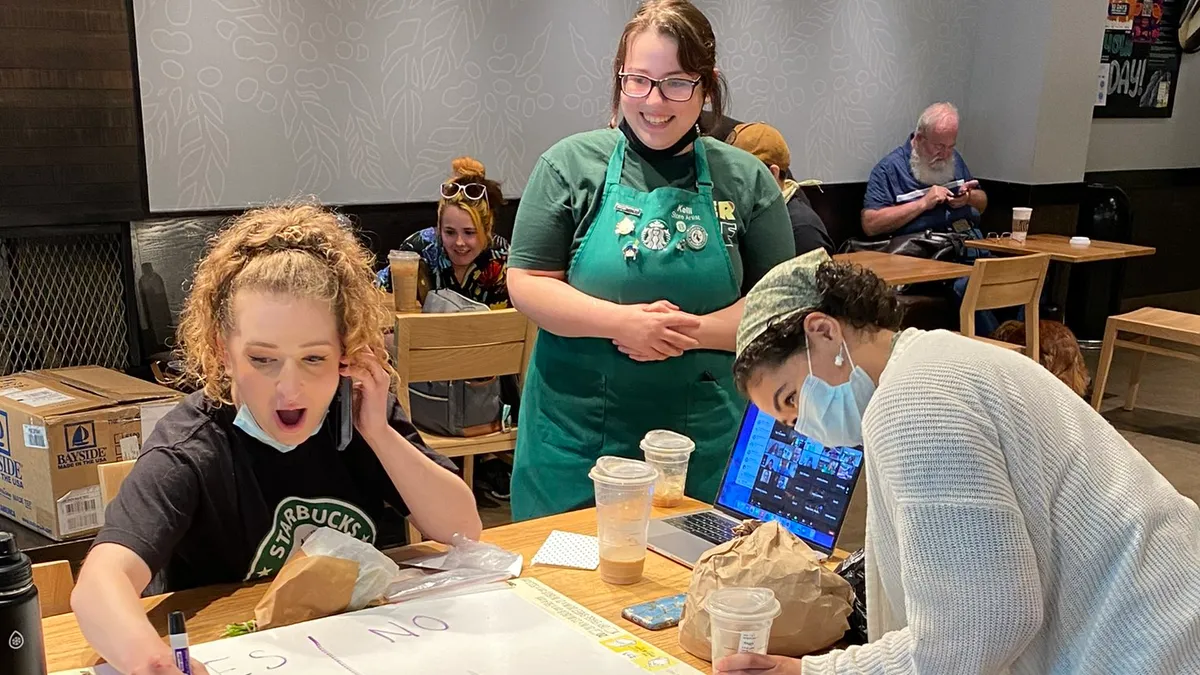
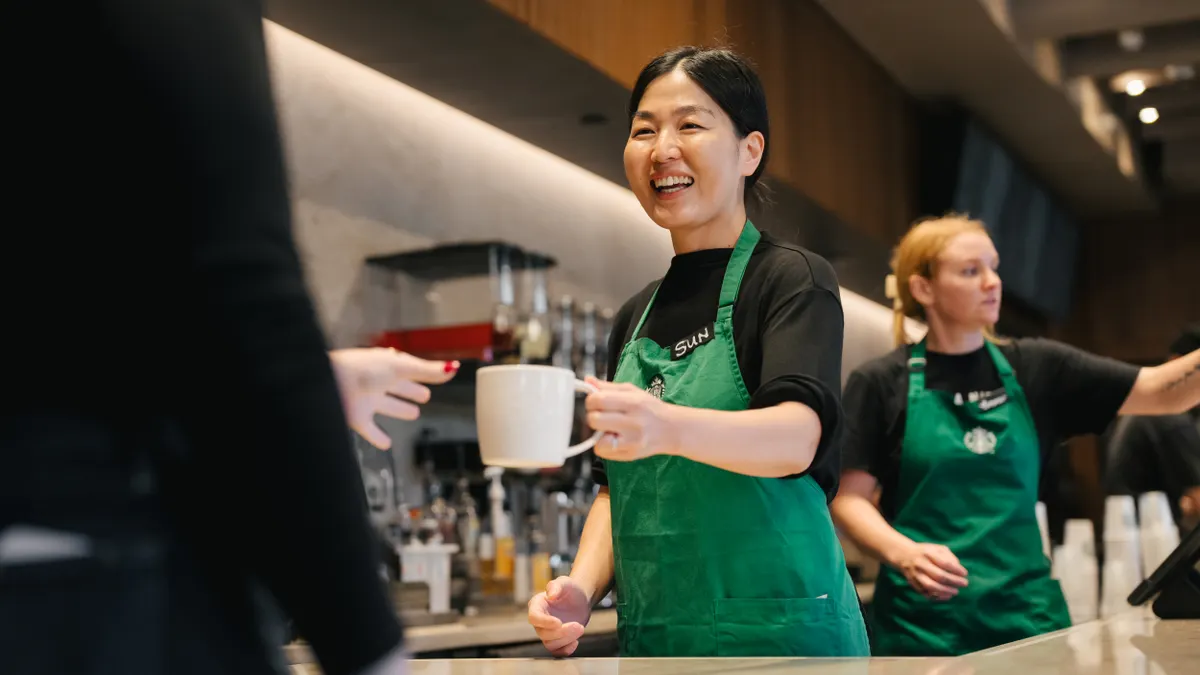
The streak of same-store sales growth is evidence that the coffee giant’s turnaround plan is working. CEO Brian Niccol especially highlighted the impact of the brand’s Green Apron service model, which he said served as “a platform to fix the operational issues we faced” and “reset expectations [and] refocus on the customer,” on a Wednesday earnings call.
Low turnover boosts operations and sales
The brand’s service improvements were made possible by slowing turnover in store-level management, Niccol said.
“The percentage of North America coffeehouse leaders who have been enrolled two years or more improved by about seven points year over year,” Niccol said, adding that managerial tenure was closely correlated with sales.
The brand is in the middle of a major push to hire thousands of assistant managers to support its continued turnaround.
Starbucks turnaround gains steam
Internal hiring for manager roles, including assistant managers, creates career development pathways for store-level workers, Niccol said, which could help reduce hourly turnover. These changes could lead to improvement in store-level operations and, eventually, sales.
Data from Placer.ai corroborates Starbucks’ assertion that the turnaround is working. The location analytics firm measured 12 consecutive months of traffic gains at the brand. Same-store visits rose 5.7% in April, 0.5% in May and 2.1% in June, according to Placer.ai.
Placer.ai also found that repeat visits to Starbucks have grown modestly in H1 2026, indicating an increase in customer loyalty.
“Starbucks' operational improvements are beginning to translate into stronger customer retention,” Shira Petrack, Placer.ai’s head of content, wrote in a blog post.
Starbucks has also improved consumer engagement and retention through its loyalty program, which hit 35.8 million active 90-day members in the U.S. — more than 10% of the country’s total population. In March, Starbucks added new tiers to its loyalty program, with high-spending-consumers earning points faster.
Niccol said some of the new methods of engagement have been particularly useful. Free Mod Mondays — a once-monthly costless modification perk — has helped drive greater customization.
“One in three members who tried a new modification through this benefit reordered it in subsequent weeks,” Niccol said. That repeat frequency for modifications could help drive ticket growth for the chain. The brand also gave rewards members early access to menu items, like its S’mores beverages.
Niccol’s multi-year effort to revive the coffee chain through premium brand positioning, investments in store-level operations and labor, remodels and product innovation continued in the quarter.
Starbucks speeds up remodels
During the period, Starbucks hit 1,000 remodels in North America, surpassing its Fiscal 2026 goal. The brand now plans to hit 1,500 remodels by the end of September, Niccol said.
“Early data from uplifted coffeehouses show transaction lift across access points, dayparts, formats and customer segments,” Niccol said. Those renovations include new, more comfortable seating, warming colors, visually interesting design elements like wainscoting and more power outlets.
Starbucks is making more investments in its infrastructure elsewhere, too. Its forthcoming Nashville headquarters would cost up to $100 million and could serve as the base for 2,000 corporate employees.
At the same time, however, the coffee chain slashed 300 corporate jobs this year in the U.S., with more cuts expected in international markets, and closed four of its support centers as a cost-savings measure. The brand also backed off a bespoke computer vision inventory tracker after about nine months, following negative employee feedback on the tech.
New drinks drive consumer buzz
Niccol said that the chain’s menu innovations and LTOs remain an important part of its strategy for driving sales.
“We're finishing the summer season with a strong menu lineup that includes blended refreshers, our legendary unicorn frappuccino, and new orange cream beverages,” Niccol said. “And we'll keep driving fandom with a steady pace of buzzworthy merch launches, and continued innovation season after season.”
Earlier this year, the chain added a new, more caffeinated version of its refreshers, offering consumers a wider range of refreshers.
Starbucks’ refreshers platform saw double-digit year-over-year revenue growth in the U.S., Niccol said.
“Customizable energy refreshers, new coconut and mango [flavors] kept customers engaged, expanded the platform to new occasions and gave them more reasons to visit throughout the day,” Niccol told investors.
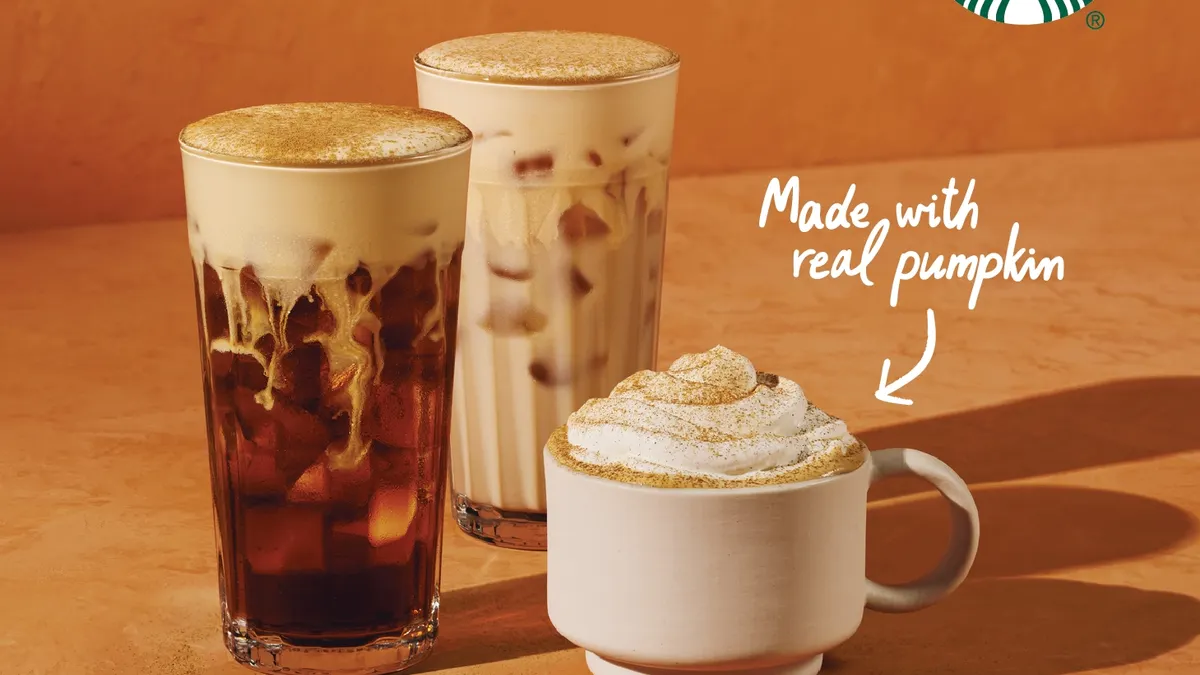
On July 28, the brand began testing carbonated versions of several of its Energy Refreshers, and a new Spritz platform that “brings together real fruit with coffee, tea or lemonade,” in a sparkling beverage, per a press release. The drinks are in market tests across about 100 stores in San Antonio, Austin and St. Louis, and could foreshadow future menu innovation from Starbucks.