Dive Brief:
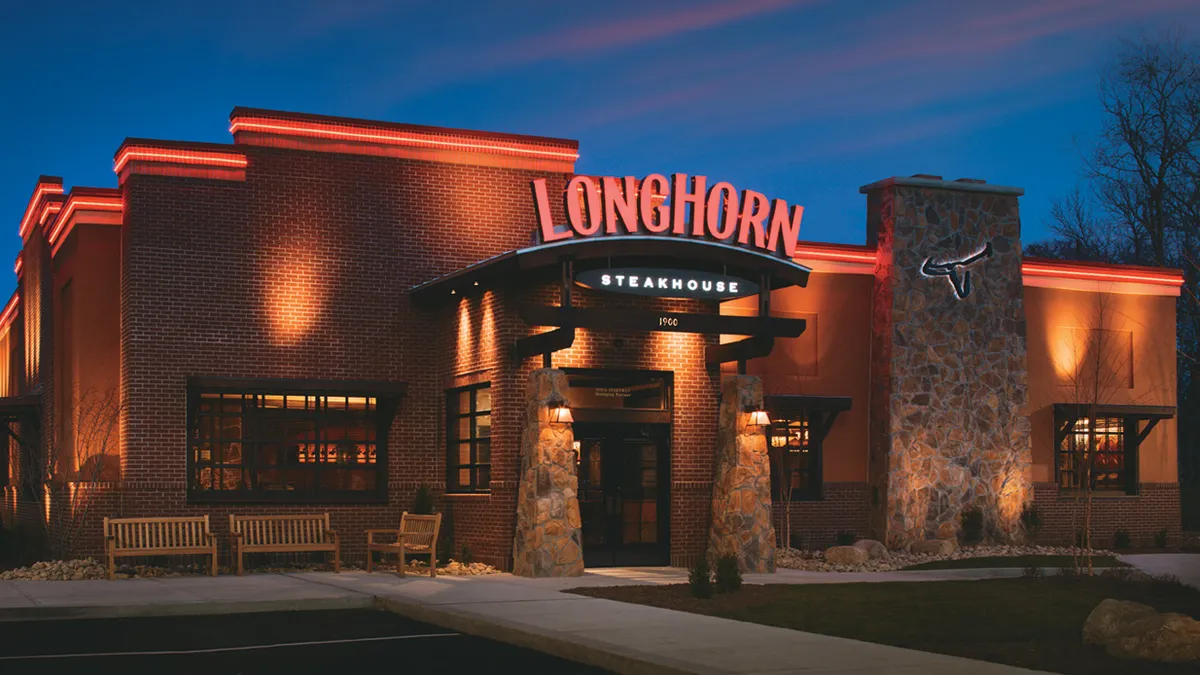
- LongHorn Steakhouse reached the $1 billion quarterly sales mark for the first time, thanks to a 9.5% rise in same-store sales and an increase in the brand’s storecount, according to an earnings report from parent company Darden Restaurants.
- Combined with new openings, comps growth drove LongHorn’s total sales up by 21.9% year over year in the quarter, according to an earnings presentation, reaching $1.01 billion.
- Darden’s other flagship brand, Olive Garden, saw more modest sales growth in the company’s fiscal Q4 2026, with a comps increase of 2.4%.
Dive Insight:
CEO Rick Cardenas said on the brand’s earnings call that Darden’s casual brands saw increased spending from guests across all income groups,, which helped the company notch sales wins at a moment when other brands are facing faltering sales as a result of macroeconomic uncertainty.
LongHorn’s sales surge was driven by long-term investments in food quality and by the relative value the steakhouse offers to consumers at a time of high beef price inflation, Cardenas told analysts.
Consumers were trading down to LongHorn from fine dining and trading in to the brand from retail, Cardenas said.
Raj Vennam, Darden’s CFO, said that consumer demand for steak in retail channels has fallen recently as beef prices have risen. Retail price increases may have improved the value perception of LongHorn compared to food-at-home.
The brand’s sales were also boosted by the performance of its recurring lamb limited-time offering, Cardenas said. LongHorn’s social media promotion of its lamb options went viral, building anticipation for the protein.
“We bought more lamb this year than last year, and we sold out in half the time,” Cardenas said. “It was a strong performance.”
Darden is not focused on trying to attain eye-watering, single-year comps growth across its brands, Cardenas said.
“Not all of our brands are going to do a nine comp every quarter,” Cardenas said.
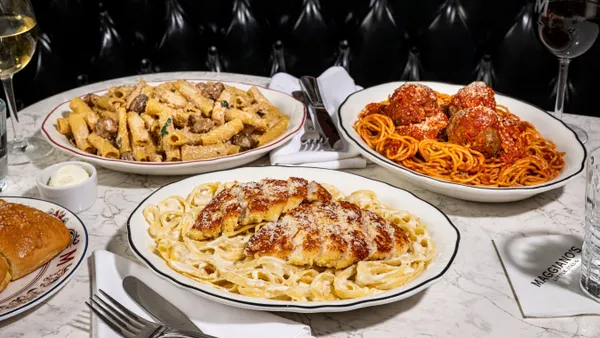
Olive Garden’s sales growth was moderate, and the chain is projecting continued modest sales growth. Cardenas said Darden is satisfied with Olive Garden’s performance and views it as sustainable. The chain is continuing to make investments for the long term so it can maintain steady comps growth for the next 20 years instead of trying for a temporary comps surge, Cardenas said.
But Darden is not taking a passive approach to Olive Garden’s sales. Olive Garden will leverage new menu items to drive traffic growth, and will continue to invest in marketing.
Successful menu items for the brand have “got to be simple to execute, can't be at a deep discount, and [are] going to elevate brand equity,” Cardenas said.
Olive Garden’s recent decision to offer lighter portions of some of its core menu items has helped the brand’s value perception and is driving frequency, Cardenas said, without accounting for too great a fraction of the chain’s sales mix.
Darden is also seeing a stepwise increase in its unit growth, as it is projecting 75 to 80 gross openings in fiscal 2027, up from 71 in fiscal 2026, alongside the conversion of about 11 Bahama Breeze locations into other Darden concepts, Vennam said.