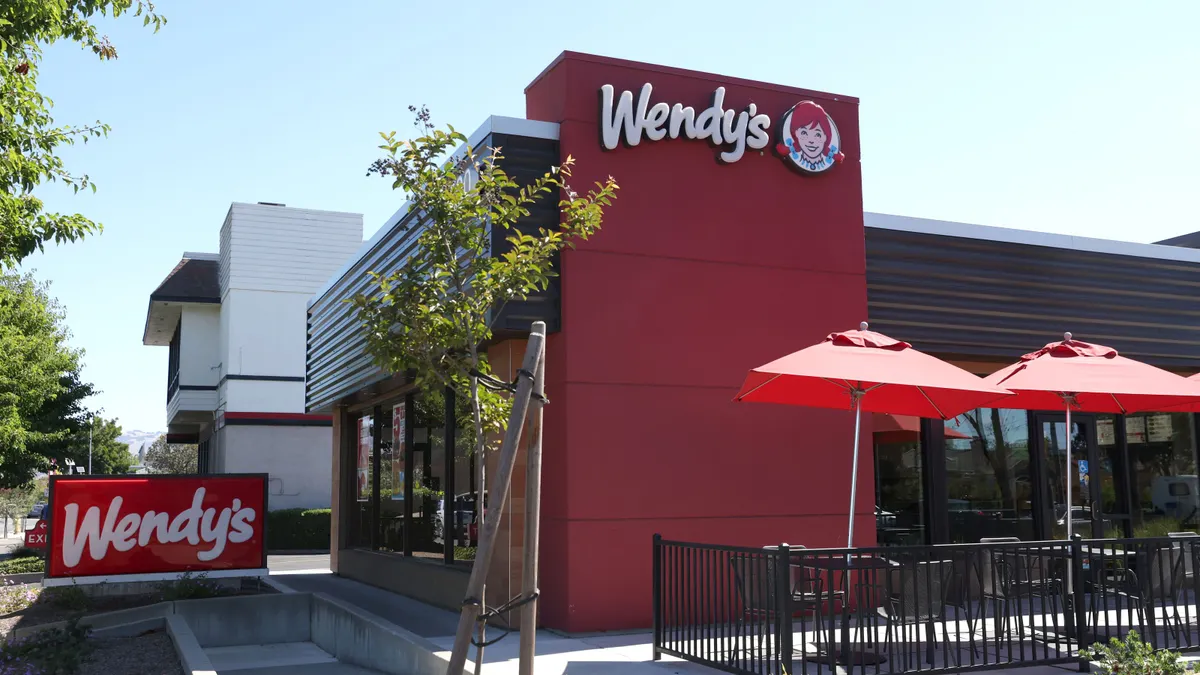
Wendy’s detailed its latest turnaround plan, called Dave’s Way, on Thursday to improve customer traffic, market share and restaurant profitability, according to an earnings release.
The initiative follows multiple quarters of same-store sales and traffic declines in the U.S., including a 5.7% comparable sales decline during the third quarter.
Wendy’s franchisees have also closed a number of stores to optimize their portfolios, and one of its largest franchisees declared bankruptcy earlier this year. The brand hired Robert Wright as CEO earlier this year to help improve its trajectory.
The company also said a committee of independent directors “unanimously rejected” Trian Management Partners' unsolicited $1.4 billion bid to take over the company, Wright said on a Thursday earnings call.
“We’re confident that we have the right strategy, execution and resources to restore Wendy’s to its full potential and drive meaningful shareholder value,” Wright said.
The new Dave’s Way plan focuses on food quality and value, distinct branding and marketing to drive demand, operational standards, improving the digital experience to drive frequency and using restaurants as “the engine for growth,” Wright said.
“Dave's Way is our multi-year strategy designed to put those strengths and values back at the center of how we compete, while also continuing to build the capabilities that enable us to grow and win over time,” Wright said. “It's also the standard for how we operate, make decisions, and hold ourselves accountable. Our objective is clear: grow customer traffic and market share while strengthening restaurant profitability.”
Before announcing Dave’s Way to the general public, Wendy’s shared the strategy during a September convention with global franchisees and suppliers, during which operators responded positively.
“Survey results … showed a substantial increase in both business optimism and confidence in leadership,” Wright said. “Our franchisees are committed to the Wendy's brand, aligned to our strategy, and they continue to make smart investments to grow their business and Wendy's.”
A refocus on food quality, distinct value
Wendy’s is in the midst of rebuilding its menu around “distinctive, fresh and craveable food,” Wright said. That means improving ingredients of core menu items and creating a pipeline of menu innovation based on disciplined development and testing, alongside a pricing structure that offers “real value” to consumers, he added.
The chain is already working on implementing new menu designs that highlight signature items, Wright said. It is also restructuring its menu around high-demand core items and removing lower-volume items that add to complexity in the kitchen.
The brand has already begun to test improved ingredients like thicker, crispier bacon, richer and creamier Frostys, whole-leaf lettuce in sandwiches and changes to its salads, he added.
“We'll be disciplined in what we scale, moving forward with the innovations that resonate with customers, work best operationally, and drive sales and profits to our restaurants,” Wright said. “We’ll scale the improvements as they are ready, resulting in a fully refreshed menu experience in 2027.”
Additionally, Wendy’s is now making the breakfast daypart optional for franchisees going forward. This means operators can choose to serve breakfast in stores where it works, or cut the menu segment altogether so they can focus on dayparts that result in higher profitability, Wright said.
Restaurants that have removed the morning daypart saw greater profitability across lunch, dinner and late-night, as a result of more efficient labor deployment. Stronger performance in other dayparts means many stores that cut the meal have already recaptured their breakfast sales, he said.
“As this optionality is expanded more broadly later this year, we estimate this could add up to $200 million in restaurant-level EBITDA for franchised and company restaurants, while bringing the focus to the menu, dayparts, and experiences most important to our customers and our business,” Wright said.
The chain will continue to support operators who keep breakfast, through innovation and digital and traditional marketing and operational support, Wright added.
Marketing and branding
Wendy’s is looking for the “right media, message and creative” to drive traffic as part of its turnaround strategy, Wright said.
That has so far included strengthening its marketing team with new leadership roles and using data to drive performance, he said. In August, Wendy’s hired Tariq Hassan to serve as chief marketing and customer growth officer.
Six weeks ago, the chain signed with a new creative agency and has already evolved its media strategy with new data and tools.
“We’re also continuing to improve how we test and measure creative offers and channels before broader deployment, so we can direct spending towards programs that most effectively drive visits,” Wright said.
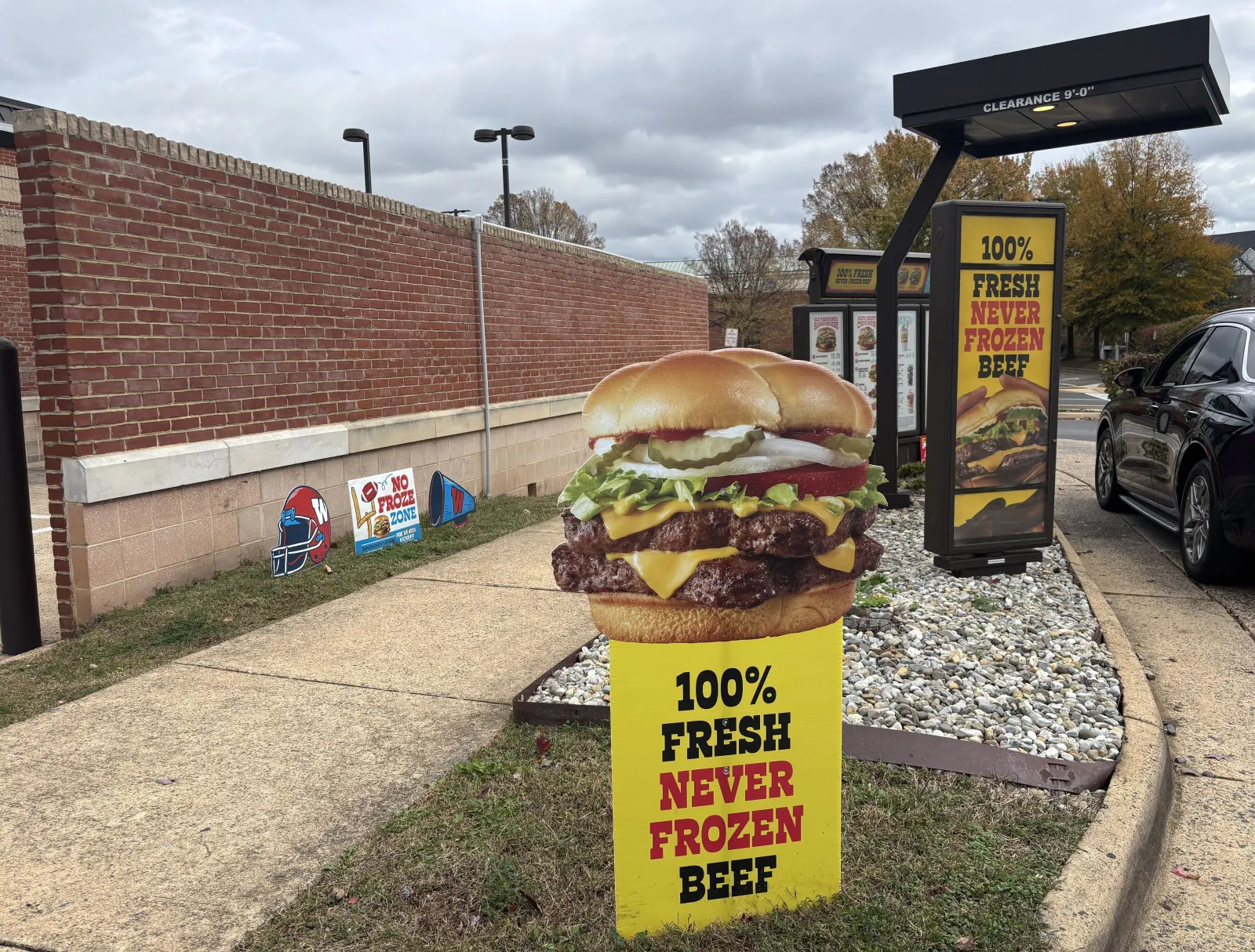
So far, the chain shifted its marketing to highlight its fresh beef with new signage around restaurants. It also used its new messaging strategy to highlight a limited-time offer, the $7.99 Dave’s Single Combo promotion, he said.
Improving operations with training
To improve operations, the chain is returning to “rigorous brand standards” backed by a metric-drive performance system, Wright said. That platform will award top operators and help improve execution with ongoing coaching and feedback. Interventions or rewards will be tied closely to traffic metrics, he added.
“Restaurants in our top quintile on customer satisfaction scores are outperforming the bottom quintile on traffic by over 500 basis points, and the gap on lunch drive-thru speed of service between those groups is nearly two minutes,” Wright said.
The chain is also improving its analysis using tools and data that combine traditional customer feedback surveys with online reviews and social media chatter. This will create a more accurate measure of satisfaction that will link to sales growth.
Wendy’s is also developing operational playbooks, reestablishing its expectations for cross-training and redesigning training to help teams with quality, speed, accuracy and hospitality, Wright said. The chain plans to pilot simplified cross-training across its system early next year.
It also is aligning staffing with demand, especially during peak hours, to improve throughput.
“Developing great operators and restaurant leaders was once a defining strength of Wendy's, and it will be again,” Wright said.
Bulking up digital
To increase digital sales, the chain is creating an ecosystem with its app, website and third-party aggregators that ensures the digital experience is seamless from ordering to pickup, Wright said.
The chain is taking a particular focus on delivery since it lags behind competitors, even though delivery is growing industrywide. The chain has already tested a range of options for delivery and “the results are very encouraging,” Wright said.
“Both company and franchised restaurant tests delivered low double-digit to 20% sales lifts in delivery,” Wright said. “We shared those proof points with franchisees at our recent convention, and today, more than 90% of our U.S. franchise restaurants are participating in delivery promotions, nearly double the level it was just a few months ago.”
This move also includes improving Wendy’s presence on marketplaces, and highlighting its menu, food and value to drive visibility and order count, Wright said.
“Beyond delivery, we plan to make ordering easier using personalization and more relevant offers to give customers reasons to return,” Wright said. “We'll measure progress across our digital and delivery channels through market share growth and customer frequency.”
Leveraging restaurants for growth
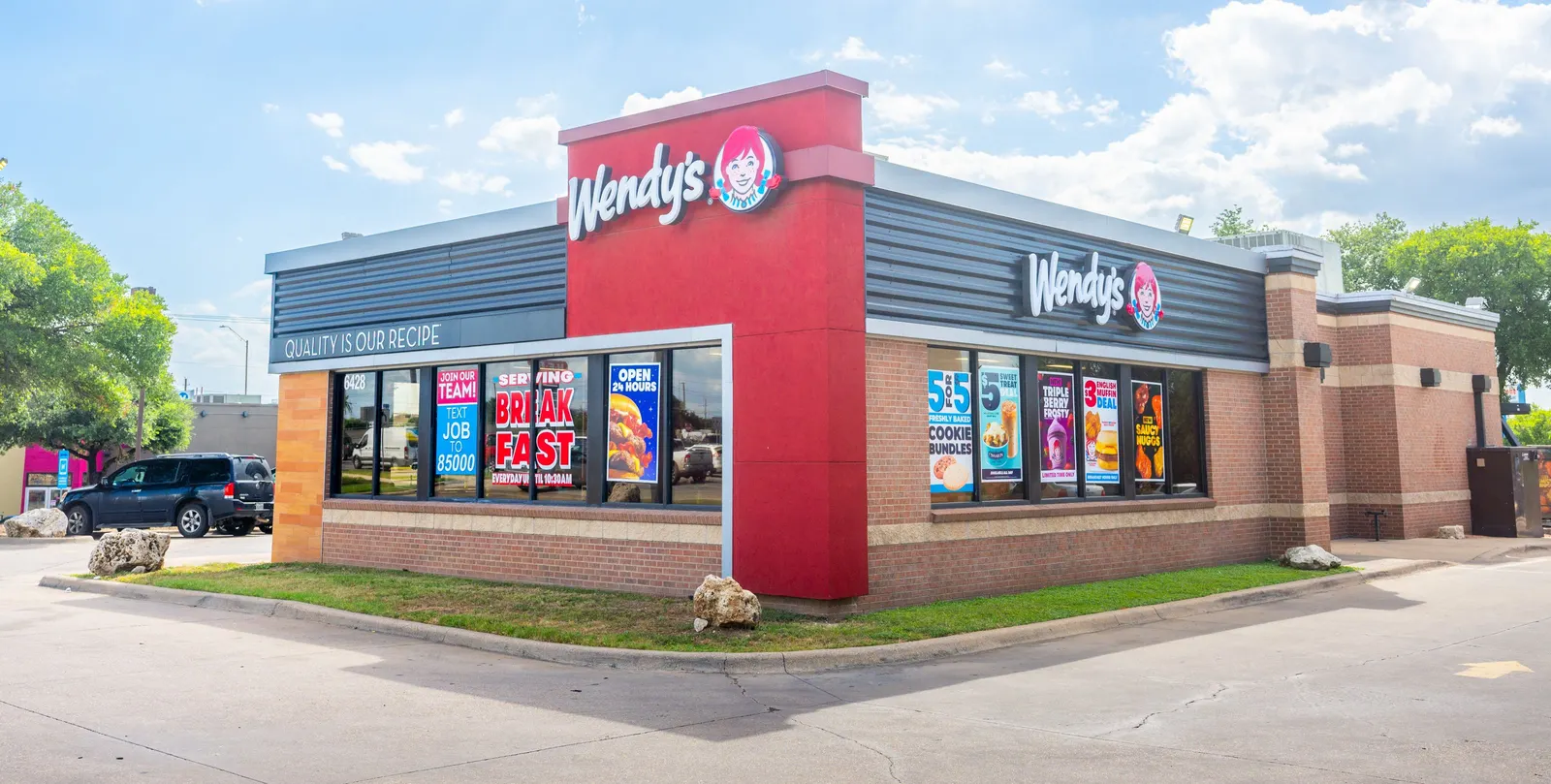
The company created a portfolio optimization team to address franchisee financial health and improve the overall system, Wright said. That team is working with franchisees, lenders and other partners to figure out the best path forward for underperforming restaurants, whether that’s greater operational support; deferred royalties, advertising or other fees; targeted closures of ailing locations; or shifting restaurants to new owners.
“Where we acquire restaurants, our objective is to improve performance and, in certain cases, position them for refranchising,” Wright said. “The team is operating with discipline and rigor in alignment with our investment discipline and tailoring our engagement to each unique situation.”
The company is already working with Meritage Hospitality Group, which declared bankruptcy in September. Wendy’s signed a letter of intent to acquire up to 163 of the operator’s restaurants, which are located in markets where the company has a presence, while giving Meritage the option to approve higher and better offers from approved franchisees, Wright said. Further units Wendy’s acquires will eventually be positioned for new franchise ownership, he added.
Wright expects additional Wendy’s restaurants to be sold and transitioned to other operators through the bankruptcy process. Meritage is already in the process of selling 42 units to Divine Infinity Operations for over $18 million.
“Taken together, these actions demonstrate the disciplined approach we're taking to strengthen the system,” Wright said. “We will measure progress in this pillar through improved franchise economics and portfolio health.”