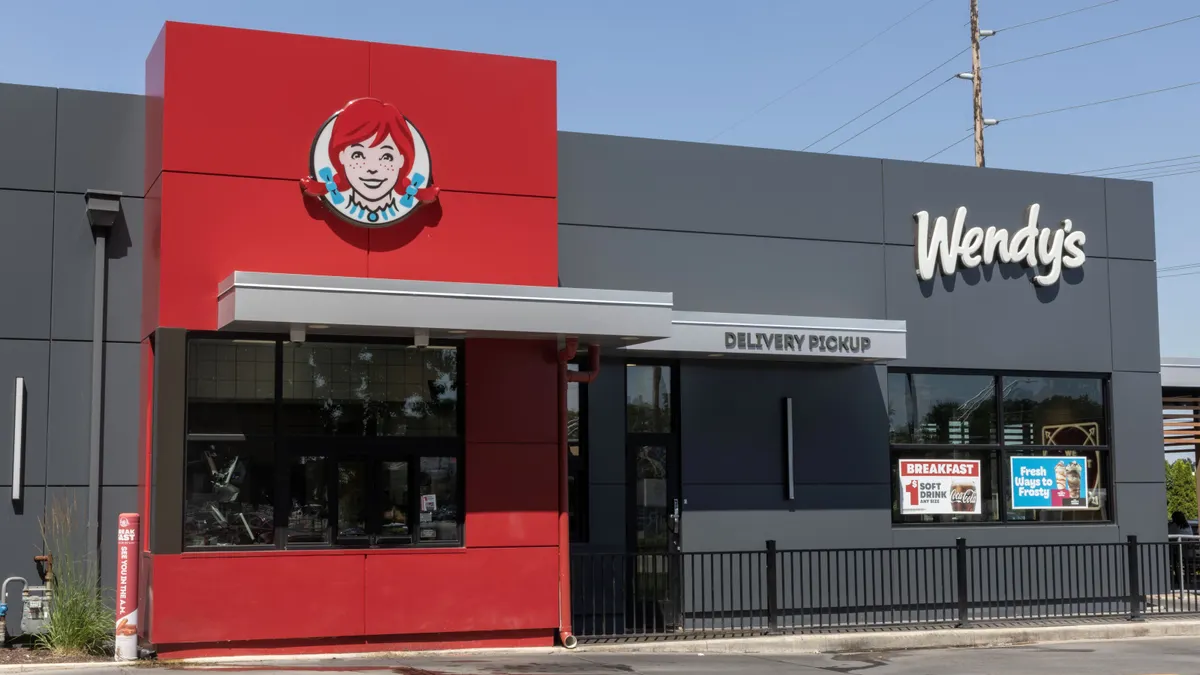
When one of Wendy’s largest franchisees, Meritage Hospitality Group, declared bankruptcy in September, it was a sign that financial conditions are only getting worse for restaurant operators.
Even the largest and most profitable multi-unit franchisees can fall into distress, and experts expect this level of turmoil to only continue among the franchise community.
“You’re operating in tight margins to begin with and then you see your traffic decrease,” said Ted Gavin, founding partner of law firm Gavin/Solmonese. “That’s going to have a pretty serious effect on your bottom line.”
Economic conditions also don’t show signs of any near-term improvements.
“You have this three-headed monster: cost of goods being higher, inflationary pressures and the debt service being higher as well,” said Matt Anuszkiewicz, managing director and head of institutional coverage group at Surmount, a real estate advisory group. “Whatever debt they could have supported in the past is not really supportable in today’s market because cash flow is down and debt service is more expensive.”
The industry is undergoing a bit of a correction right now, on top of already highly competitive conditions, Gavin said. Even if a chain or restaurant has a great product, larger chains can flood the airways with advertisements and drive more customer recognition, Gavin said.
Wendy’s, as the third-biggest burger chain, may continue to struggle against McDonald’s and Burger King, which may have stronger brand recognition in many markets. Other burger brands like Carl’s Jr. and its sister company Hardee’s, both of which have seen franchisee bankruptcies this year, may also struggle to make headway against sector leaders.
“You have this three-headed monster: cost of goods being higher, inflationary pressures and the debt service being higher as well.”

Matt Anuszkiewicz
Managing Director and Head of Institutional Coverage Group, Surmount
Meritage’s bankruptcy is “a harbinger of future adjustments and some rough times to come as the industry adjusts to changing consumer preferences and changing consumer practices,” Gavin said.
Before an operator takes Meritage’s path toward bankruptcy, there are many decisions that franchisees can make to alleviate financial pressure, including making important payments and renegotiating leases and vendor payments, experts said.
Pay the most important expenses first
If operators are facing financial difficulties, it’s imperative that they prioritize some payments over others, including paying employees and trust fund taxes, the latter of which could turn into a personal liability for the owners if left unpaid, Gavin said.
“If you want the lights to go on the sign at night when you have your business, you’ve got to pay the franchise fees, and then you start getting into more operating expenses,” Gavin said. “That’s where you can get creative.”
Payables, such as those to suppliers for goods of service, can be stretched a bit, but not too far since vendors will stop delivering. Operators should definitely try to negotiate for better terms and more time to pay, Gavin said.
“You have to focus on the fact that you are a restaurant, and so you’ve got to keep your eye on food cost,” Gavin said. “You’ve got to keep your eye on man hours per customer. You’ve got to keep your eye on what’s going on [and] what money is going out the back door in waste.”
One way to lower costs is to reconsider the impact third-party delivery has on operations, said Chad Van Horn, a bankruptcy attorney and founder of the Van Horn Law Group.
If every order is losing money, restaurant operators should work toward redirecting customers to a native app or another channel that is more profitable “and not giving away the profits and revenue to the tech guys,” Van Horn said.
Operators can try and increase their menu prices for delivery, but that could put customers off, Van Horn said. Instead, some restaurants are trying to renegotiate terms with delivery firms because margins are so thin, he added.
Be proactive with landlords, creditors
Operators should also reach out to their landlords before they are preparing for bankruptcy to try and get in front of financial issues and try to increase cash flow, Anuszkiewicz said.
“We can try and right size occupancy costs by having pretty upfront and candid conversations with landlords about some of the challenges that operators are facing in today's market and the fact that we need buy-in from everybody in order to avoid another distress situation,” Anuszkiewicz said.
In addition to renegotiating rent, operators should talk with landlords about getting out of leases for underperforming locations. These often weigh down otherwise profitable portfolios for restaurants, Anuszkiewicz said.
“I think a more proactive pruning of the portfolio and elimination of the losers could really help these groups in the long run, and certainly allow them to focus on the restaurants that are performing rather than you know spending 90% of their time worrying about their bottom 10% of their performers,” he said.
Companies should communicate with their creditors, let them know as early as possible about financial difficulties and try to stay out of default, Van Horn said.
That means working on forbearance agreements or other arrangements to help with restructuring. While bankruptcy can help reorganize, it comes with an additional layer of administrative costs with regards to attorneys, accountants and other professionals, for example, Van Horn said.
Distressed companies can conduct a composition of creditors, if their lenders are willing to do so, that can help build an early consensus, Gavin said. This would create a legal agreement in which a creditor would accept partial payments or an alternative settlement to secure part of what is owed rather than risk total non-payment.
“Having advocates for your continued survival in your vendor and creditor community, particularly among the larger and more influential members of that community, is always helpful,” Gavin said.
When bankruptcy becomes the best option
While bankruptcy is a last resort, “it’s sometimes a necessary resort,” Gavin said. Bankruptcy gives companies the ability to do things they wouldn’t otherwise be able to do without the consent of other parties. For example, a debtor can terminate executory contracts, like franchise agreements, assume them or assign them to a buyer.
Gavin said negotiations can be done outside of bankruptcy, but generally require the consent of the other party, “and those consents are not usually easily obtained.”
The timing of Meritage’s filing for bankruptcy was key, for example. Wendy’s canceled its franchise agreements with Meritage a day before the franchisee filed for bankruptcy, according to court filings. It’s likely Meritage was hoping to use the bankruptcy court to stave off Wendy’s actions. However, Wendy’s sued, saying Meritage didn’t have the right to continue running restaurants since the agreements were canceled.
“[Meritage has] effectively been financing the business by not paying Wendy’s the money that Wendy’s was owed under the franchise agreements,” Gavin said.
To avoid a similar litigious situation, operators should file bankruptcy before their franchise agreements are canceled, Van Horn said.
“That’s extremely important because once that happens, then you have the biggest asset still at hand,” Van Horn said.
Any operator that is falling behind on payments should discuss options with a bankruptcy attorney, he said. Once a franchisor cancels franchise agreements, an operator has fewer options, Van Horn said.
During bankruptcy, if a company can argue that it’s still operating, making money and maintaining its employees, they can work with their largest creditors, be it a franchisor or secure creditor, to strike a deal to emerge from bankruptcy, Van Horn said.
The bankruptcy process also allows companies to terminate expensive leases, particularly ones that are charging more than market lease rates. Otherwise, a company would need the consent of the landlord, Gavin said.
Bankruptcy brings landlords to the table in a short amount of time, and can give tenants the ability to optimize their portfolios through lease rejections. During bankruptcy, operators can make changes in 30 or 60 days that would otherwise have taken years, Anuszkiewicz said.
The Chapter 11 process can also help facilitate the sale of certain assets, like Meritage’s proposed sale of 42 units to another franchisee for over $18 million. That action not only provides additional capital for Meritage during bankruptcy, but also ensures that Wendy’s will still have these units in operation.
“If you're looking to do a sale and the other side isn't being cooperative, you can often accomplish a lot of those things in bankruptcy,” Gavin said. “Bankruptcy is the remedy when negotiating the same result simply isn’t an available option.”