Dive Brief:
- Taco Bell’s long streak of industry-leading sales and traffic growth came to an abrupt end in Q3 with a 4% drop in same-store sales in the U.S., as consumers pulled back from the chain over concerns about Cyclospora contamination during this summer’s outbreak.
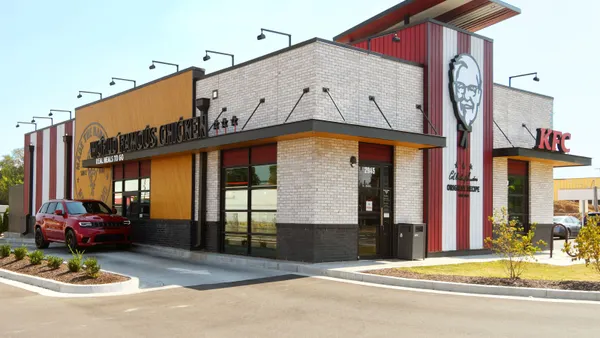
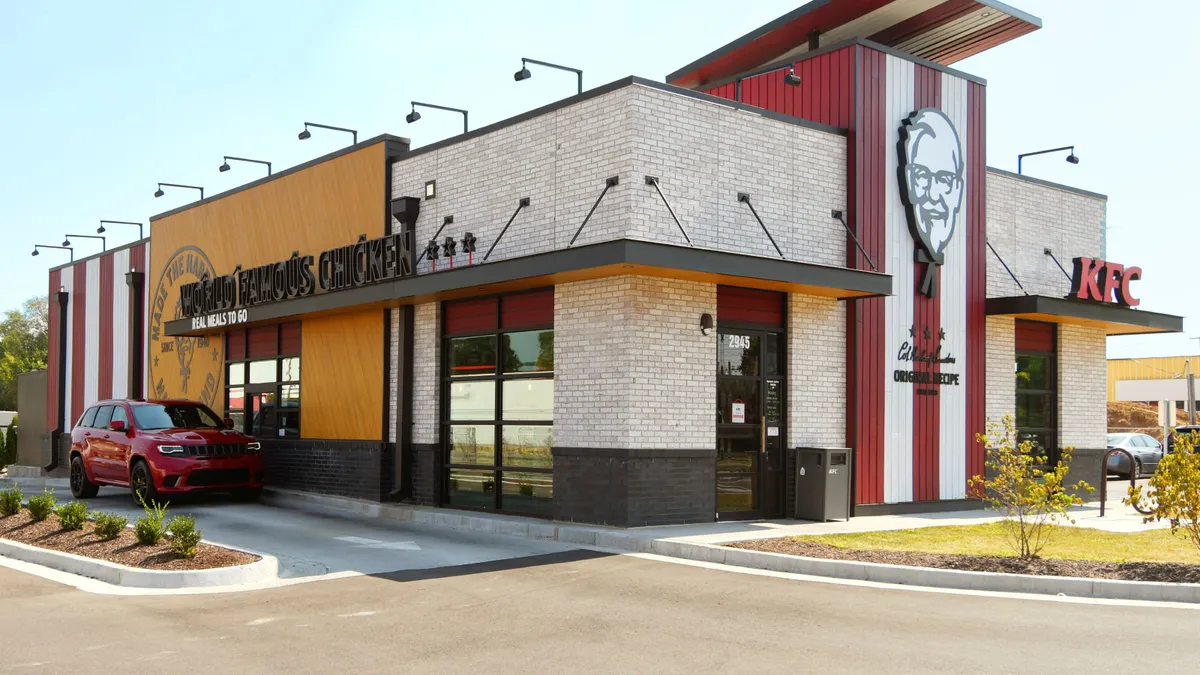
- Sister brand KFC performed well globally, though the company has stopped disclosing specific comp figures for the U.S. market, which accounts for 12% of KFC’s global sales, according to a Yum Brand’s earnings release.
- Taco Bell’s sales, however, recovered quickly thanks to a “magic formula” based on marketing, loyalty and limited-time offers, Yum Brands CEO Chris Turner said on the company’s earnings call. KFC, meanwhile, is working on a substantial brand turnaround, and recently began testing new dayparts and processes — like breakfast and table service — at a new, experimental location.
Dive Insight:
Taco Bell has seen a fairly continuous recovery since the summer, when iceberg lettuce served by the chain and sourced from Taylor Farms, sickened thousands of consumers during a massive cyclosporiasis outbreak.
“From a low point in July, Taco Bell U.S. same-store sales strengthened week after week, and since the end of September, the brand has been outperforming the QSR industry on same-store sales growth,” Turner said.
Turner attributed the recovery to culturally relevant offerings, like the brand’s promotional partnership with popstar Olivia Rodrigo, who is the face of the You Seem Pretty Pink for a Baja Blast campaign. Loyalty also played a role in the recovery.
“Loyalty users return to the brand two times faster than non-loyalty users,” Turner said, adding that the chain leveraged loyalty exclusive promotions, like the Build-Your-Own-Luxe Box to draw new consumers into the loyalty program.
Yum CFO Ranjith Roy said Taco Bell was continuing to invest in technology, with about 900 locations currently using drive-thru voice artificial intelligence. The chain plans to have the ordering tech live in about 1,500 locations by year’s end.
“In locations where voice AI has been deployed, the brand has seen a 6% improvement in overall drive-through satisfaction, approximately 1.5% sales uplift driven by higher check, and sustained improvements in team member retention compared with our control group,” Roy said. This performance could help the chain complete its recovery from Cyclospora and continue driving same-store sales growth.
KFC is also investing substantially in technology as part of its long-term turnaround strategy, Roy said. The chain has deployed a new kitchen display system, using Yum’s proprietary Byte platform, in a small subset of its U.S. locations.
In locations using the tech, Roy said, the chain is “seeing measurable operational gains: 8% faster drive-through speeds, a 12% reduction in refunds, and a more than 20-second reduction in delivery driver wait times.” These operations gains could help the chain improve consumer satisfaction as the technology scales throughout its system.
On the menu side, KFC’s launch of popcorn chicken generated a strong consumer response, Turner said, with many stores selling out of the item entirely. But there’s still a way to go before KFC returns to significant growth in the U.S.
KFC also announced it was switching its primary beverage supplier from Pepsi to Coca-Cola, a move that will substantially shift the flavors of its core drinks starting in 2027.