Editor’s Note: This Q&A is part of a series of interviews with political figures in the restaurant industry about the issues facing brands, workers and operators in 2026.
Independent restaurants face a difficult political environment, said Erika Polmar, executive director and co-founder of the Independent Restaurant Coalition.
Heavy-handed immigration enforcement is exacerbating problems with hiring and retention, while an inconsistent tax code makes it more difficult to manage labor, and credit card swipe fees are eating into margins on many orders. Third-party delivery and tech providers can also ride roughshod over independents, who lack the market power and deep pockets that big brands and franchise systems use to negotiate better terms.
The IRC was founded in the depths of the COVID-19 pandemic to advocate specifically for the interests of independent restaurants. While masking, social distancing and on-premise dining restrictions are fading memories, single-unit operators and small chains must still overcome unique cost pressures that are often shaped by broader political policies.
In 2026, Polmar said, the IRC isn’t backing a particular party or candidate — it’s a non-partisan organization — but is instead focused on educating lawmakers about the unique problems facing small restaurants.
“We don’t care what party someone is in,” Polmar said. “We will work with any administration. We will work with any individual. Our job is to educate them on the business operations of independent restaurants and bars — it doesn't matter if you're Democrat, Republican or Independent, or any other party.”
Here’s how the IRC is approaching this difficult political moment.
Editor’s note: This Q&A has been edited for clarity and brevity.
RESTAURANT DIVE: What are the three biggest political issues facing independent restaurants right now?
ERIKA POLMAR: The three biggest issues that we currently see at play in D.C. are the desperate need for immigration reform, the need for service charge tax fairness, and the Credit Card Competition Act is really important, as credit card swipe fees continue to increase, and it is very, very hard to operate a restaurant financially right now, and that’s something that is taking a big chunk out of their revenue.
What would the IRC like to see out of immigration reform, and how have the politics of immigration changed in the last year and a half?
We employ a disproportionate amount of first time job seekers and we are ladders to opportunity for folks who are looking to grow. Immigrants who want to work legally in a restaurant are waiting for over a year for basic work permit approval. And we’re seeing this unrelenting, indiscriminate enforcement [against] even people who are operating with all of the right permits — maybe they’ve got a temporary work permit, maybe they’re on a visa, maybe they are on a green card, maybe they are a full-fledged U.S. citizen who immigrated here.
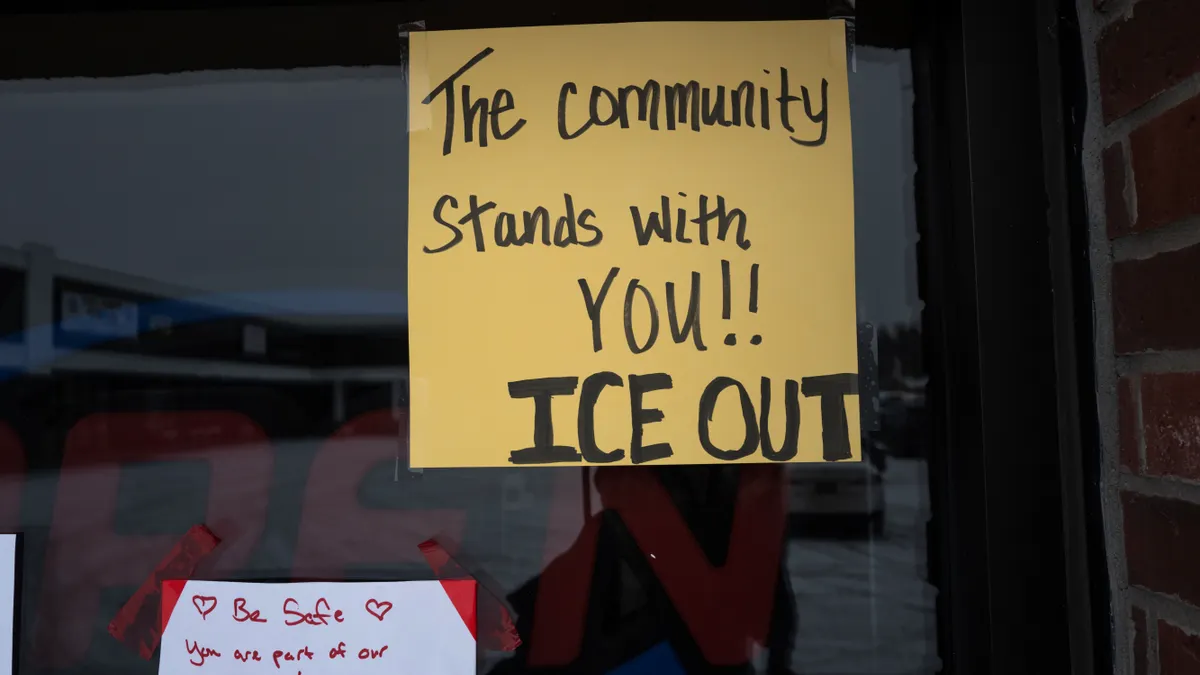
The enforcement is so dramatic right now that folks are afraid to go to work. That change in enforcement is what we have seen in the last 15 months. The backlog is something that we have seen for quite some time. So that is not a new problem.
What would positive immigration change look like from IRC’s perspective?
We would like to see expanded H-2B (temporary non-agricultural workers visa) caps with a special small business carve out. Some of those programs are very costly and there aren’t very many of them, and bigger corporations snap those up.
We would love to see longer-term renewable visas. We’d like to see them go from 18 months to multiple years. We would love to see the ability to renew visas in-country. Oftentimes, what happens is you have to depart the U.S. every six months to renew your visa. That creates a real insecurity and instability in the workplace.
So we really would like the visa categories to be tailored to a more year-round staffing situation with restaurants.
We’d also really like to see a pathway to legal status based on length of employment and community contributions. That is a really big ask that’s not currently on the table but that would be a very big win for the industry. We have so many people who have been going through this for so long, and they are good partners — both in the restaurant and out of it — and it would be great to give them a pass.
Do you think any of these changes are on the table with the current constellation of political forces in the U.S.?
You are starting to see politicians on both sides of the aisle recognize the significant contribution that immigrants make to the U.S. economy, and starting to realize that what we have been doing for the past year or so is causing more harm than good. Those folks are few and far between, but there are starting to be more voices that are being courageous and speaking up about the important role that immigrants play.
We are seeing movement with the Dignity Act and with changing the Temporary Protected Status program.
Service charges are not covered by the “No Tax on Tips” enacted by the Big Beautiful Bill — what impact does that exclusion have on independent restaurants?
Many restaurants moved to the service charge model to create a more balanced compensation system, because in some states you're not allowed to pool tips, so your back of house is getting one rate of pay, and your front of house is getting another.
If you use service charges, you can more evenly distribute the money that’s coming in from guests. When you have service charges and you don’t have tips, then you don’t have somebody who is having a bad day and thinking that their server didn’t smile enough to warrant a significant tip.
When a restaurant charges a service charge, the restaurant — not the employee — is being taxed on that service charge as if it is income. So that looks like revenue, and the restaurant’s tax burden goes up. A restaurant is paying taxes differently on tips, because it’s not showing up as revenue. And so if service charges are being used directly for employee compensation — not for an environmental fee, not for a health fee, not for anything else — we want the tax structure to mirror that of tips.
What are the prospects for changes to credit card swipe fees, or changes to the structure of the credit card markets, and how is the IRC advocating for that?
The Credit Card Competition Act was introduced in 2023, so we have been fighting for this for quite some time. We’re not alone in that: Independent restaurants and bars and independent booksellers and independent groceries and all sorts of other industries are working together on this. There’s the Main Street Competition Coalition and the Institute for Local Self-Reliance. Every single one of us is reaching out to members of Congress and delivering this message. There is more traction now than perhaps there was in 2023, when this all started.
Really, the issue now is can the smaller, independent businesses prevail over big banking lobbyists?
Regarding affordability and intermediaries between restaurants and consumers, there have been a number of moves by third-party delivery companies to raise fees. What impact do changes like this have on independent restaurants, and what would the IRC like to see out of delivery regulation in the next couple of years?
Many of the apps charge 30% commission. If you are going to absorb that 30%, you’re going to have to increase your menu pricing. So your menu for delivery is both fewer items and more expensive, and then you are paying for those third-party apps to actually advertise against you.
If you’re going to Google your favorite restaurant, and it’s pretty likely that before the actual restaurant web page shows up in your search results, DoorDash or Uber Eats appears.
OpenTable recently required restaurants to list them as the primary reservation tool for its partner restaurants, citing problems with third parties scraping reservations and then reselling them. What’s going on with the reservation ecosystem generally, and how does that impact independent restaurants?
So in terms of the OpenTable issue, it’s all about owning data, and so tech providers are all leaning that way. It’s not frequent that people are working with multiple reservation systems. If they signed on with OpenTable, they’re working with OpenTable, and it’s not causing anybody significant concern.
That is less troubling to folks than this reservation theft that is happening often with AppointmentTrader and other similar apps, which is what the SEAT act is designed to stop.
How significant is reservation theft?
In major markets, it’s significant.
It is causing very strange problems within the restaurant. So you, let’s just say you are using OpenTable, or you are using Resy and third parties are scraping the reservation information, buying it, and then essentially scalping it like a ticket. So then they’re putting it on their site, but those seats are not necessarily selling. So a restaurant may be planning to have a full house on a Friday night. They staff that way. They prep that way. They have done all their ordering that way. They have spent a fair bit of money to do that. And then they have no-shows. And the no-shows were the bots. They weren’t really people.
The hope with the SEAT act is to just straight-up prohibit reselling without any clear written agreements. If you don’t have a contract, you’re not able to resell those seats. Unfortunately, that would then also become an FTC enforcement issue, and I don’t have a high degree of confidence in the implementation of that right now.
What has changed since the end of the Biden administration, when it comes to the Federal Trade Commission and restaurants? Specifically, how is the IRC approaching the Sysco-Restaurant Depot merger?
I’m hoping that the FTC hears us loud and clear when it comes to us explaining how the Sysco merger doesn’t just impact a small set of people, that it actually also impacts affordability. It removes competition in the food system.
Sysco has 337 distribution centers in 10 countries, Sysco already owns 17% of the foodservice distribution market. Jetro, the parent company of Restaurant Depot, has 166 large-format warehouses across 35 states.
Sysco claims there is minimal overlap between customers, but then the Sysco CEO likes to say these efforts will create a synergistic environment. It is only synergistic for Sysco, not for the rest of the supply chain. I’m sure that they will have cost savings. But when you own all the warehouses and all the trucks, it is not helping independent restaurants.
Independent restaurants and bars look at Restaurant Depot as a sort of checks and balances system. When Sysco is out of stock of an item or an item suddenly increases in price, [restaurants can] go check the price at Restaurant Depot and go back to their Sysco rep and say, “Why is it that you’re charging me this amount for plastic wrap? I can go get it at Restaurant Depot for this amount.” When one entity owns all of those systems, that check-balance system goes away.
The FTC has stopped Sysco mergers before, and it is very clear that this is a violation of Section 7 of the Clayton Act. The Clayton Act and Robinson-Patman Act are tools that the FTC has to enforce this. Both of those are very old components of the Federal Trade Commission regulations.
How do the interests of independents diverge from or align with the interests of major chains and large franchisees when it comes to political issues?
The very nature of franchises and chains, and the capital available to them, and the infrastructure available to them, dulls the impact of many of the things that happen in Washington, D.C., whereas independent restaurants feel them acutely and immediately.
Consider the negotiating power they have. Brands like McDonald's and Chipotle are not paying 30% commission on their delivery apps. And they’re not having to worry about the money that is being spent to advertise against them, because the third-party apps all want them.
Similarly, you can take this through everything. With the Credit Card Competition Act, independent restaurants don’t have any negotiating power with Visa or MasterCard. Big chains do. They are not paying the same fees we are. So independent restaurants are looking at a 3% to 6% profit margin right now. There is no room for error.
If we have a catastrophic climate event, if we have another virus, heaven forbid, if we are forced to close, independent restaurants don’t have the resources to survive. Large chains have a higher profit margin and they have more access to capital.
Many independent restaurants struggle with being unbankable. Again, not a problem that a McDonald’s is going to have. If a large corporation needs to take on a loan or negotiate more favorable terms, they have the resources and the backing to do that, whereas a traditional Mom and Pop enterprise is going to get locked down at the bank.