When Erin Hasselgren departed Corner Bakery Cafe in 2016 as a regional vice president of operations after nearly two decades with the chain, the restaurant’s network was just shy of 200 restaurants, with more in development. When he returned to take a post as chief operating officer after the brand was bought out of bankruptcy in 2023, Corner Bakery Cafe was rapidly shrinking.
After a concerted effort, the chain is now healthy enough to attract new franchisees. Nanu Gill joined the chain’s system in March as its ninth franchisee and the first in nearly a decade.
The chain had struggled under the ownership of Jay Pandya, who also oversaw the decline of Boston Market, losing units and shedding sales. The company ended 2023 with just 104 units, per its franchise disclosure document. Hasselgren, now president, said Pandya failed to invest in the brand and that management lacked key operational insight at the store level.
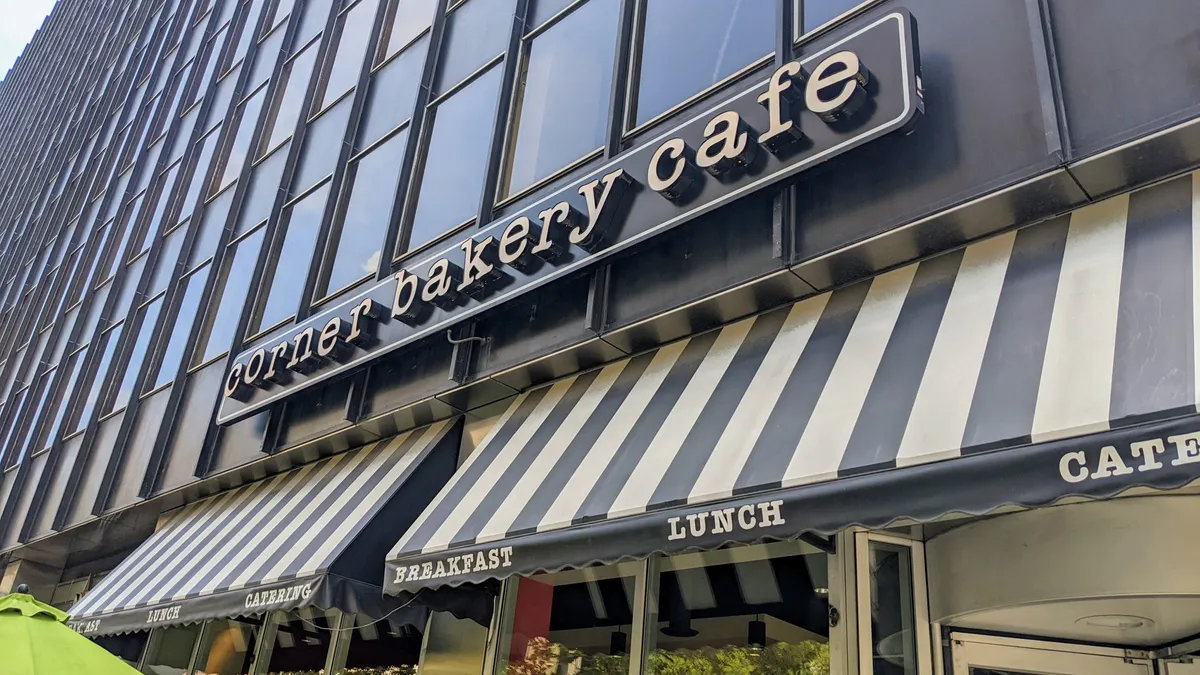
Previous ownership, Hasselgren said, “didn't spend a dime of investment since [Pandya] bought it in ‘20 to ‘23. Not a dime. I mean [there was] broken equipment, ripped carpet, broken awnings. It was bringing it back from scorched earth.”
SSCP and Hasselgren undertook a significant series of changes, restoring bonus programs, ensuring restaurants had accurate profit-and-loss statements, and bringing back processes and routines.
The chain has continued to retrench its store system, Hasselgren said, cutting a few stores with uneconomical leases. But now, the store system has stabilized at roughly 90 units, and Corner Bakery brought on its first new franchisee in nearly a decade, when Gill took over ownership of the chain’s location in Bountiful, Utah.
“SSCP bought the brand out of bankruptcy to kind of get the brand back on its feet,” said Hasselgren. “There was a lot of work to be done at Corner Bakery.”
Corner Bakery’s turnaround is nearly complete
In some ways, Gill joining the company’s franchise system closes out the turnaround period that began when SSCP bought the brand out of bankruptcy in 2023.
That turnaround is clearly reflected in the brand’s average unit volume, which grew from $1.6 million in 2023 to $2.2 million at present for franchised units, Hasselgren said. Much of that improvement came in the first few months of the brand’s turnaround, as SSCP remade its training programs to focus on speed of service and hospitality. Since then, Hasselgren said, the chain has worked on improving its food quality, bringing it back up to previous standards.
“We're almost 100% [done] with bringing back our offering to where it once was from a quality standpoint,” Hasselgren said, though the brand is still looking to make minor tweaks to its coffee program and baked goods.
Food quality and hospitality have been the key strategic goals for the chain during its turnaround. Hospitality and guest experiences have become more important post-COVID-19, Hasselgren said, as consumers seek greater in-person connections. Hospitality is, in essence, a labor question.
“It all comes down to who we hire and if they fit our values,” Hasselgren said. The brand has a specific, yearly training module to help hourly workers and managers develop hospitality.
Corner Bakery has balanced that hospitality emphasis with the adoption of new technologies, including ordering kiosks, and its loyalty program.
“Technology shouldn't impact how the guest feels about their experience, if you have a greeting, if you have a genuine table visit, if you have a ‘thank you,’” Hasselgren said.
The brand is integrating catering orders into its loyalty program, so consumers can use points even on catering orders, Hasselgren said. That change is forthcoming in Q3. Integrating catering with loyalty could lead catering consumers to become more regular restaurant consumers. Catering, which comprises 35% of sales at company-operated stores, is a major channel for Corner Bakery.
As inflation has eaten up much of consumer disposable income, value perception has become more important than ever. Hasslegren said Corner Bakery is running a “Choose Two $6.99” all-day digital special that offers significant value for a deal in fast casual.
That promotion, Hasslegren said, “is driving 28 additional guests per day, per restaurant, which is pretty phenomenal for any kind of a digital offer.”
All of these changes have combined to improve the brand’s unit economics, making it attractive to prospective franchisees.
How refranchising fits into a return to growth
Hasselgren said refranchising makes sense for units located in markets where Corner Bakery’s presence has declined significantly in the past decade.
“We're definitely more fragmented than we were back in my time,” Hasselgren said. “Utah only has three units. Atlanta used to have nine units. Now it has two. Running those from a corporate standpoint is really difficult.”
Corner Bakery likes its area directors to have charge of six to nine locations and to be able to visit all of them in the span of a day. But the declining density of the chain’s corporate footprint means that some of its area directors have to cover impractically large, multi-state zones. In that context, refranchising can turn units over to operators with local market expertise.
“It's better for an owner to run a two-store market, or a three-store market, or even a one-store market,” Hasselgren said. “They're in there seven days a week and they can really leverage the results.”
Hasselgren said the brand is still looking to refranchise select corporate markets in the Northeast and the South. The brand plans to keep its California system, particularly in Los Angeles and Orange Counties, corporate. Corner Bakery’s established brand identity, and the security of SSCP’s backing, have led operators to approach the brand.
“We've had a lot of really organic interest, and that's what spurred our strategy in welcoming in new franchisees,” Hasselgren said.
In the short term, as the brand returns to net unit growth, franchising will account for most of its growth, though Corner Bakery will try to rebuild density in its remaining corporate markets, Hasselgren said. This year may not be the year the brand resumes net unit growth, Hasslegren said.
“This year is more about bringing on new franchisees and remodeling some of our corporate stores to just bring our image [up to date] and some fresh blood in on the franchising side,” Hasselgren. “[Next year] will really be more of a growth year for us.”