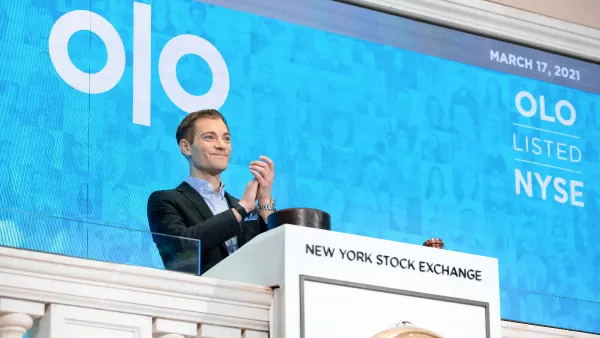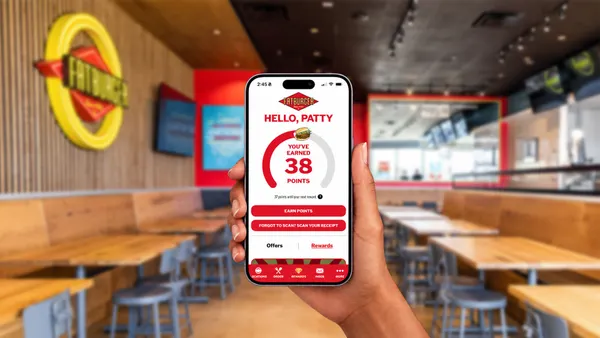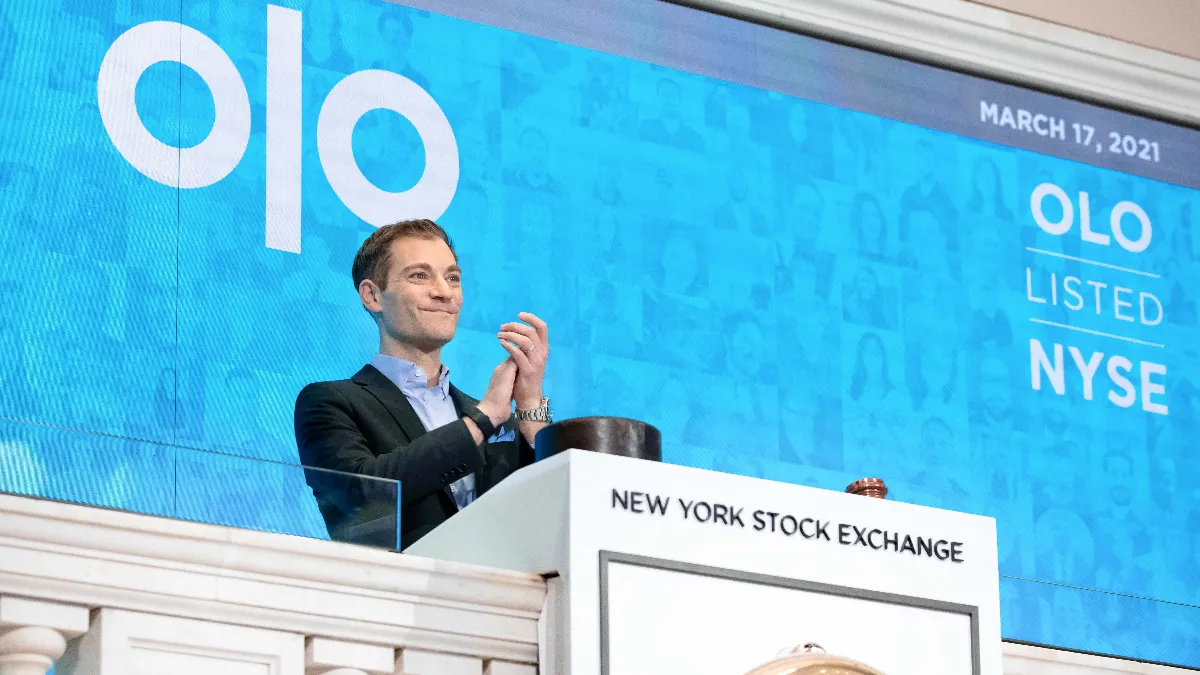
Olo is launching a new, consumer-facing app for delivery and takeout orders that will offer consumers lower prices than they might find on third-party aggregators, CEO Noah Glass said.
“Because the delivery marketplaces charge the restaurants a commission, restaurants have offset that by charging a higher price on the marketplaces,” Glass said. These commissions can range as high as 30% on an order, Glass said, and avoiding them is a major opportunity for consumers to save.
While Olo is charging a 5% network fee to consumers, this is significantly smaller than the menu price markups driven by third-party commissions, Glass said.
“We don't lump it in with taxes and service fees. We say it at the top of the menu, and we say it at checkout,” Glass said.
The app already includes about 20,000 restaurant locations across 250 brands that use Olo, Glass said, and the tech firm plans to bring it to more of its roughly 90,000 locations, before opening it up to the restaurant industry as a whole.
Glass said the app combines the data advantages of first-party delivery with the consumer discoverability and flexibility of third-party marketplaces.
Who delivers the orders?
The app functions as a sort of second-party ordering platform — something between third-party options like DoorDash and Uber Eats and expensive first-party delivery.
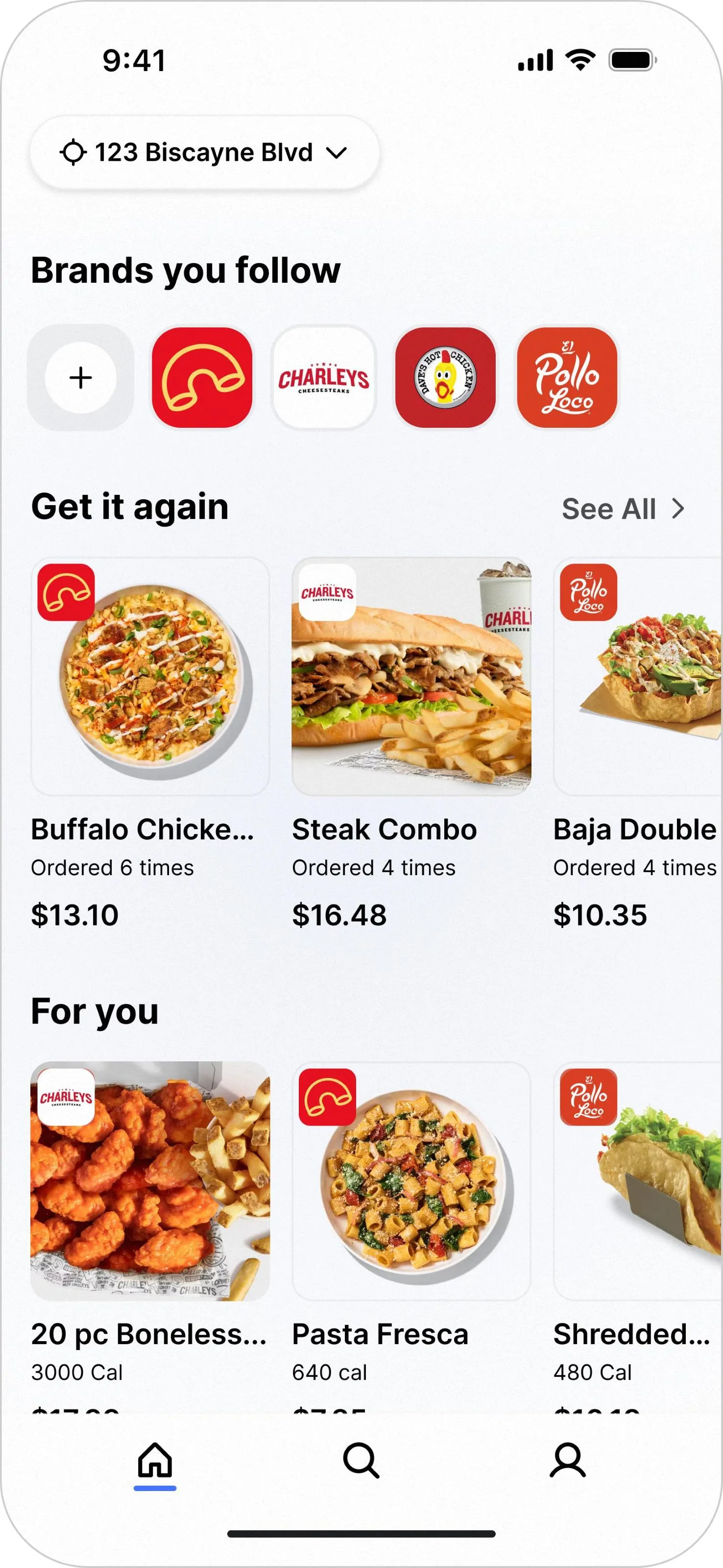
Olo processes orders through its app the same way it processes orders through partner restaurant’s owned-channels.
“The order, when it arrives, looks exactly to the restaurant as if it came through that first-party ordering platform,” Glass said. This means the operators keep the first-party consumer data and can use it to build a more complete picture of consumer behavior.
Delivery orders placed on the app are sent through Olo’s Dispatch tool, which “will ping all the different delivery services that serve that restaurant, and then we'll find the best quote for that order,” Glass said.
Consumers do pay whatever delivery charge the restaurant adds to its orders, while those who might balk at the Olo app’s 5% network fee are free to order through the restaurant’s owned channels. First-party orders remain advantageous to Olo, since they comprise its core business, Glass said.
The orders themselves are fulfilled by drivers, often those affiliated with DoorDash, Uber Eats or other delivery aggregators, though some restaurants have business-to-business delivery services and a few have first-party delivery workers, Glass said.
While it may seem disadvantageous for the delivery aggregators to accept such orders, the aggregators often have white label delivery deals with restaurants under which they charge a set fee, rather than hefty commissions, Glass said. White label delivery deals, like Uber Direct or DoorDash Drive, and tools like the Olo app, come with an ancillary benefit for the aggregators: A greater volume of orders for drivers.
That high flow-through of orders coming through a delivery platform keeps drivers loyal to that service, since they have reliable earning opportunities.
A billion orders a year
But Olo has grander ambitions than peeling the commissions off of some restaurant orders and offering somewhat more data to operators.
Glass wants the app to scale up to a billion orders a year by about 2030, roughly equivalent to what Olo’s entire ecosystem of ordering channels currently processes. Olo can achieve this, Glass said, by tapping into a new pocket of demand.
“There are guests who are loyal to marketplaces and will always order through marketplaces. They just like the variety, they like the selection. They like being surprised by new things,” Glass said.
Another subset of guests are loyal enough to specific brands to consistently order from the brand’s first-party channels, he added.
But Olo is betting that some large portion, perhaps a majority, of consumers, don’t fall neatly into either of those categories.
“There’s this big middle in the normal distribution curve of guests who aren't quite loyal enough to a brand to download their app, don't want to pay 15% to 30% more, find delivery really expensive, but do want to have the convenience of food ordering for pickup and delivery with multiple brands,” Glass said.
Olo’s app is designed to appeal directly to those consumers, offering modest savings, a wide selection and continued convenience.
Glass cautioned that the app was unlikely to cause an immediate shift in industry economics, and it may take a degree of refinement and iteration to hit on a set up that works for a wide base of consumers. But once it does, Olo’s existing user base of roughly 40 million customers could help the tech firm reach significant order volume rapidly.