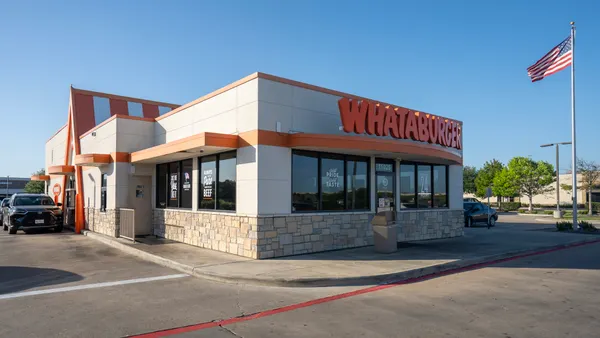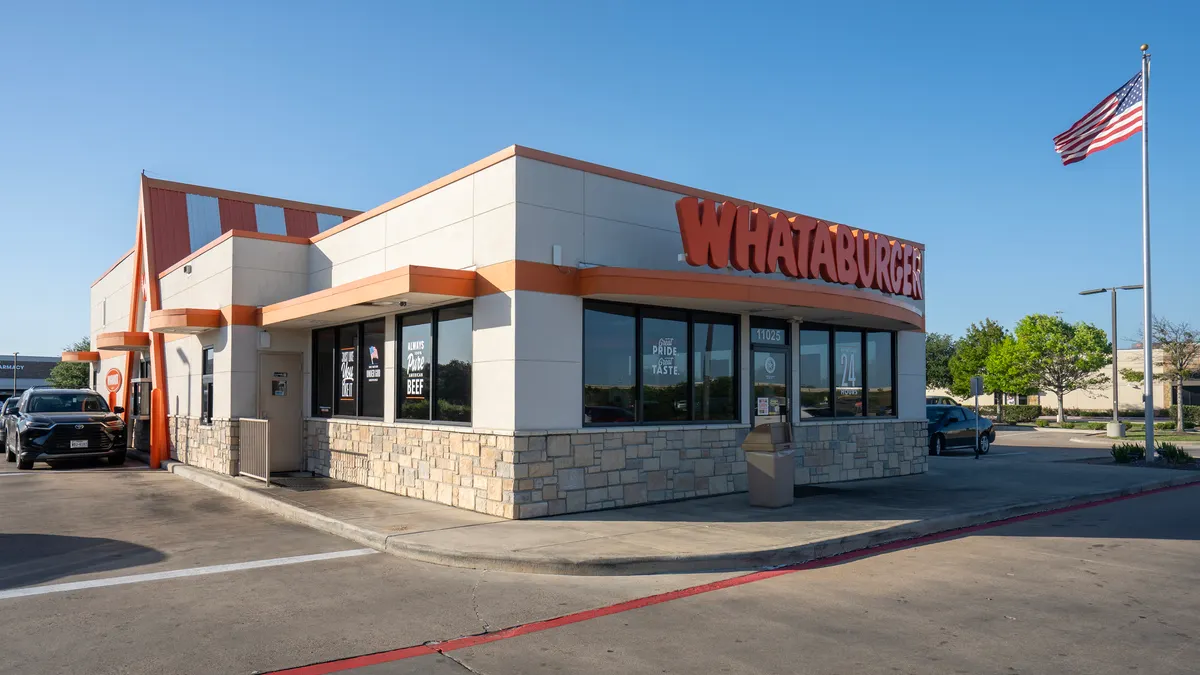
As a Texas-based restaurant chain, Whataburger has traditionally focused on partnering with local, family-operated suppliers in the state. But as the burger chain has grown to more than 1,200 restaurants in 17 states, Chief Supply Chain Officer Todd Huetinck saw an opportunity to diversify the supplier base alongside the expansion.
Huetinck recently marked two years at Whataburger. Since he came on as CSCO in October 2024, the company expanded its beef and chicken suppliers, vertically integrated with beef packers, and started to source non-food products globally — all while maintaining quality and putting out supply chain fires like tariffs along the way.
“We're diversifying to partners that can help us grow and innovate,” Huetinck told Restaurant Dive in an interview. “And the cost savings is a nice bonus.”
With the sourcing adjustments, Whataburger forecasts inflation for 2026 will come in under 2%, which Huetinck said is significantly lower than the national average food basket.
“That's just the result of hard work, working with our suppliers and being creative with how we're approaching buying our food without compromising quality at all,” Huetinck said.
Diversifying beef and chicken
Whataburger’s supply chain strategy pinpoints product categories with the highest inflation rates and prioritizes those for cost reduction over low-hanging fruit, Huetinck said. For the burger chain, that meant tackling beef inflation. Commodity prices for beef and veal products have increased nearly 17% over the last five years, and Huetinck said rising beef prices are among his biggest challenges.
Huetinck and his team examined how Whataburger was buying the product and from where, identifying areas for cost reduction while maintaining the company’s commitment to fresh, never frozen beef.
“Paramount amongst all other things is quality and food safety. So that trumps any cost conversation that ever takes place,” said Huetinck, who, prior to Whataburger, spent 18 years at CKE Restaurants, the parent company of Carl’s Jr. and Hardee’s, focused on supply chain management and quality assurance.
Whataburger diversified from smaller Texas-based suppliers to larger ones across North America. Where possible, it vertically integrated its supply chain to work directly with beef packers, which helped in sourcing large volumes and moving them efficiently through the supply chain, Huetinck said.
“It's been a very similar playbook in the other product categories outside of beef,” Huetinck said.
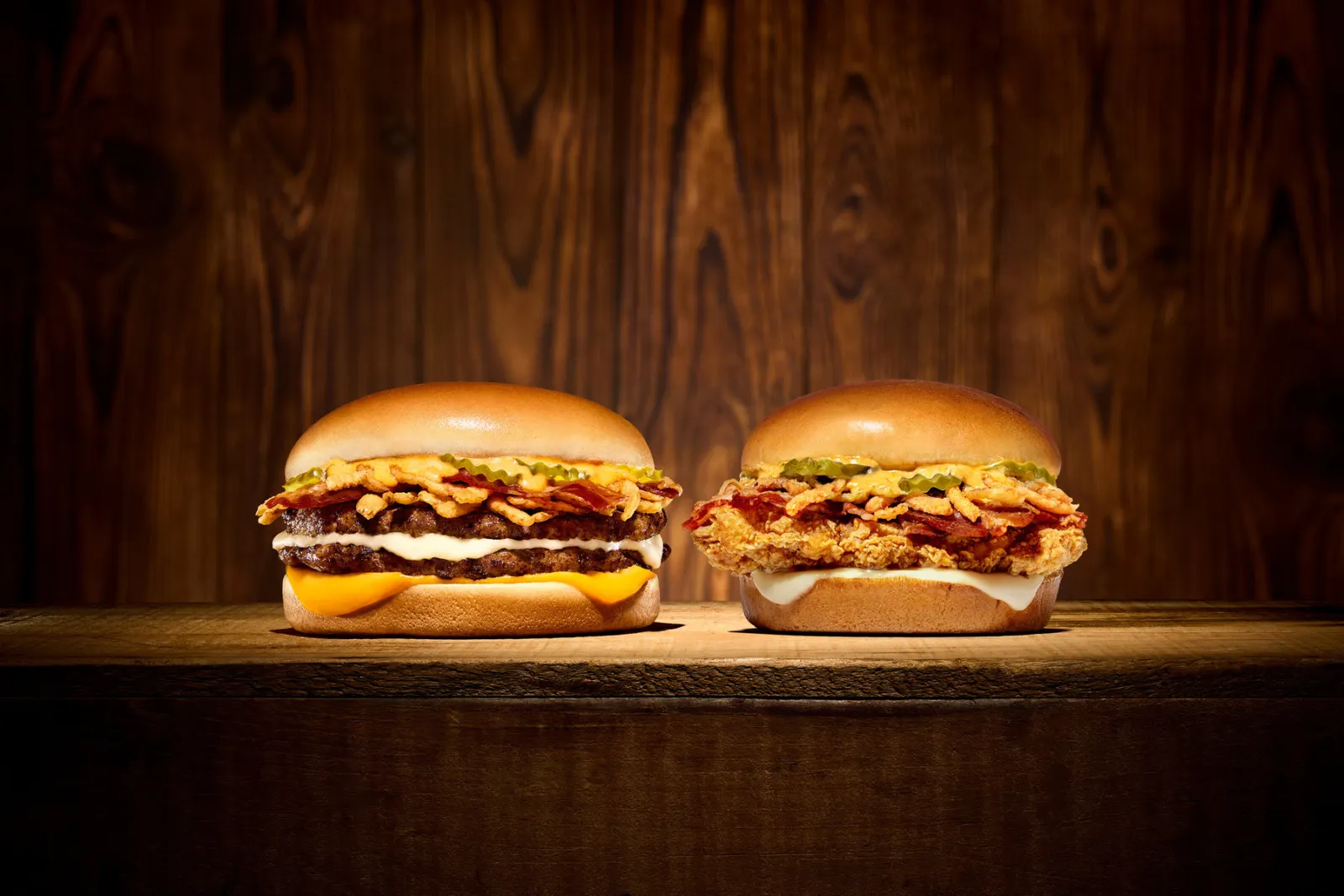
In the chicken category, Whataburger doubled the number of poultry suppliers it sources from, in response to consumers’ protein craze and desire to consume chicken. The chain wasn’t simply looking for more volume — it wanted “innovation partners that can help us grow,” Huetinck said. The restaurant released new chicken sandwiches this year, including the Hot Honey Crisp Whatachick’n Sandwich and the Bacon Wrangler Chicken.
Just as with beef, quality is critical for chicken. Whataburger's chicken tenders are made from tenderloins, “not breast meat that's cut into pieces,” Huetinck said.
The same principles of food quality and cost mitigation guided Whataburger's More for $4 menu, which debuted this summer.
Together with Whataburger's marketing and finance teams, Huetinck and the supply chain team researched what consumers wanted in a value menu, assessed the current and forecasted future cost of ingredients, and found menu items that it could price at $4 without sacrificing margins or quality.
“Those aren't new value-engineered menu items,” Huetinck said. “Those are our original high-quality menu items.”
Long-term strategy
While Whataburger sources 100% of its food products from suppliers in North America, Huetinck expanded the supply base to include global suppliers for staff uniform textiles, food packaging and indirect components, such as restaurant equipment and construction materials.
“The level of innovation and capabilities are actually greater when you leave North America,” Huetinck said, referring to indirect products.
Even with overseas suppliers, Whataburger had “very minimal impact” from tariffs because it worked proactively with suppliers to source products from their manufacturing facilities in non-impacted countries, Huetinck said. Whataburger also maintained a safety stock of products in the U.S.
“We were never in a just-in-time situation when the tariffs were at their peaks,” Huetinck said.
The other big risk front of mind for supply chain executives, including Huetinck, is the high cost of diesel fuel and trucking.
“The level of innovation and capabilities are actually greater when you leave North America.”

Todd Huetinck
Chief Supply Chain Officer at Whataburger
Whataburger can alternate between rail and direct trucking for ingredients such as french fries. Fries are durable, they come out of the Pacific Northwest, and the infrastructure exists to move them by rail, Huetinck said. Not many ingredients have that same transport mode flexibility, he added.
When trucking costs spike, the restaurant chain examines how far products are traveling from warehouses to restaurants and sees if it can reposition freight in the short term to reduce truck miles.
Huetinck warned, though, that focusing exclusively on short-term risks can lead to “a pretty dangerous death cycle.”
He keeps a green ping-pong paddle in his office, and anytime someone holds it, they talk about long-term, creative ideas that move the supply chain forward, not daily firefighting.
Huetinck makes sure to carve out time dedicated to this kind of strategic thinking — “because there's always going to be those fires that crop up in supply chain.”