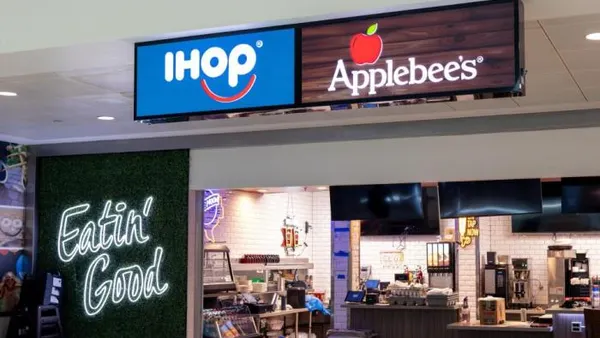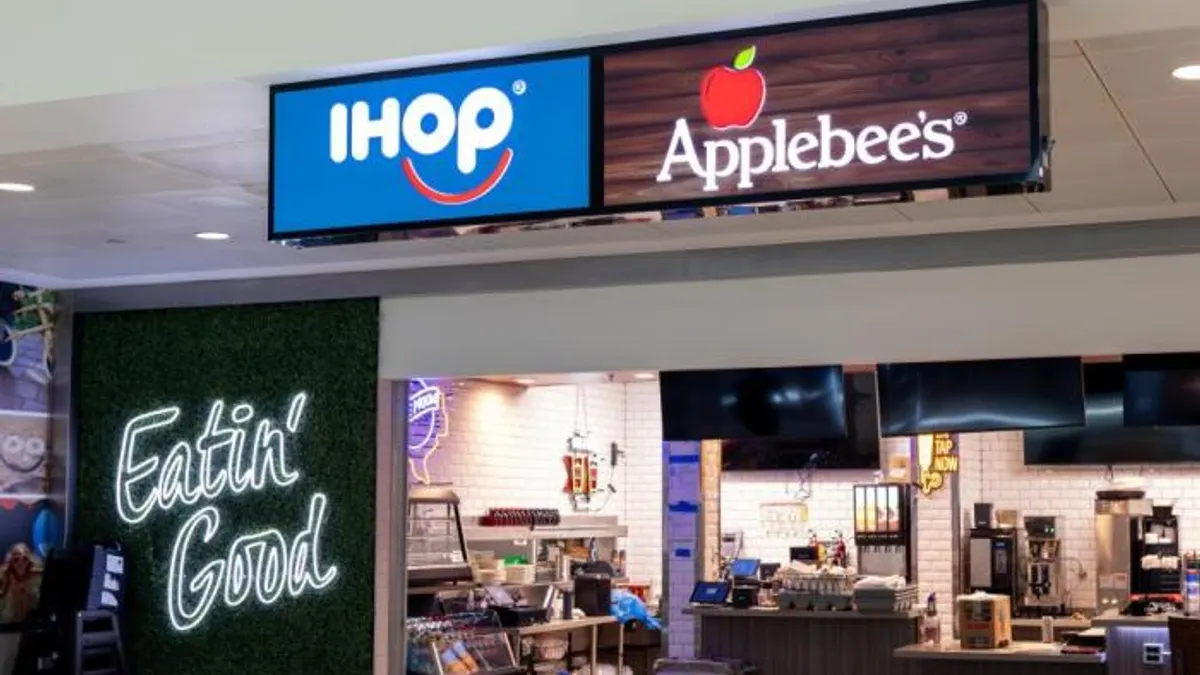
Dine Brands’ board of directors has adopted a stockholder rights plan, colloquially known as a poison pill, following reports that activist investors were mulling a takeover of the parent company of Applebee’s and IHOP, according to a Thursday press release.
The poison pill would allow stockholders to buy shares at a 50% discount if activist investors amass a 10%or-greater stake or a passive investor builds up a 20%-or-greater stake. The plan would last until Oct. 27, 2027, and grant rights to shareholders with a stake in the chain before Nov. 9, 2026.
Dine CEO John Peyton said in an emailed statement that the plan “is a standard practice to ensure all stockholders are protected from opportunistic share accumulations that could lead to an effective control position without stockholders receiving an appropriate premium value.”
The poison pill would give Dine’s board time to evaluate options and make an informed decision to maximize shareholder value, Peyton said. The company is confident in its long-term strategy, as well.
“The Board and management team of Dine are executing against a strategy to unlock our brands’ full potential by investing in long-term initiatives – such as our dual brand concept – that are driving results,” Peyton said.
On Wednesday, Bloomberg reported that a group of investors, including Arkhouse Management and Cobblers Cove Capital, were trying to buy Dine. The restaurant company said it took the poison pill following those reports. Bloomberg reported the would-be acquirers have “economic exposure to almost 20% of Dine Brands’ shares through swaps and other instruments.”
Neither Dine nor the would-be acquirers confirmed the potential share price, which Bloomberg reported at $39. That’s a premium on Dine’s stock, which closed at $32.01 on Oct. 27, the last trading day before reports of the potential acquisition caused a spike in volume and price, company data shows.
The potential acquisition move comes at a moment when many restaurant brands are pursuing turnaround plans. Some, like Pizza Hut, have gone private to avoid the short-term pressures that public markets can exert on businesses. Others are considering bids that would take them private. Wendy’s, notably, is considering a $1.4 billion bid it received earlier this week; the burger chain has not adopted a shareholder rights plan in relation to this particular bid. Last year, Jack in the Box took a poison pill to stave off a takeover bid from Sardar Biglari, a prominent restaurant activist investor.