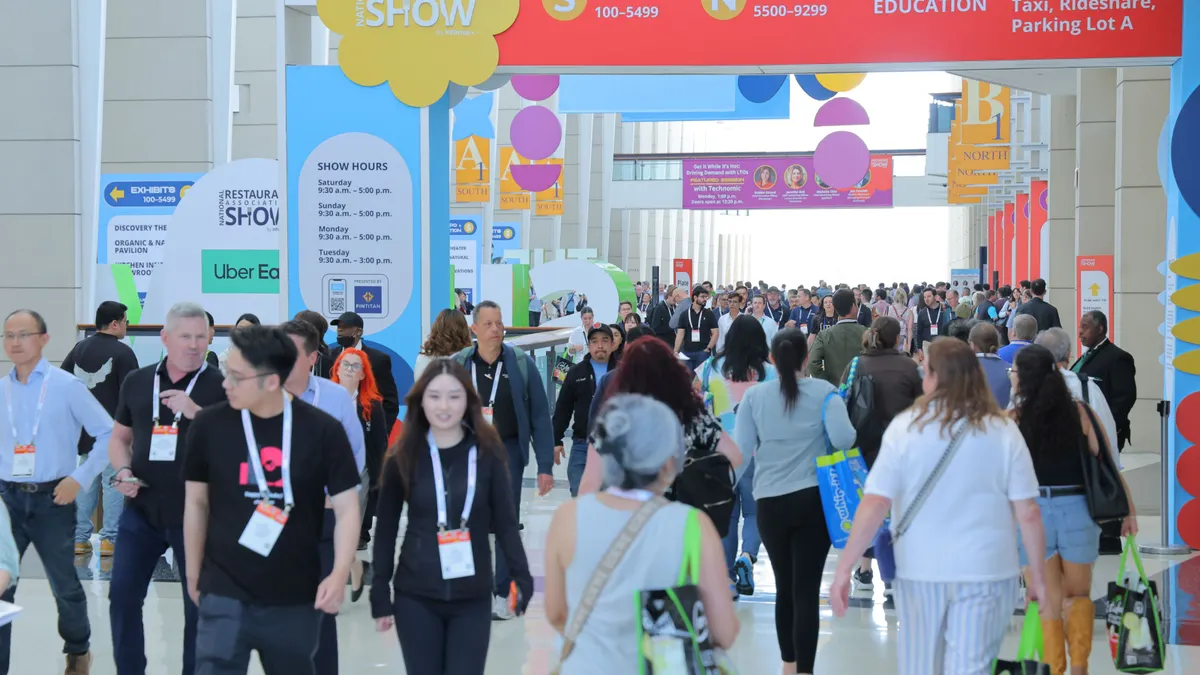
CHICAGO – At the National Restaurant Association Show, Restaurant Dive made a point of closing our interviews with a simple question: “When people talk about the restaurant sector right now, what’s one thing they’re getting wrong?”
Almost universally, at least among restaurant tech leaders, the answer this year was “artificial intelligence.” This skepticism didn’t correlate, however, with a lack of enthusiasm for the technology on the show floor.
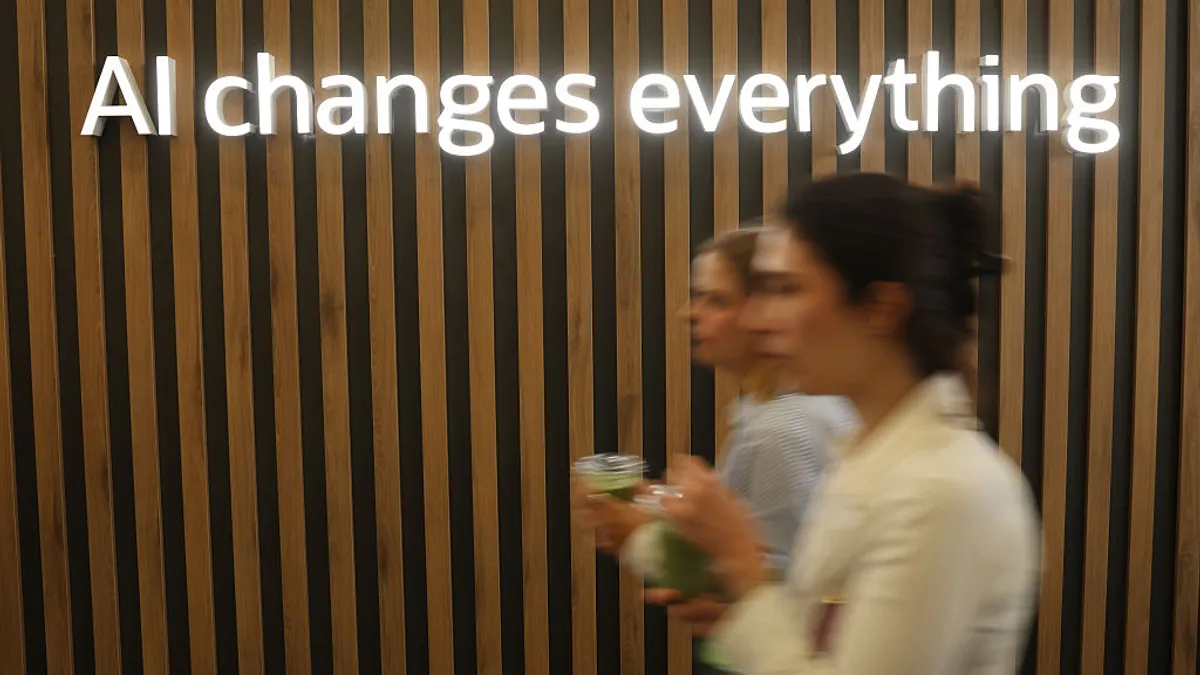
“AI is the biggest thing of this entire show this year,” said James Schonzeit, Square’s head of food and beverage.
Uncertainty abounds over scale and use cases
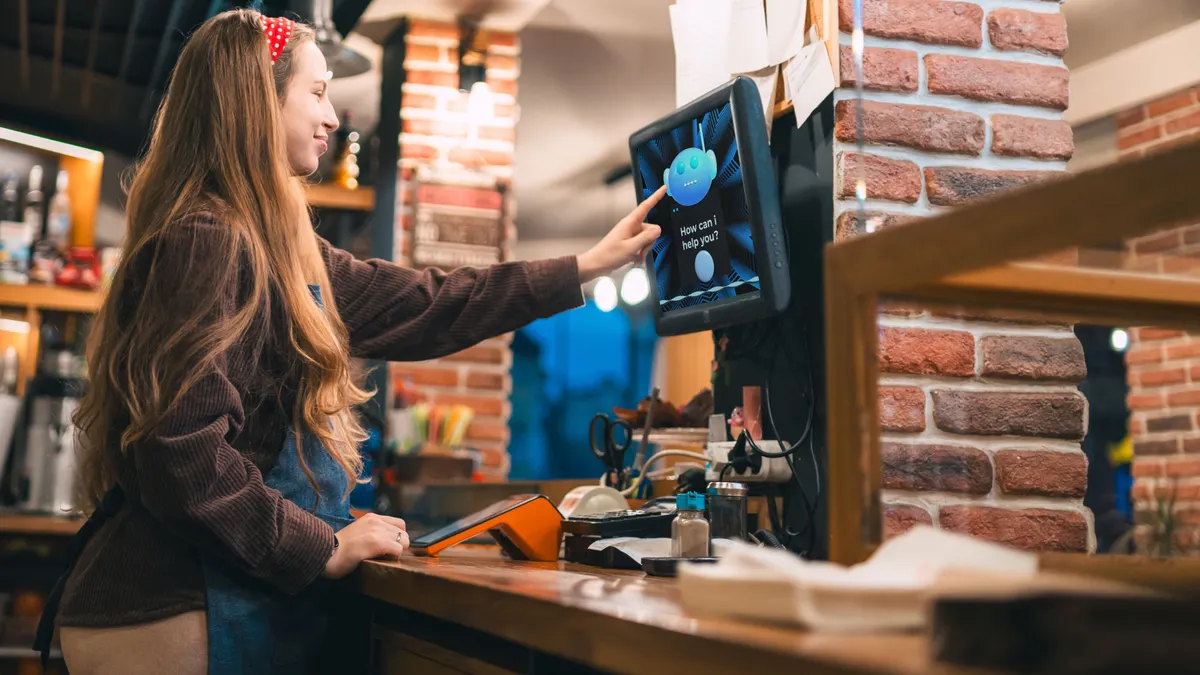
It’s far from clear how the suite of technologies called AI — large language models, machine learning, computer vision, sophisticated analytics algorithms and other tools — will impact restaurants.
The speed at which AI is changing makes its ultimate use cases unpredictable. Just this month, Google announced it was moving away from traditional links-based search results in favor of AI summaries, while Starbucks killed off its AI inventory control tool.
“No one can tell you what's going to be in place a year from now. They can tell you what they think, like Microsoft [AI CEO] saying all white-collar work will be done by AI in 18 months, that’s obviously bullshit,” said Brendan Sweeney, CEO and co-founder of Popmenu.
Part of the problem, Sweeney said, is that overadoption of large language models rests on shaky fundamentals. The cost of AI tokens required to operate coding services can exceed the salaries of the workers the technology purports to replace, he said.
At the same time, the slow pace of data structure construction and rising cost of electricity make it unlikely that AI services will see a decline in cost, Sweeney said. With OpenAI pursuing an IPO, AI developers could face greater pressure from investors to turn a profit — something OpenAI has failed to do.
Instead of rushing to embrace an unproven tech, Sweeney said operators should make sure the solutions they’re considering actually produce operational efficiencies.
“Being first is not always the best,” Sweeney said. “Being right and doing it the right way is the best.”
Restaurant technology has to emphasize reliability, said Kelly Esten, chief marketing officer at Toast
“There's some parts of running a restaurant that are all about reliability,” Esten said. AI can’t replace the core aspects of restaurant operations or restaurant technology, Esten said. Instead, AI can augment robust underlying programs, such as improving workflows and speed of service.
A limited solution to limited problems
Some proponents “think an overdependence and AI is going to fix everything,” said Kevin Bryla, SpotOn’s chief marketing officer.
Instead, Bryla said, AI that’s embedded in restaurant tech platforms can give operators better insights into operations strengths and weaknesses.
“AI at its best is going to serve up an option to an operator to make an informed decision,” Bryla said.
Esten echoed this argument, stating that for AI to be effective it can’t add tasks for operators to complete.
“It can't be another thing to do. It has to actually do some of the work for you,” Esten said. Some of that automation could include some administrative, marketing, scheduling and supply ordering tasks, Esten said.
AI systems, Schonzeit said, are limited by the data they can draw from. For restaurants, this can pose a problem.
“If you can only see one part of your business and not the other, you're not going to make the best decision, and you're not going to be able to do things to bring customers back,” Schonzeit said.
Some restaurant tech firms are building solutions that enclose information or erect walls around valuable data sets, which keeps operators from gaining that insight and visibility into their operations, he said.
Old school solutions to guest-facing problems
Instead of a cure-all for operational ills, AI can complement the oldest of all investments: Labor power.
“There's a lot of great technology solutions here, but technology cannot replace the consumer experience,” said R.J. Hottovy, head of analytical research at Placer.ai. “When we look at those companies that have done more investment in labor, whether that's Starbucks or somebody else, Cava is a good example, they're the ones who win right now.”
Bryla said that AI can help present operators with choices and context, but that it’s up to restaurant owners and managers to turn those insights into real results.
“It’s what you do with information that makes a difference,” Bryla said.
Esten said that an effective technology strategy was one that freed up workers and managers to focus on in-restaurant operations.
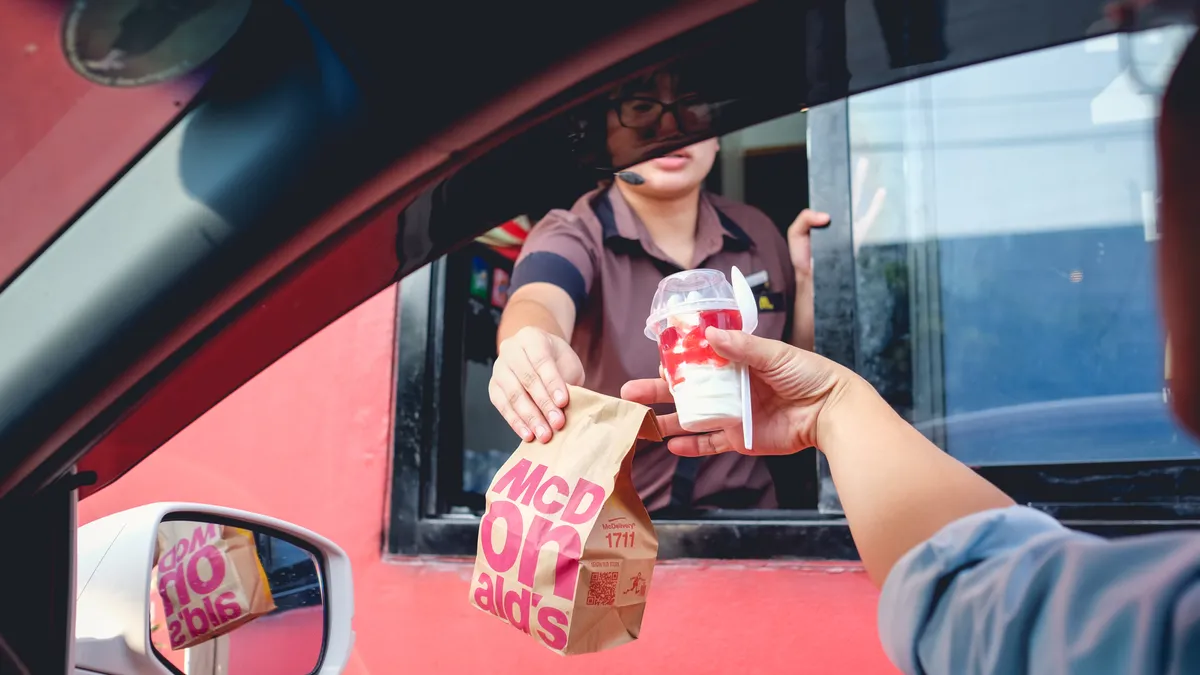
While testing and developing new technologies remains a key element of most major chain’s strategies, some have pulled back on the use of different forms of AI in recent years. In 2024, McDonald’s shut down its drive-thru voice AI test with IBM.
Taco Bell reconsidered the deployment of similar technology last year, though Yum Brands is continuing significant investments in unifying its restaurant tech into an AI-backed system. However, Yum recently faced a lawsuit from a Pizza Hut franchisee that claimed its tech strategy resulted in $100 million in lost sales, as a result of DoorDash drivers leaving orders waiting so they could pick up multiple pies in a single trip.
Many chains are still working to integrate new technology into their operations in search of efficiency. Shake Shack, for example, is using AI to identify and alert managers to potential inefficiencies. Earlier this month, Culver’s began rolling out computer vision to measure service execution and vehicle flow in its drive-thrus. In April, Dairy Queen expanded a voice AI drive-thru test to more locations in partnership with Presto.
Sweeney cautioned against underplaying AI as much as he warned against overplaying it, however.
“What people are getting wrong is [thinking that] it's either going to be nothing or it's going to be everything, and [they should] treat it like any other innovation,” Sweeney said.