Dive Brief:
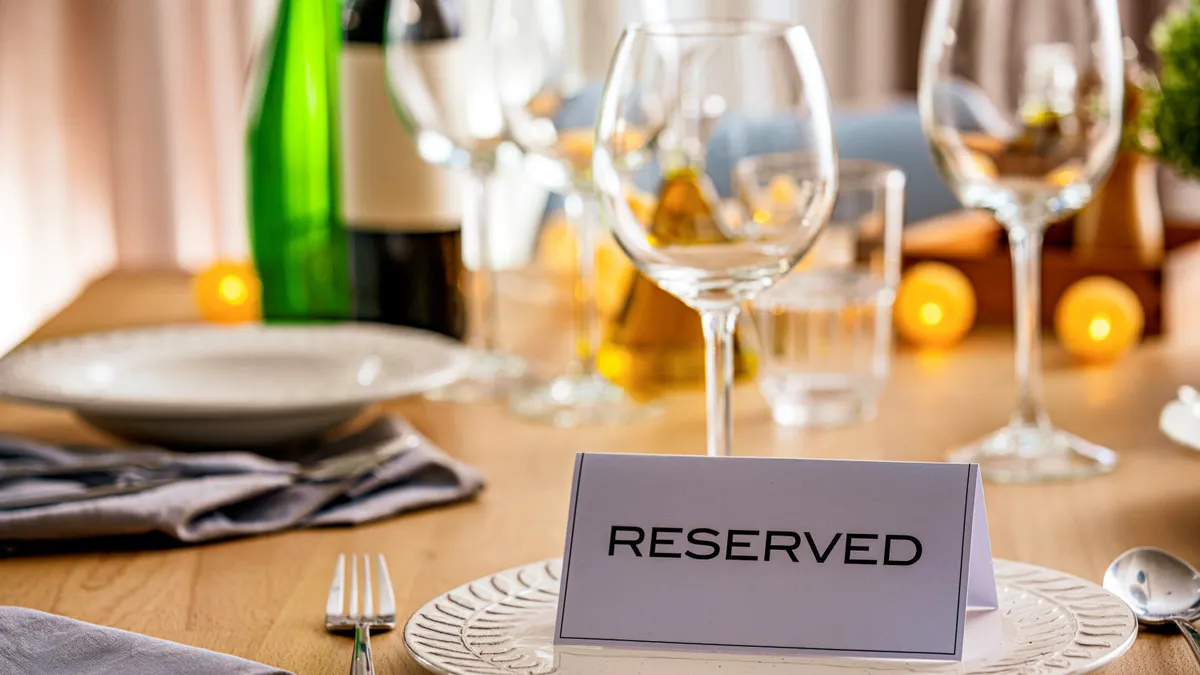
- OpenTable launched a new loyalty benefit Wednesday called Gold Tables that gives its Gold tier rewards members easier access to tables at participating restaurants, according to a press release.
- At least 500 restaurants across 50 cities have already signed up to partake in the program, including “Soothr in New York City, Elena's in San Francisco, Saffy's in Los Angeles, Fiorella in Philadelphia and Esme in Chicago, with new restaurants added regularly,” according to the press release.
- Gold Tables is an expansion of the benefits already offered to the reservation service’s Gold Status customers, including early alerts for last minute table openings and a six month Uber One membership.
Dive Insight:
By offering consumers more perks and giving restaurants an additional way to engage customers, OpenTable is bringing some of the loyalty innovations and advantages available to larger chains to smaller operators and fine dining establishments.
OpenTable first added Gold status to its loyalty system last year rewarding diners who complete six OpenTable reservations within 12 months.
Gold Tables “rewards our most loyal diners with something increasingly valuable: real access to sought-after restaurants,” said John Tsou, OpenTable’s senior vice president of growth.
The program grants “access to primetime reservations at participating restaurants” by setting aside a portion of table inventory at participating restaurants, according to the program’s Terms and Conditions. However Gold Tables that are “not booked prior to the reservation date and time may be released to general OpenTable inventory.”
The reservation service said that “sought-after reservations in select cities [have] become increasingly competitive,” in the recent past.
While the shift toward experiential dining is one explanation for competition around reservations, there are also more negative influences. Reservation reselling has become an issue for many restaurants, resulting in no-shows.
OpenTable recently altered its terms of service to require partner restaurants to list it as their primary table management system, ostensibly to combat unauthorized scalping.
Reselling has become such a significant problem that the Independent Restaurant Coalition is including regulation of it in its political priorities.
Operationally, a more comprehensive loyalty scheme could also help offset the scalping problem since “diners with Gold status typically dine out five times as often, spend more, no-show 50% less frequently,” according to the press release.