Dive Brief:
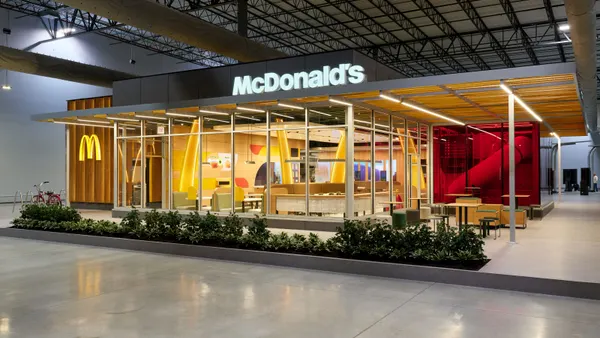
- McDonald’s plans to invest about $8.5 billion as part of its previously announced McDonald’s > Next strategy to provide partner support through 2036 to accelerate restaurant modernization, deployment of technology and operational improvements, according to a press release issued on the chain’s investor day.
- The chain’s investment includes about $5 billion by 2030, which will consist of rent relief and capital support.
- McDonald’s is targeting about 250 basis points of gross restaurant-level efficiency improvements that will result in about $100,000 in annual cash flow benefits to the typical U.S. restaurant, the company said in an emailed press release. The bulk of this benefit will be seen on the restaurant’s bottom line over time, the company said.
Dive Insight:
The long-term Next strategy could help improve quarterly results over time through enhancements to menu quality, customer relations and employee experiences, as well as restaurant modernizations. During the second quarter, for example, McDonald's posted lower than expected same-store sales. CEO Chris Kempczinski attributed a traffic slowdown in the U.S. to execution problems following several menu deployments that slowed speed of service and decreased customer satisfaction.
The company’s “Under $3 Value Menu” also struggled to resonate with customers during the quarter with about a third of franchisees setting prices too high for the program to be effective, Peter Saleh, managing director and restaurants and food distributors analyst for U.S. Bancorp BTIG, said in a Sept. 16 report emailed to Restaurant Dive. A majority of customers who reduced their frequency in Q2 had previously purchased buy-one-get-one items or used a digital offer, both of which were eliminated as part of the new value platform.
McDonald’s > NEXT will refocus the company on more consistent execution and modernize the system while giving it momentum to grow. The fast food chain expects a 2.5% contribution to systemwide sales growth in 2027 from new units, which will moderate to 2% by 2030.
The company is also targeting a 1.5 percentage point increase in market share gains for chicken and beverage categories by 2030, while maintaining a leading position with beef.
“McDonald’s has the unmatched scale, customer insights, brand loyalty, and operational capabilities to not only adapt to the next wave of change in our industry, but to turn it into an advantage,” Kempczinski said in the investor day press release.
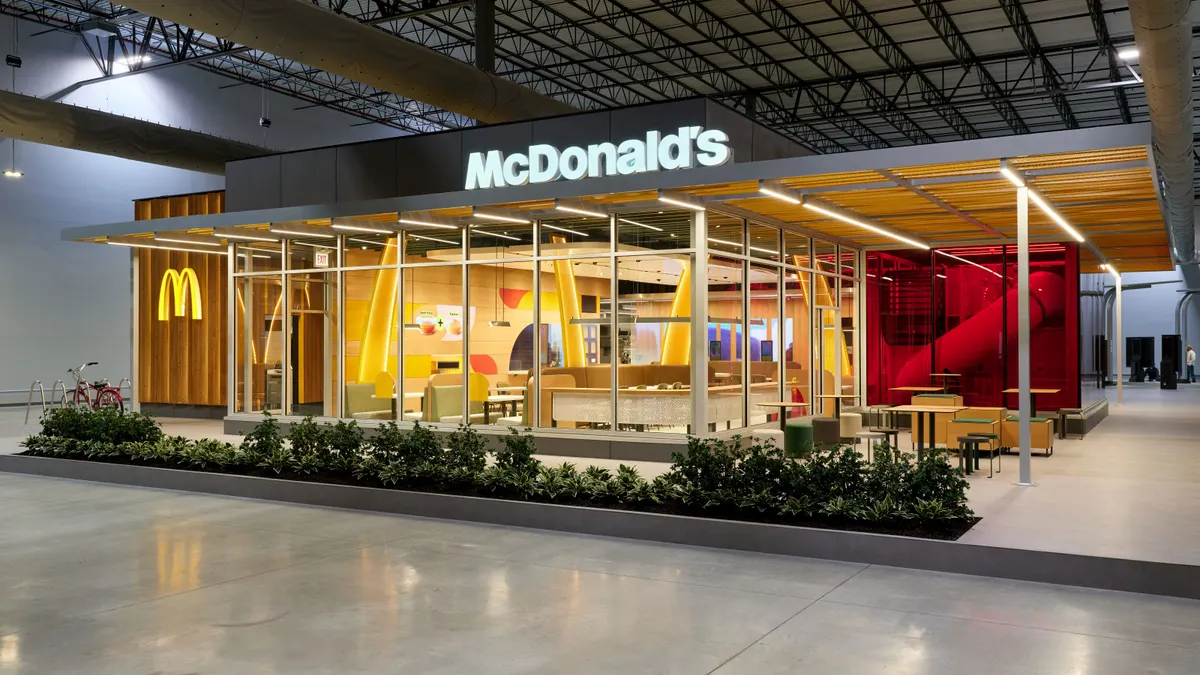
The company will update its restaurants, simplify operations and deploy generative artificial intelligence enabled ArchIQ in hopes of achieving about 250 basis points of gross restaurant-level efficiency in the U.S. and internationally operated markets.
McDonald’s also launched Make it Golden, a systemwide commitment to improving the customer experience with better food quality and hospitality, the company said. Under this program, the chain will begin re-training employees to improve customer experience on Oct. 5.
“We are confident that executing across the key components of NEXT will unlock stronger restaurant economics, generate attractive returns for the Company,” Kempczinski said.
Other chains have already seen significant turnaround in frequency, sales and guest satisfaction after making large investments. Burger King invested hundreds of millions as part of its Reclaim the Flame multi-year brand overhaul. As part of that strategy, the RBI brand improved the ingredients of its Whopper, renovated many of its restaurants, deployed various technologies and boosted marketing spend. By Q2 2026, the chain posted some of the strongest same-store sales gains among the QSR category.