McDonald’s is reportedly facing pushback from franchisees over the cost of its $800,000-per-store remodels that are part of its Next strategy to improve the brand. The chain was also sued last week over claims that it was using AI to determine how much a customer is willing to pay and forcing franchisees to use the tool to set prices, which McDonald’s vehemently denied.
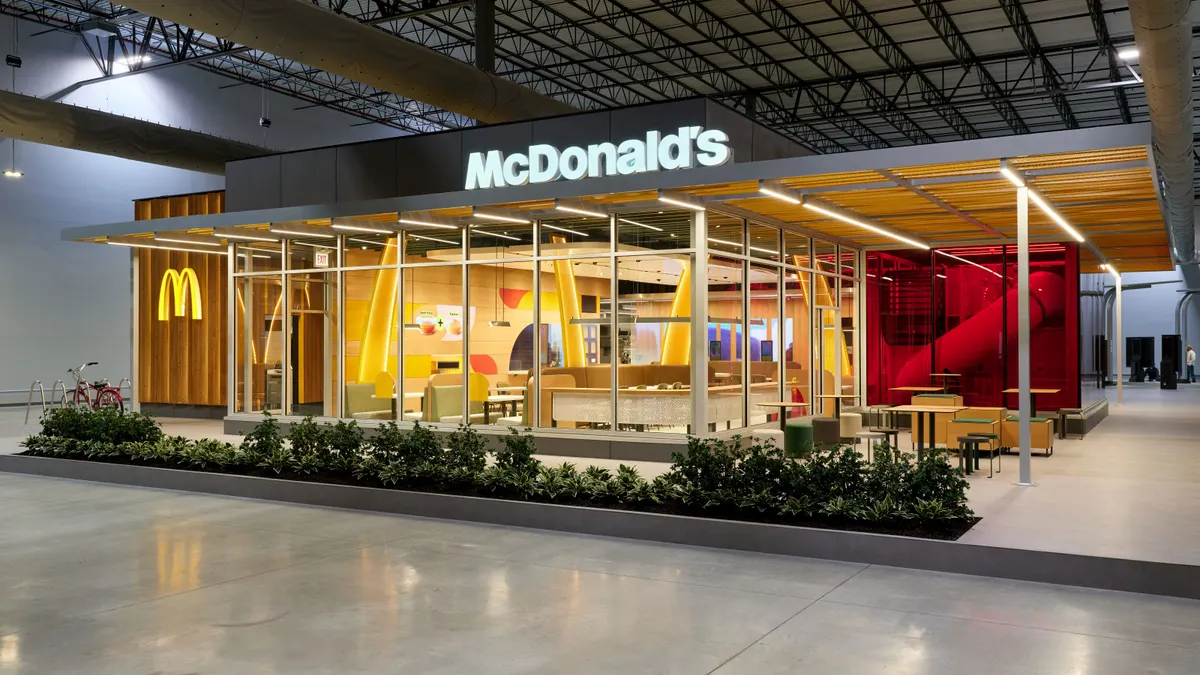
Next includes a plan to invest $8.5 billion in partner support through 2036 to accelerate restaurant remodels, deployment of technology and operational improvements. This investment includes about $5 billion by 2030 for rent relief and capital support. The initiatives are expected to lead to 250 basis points of gross restaurant-level efficiency improvement that will result in about $100,000 in annual cash flow benefits at a standard U.S. restaurant.
However, some franchisees reportedly said the remodel cost surprised them and were concerned over the lack of details, according to Bloomberg. With franchisees currently facing traffic declines, operators reportedly said they are concerned about taking on more debt to pay for redesigns. Operators wanted to hear about the potential sales lift, as well.
Some analysts have also questioned franchisees’ ability to execute on this ambitious plan, which also includes adopting new menu items. Bernstein analyst Danilo Gargiulo said in an emailed report that along with franchisees facing traffic issues, inflation is also high and pricing power is limited as consumer spending is challenged.
“[This] mak[es] us ponder the willingness of franchisees to underwrite a plan that involves entering uncharted territory that could be operationally complex,” Gargiulo said, referencing hand-breaded chicken. “In other times and with a different franchisee base we would have had no doubt on the success of the strategy, but execution remains key.”
BMO Capital Markets analyst Andrew Strelzik said in an emailed report that while the investment cost and franchisees’ ability to reinvest was “better than we anticipated,” the fast food giant has yet to provide details on remodel timing or pacing, investment spend, general and administrative expenses, or new platforms, “limiting visibility of [Earnings Per Share] in the coming years making it hard to time a comp recovery.”
In response to questions about how it is working with franchisees with its Next initiatives, McDonald’s referred Restaurant Dive to its Investor Day presentation.
“Importantly, those investments will be phased over time,” CFO Ian Borden said during the presentation. “The technology, kitchen and operational capabilities will be adopted as they become available. Design elements will largely align with the normal remodel cycle. So franchisees can invest progressively as capabilities are deployed and benefits are realized.”
McDonald’s will work alongside franchisees “for a portion of the incremental NEXT investments through a mix of rent relief and capital support,” Borden added.
“The mix and level of support will vary by market and be flexible and targeted to the realities that franchisees face locally,” Borden said. “The principle is simple and consistent with past practice: the full Restaurant > NEXT program should generate attractive returns for both our franchisees and McDonald's.”
Lawsuit claims price fixing scheme
Media reports alleged that McDonald’s is using artificial intelligence to determine how much a customer is willing to pay for menu items based on data from millions of daily transactions from about 14,000 U.S. locations. Those reports led to a lawsuit filed by a consumer last Friday.
The lawsuit claims that McDonald’s use of an AI-backed pricing tool violates antitrust laws, and that the chain pressures franchisees to use the tool to set prices and tracks franchisee deviations from the pricing algorithm’s recommendations.
“Franchisees’ authorization to continue operating their stores, expand the number of stores they operate, and ultimately renew their stores at the expiration of the franchise agreement is dependent on their level of compliance with McDonald’s-mandated business policies, practices, and procedures,” the lawsuit alleged.
McDonald’s has also benefited from the pricing tool, with menu prices increasing by 40% between 2019 and 2024, per the lawsuit.
“The system itself, according to public reporting, warns in the pricing portal’s terms of service that fellow users may be competitors of each other and must comply with the antitrust laws,” the lawsuit said. “Instead, McDonald’s and its franchisees have together colluded to fix prices for consumers. This is an unreasonable restraint of trade and serves no legitimate procompetitive objective.”
The lawsuit said that this has resulted in consumers paying higher-than-average prices over time as well as “anticompetitive prices during the class period.”
Earlier this week, McDonald’s posted on its website that many media reports highlighting its pricing tool were false. It said it doesn’t use dynamic pricing and only gives franchisees the tools that can help them make informed decisions on pricing.
“McDonald’s can provide franchisees with tools, resources, research and recommendations, and we encourage them to focus on delivering value for customers. But a recommendation is exactly that: a recommendation, not a mandate,” the company said. “Franchisees are not required to accept a pricing recommendation.”
The chain reiterated that it has helped franchisees run their businesses for the last 70 years and that it only wants operators to have the necessary tools to independently determine menu prices.
“The bottom line: The tool provides information. People make the final pricing decisions,” the company said.