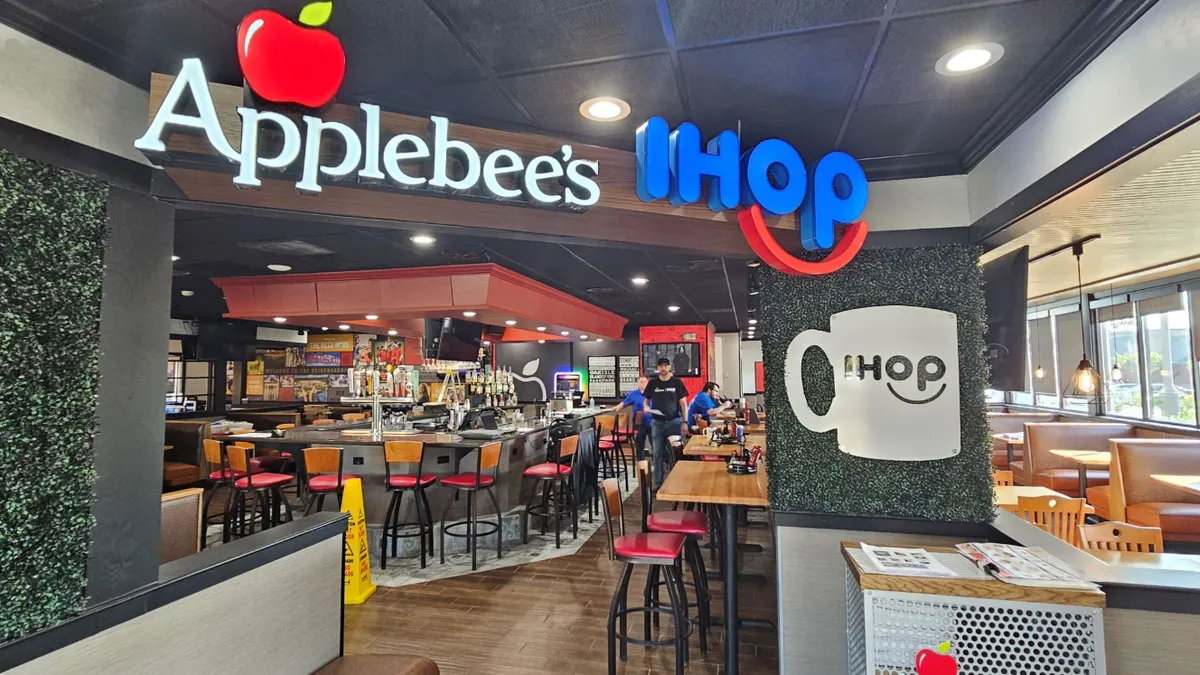
As Dine Brands expands its dual-branded restaurants, it is also accelerating its unit growth, remodel initiatives and real estate relocations.
The company opened 24 units during the first quarter, compared to just 10 a year ago, Dine Brands CEO and Applebee’s President John Peyton said during an earnings call.
Earnings results from Applebee’s, IHOP and Fuzzy’s outperformed the industry average reported by Black Box Intelligence, Peyton said. Sales and traffic were driven by value-oriented menu strategies and more premium offerings.
“Development remains a key priority for long-term growth driven by our dual-brand formats, the Applebee's Lookin’ Good remodel program and targeted investments in our company-owned portfolio,” he said.
IHOP continues to open 30 to 40 restaurants per year and Applebee’s will open a handful of new locations, which is more than it has opened in the last few years, Peyton told Restaurant Dive in an interview. The company is also on track to reach 80 dual-branded U.S. units by the end of the year.
“What’s impressive is that about 90-plus percent of the restaurants that IHOP opens are with existing franchisees, doubling down and building more restaurants, which says a lot about their commitment to the future of the brand,” Peyton said.
Building and converting successful restaurants is all about site selection, Peyton said. Dine Brands will consider everything from the demographics and income in the market, to existing businesses and competition in the market, he said.
Two of Applebee’s recent openings were relocations within existing markets and sales have already increased by over 50% compared to the previous locations, with one seeing a 95% bump and another seeing a 60% increase, he said.
“Many of our restaurants are at the end of 20- and 30-year leases in the same location. Over two or three decades, markets do move and they do shift,” Peyton said. “Our approach with our franchisees is if a restaurant … is not as visible as it once was, we will always say, yes you can close in exchange for opening [elsewhere] within 12 months.”
Remodel initiatives
Remodels are also key to the company’s development strategy, Peyton said. Refreshes are necessary in the restaurant industry because if a building looks outdated, then the staff don’t care about the business.
“If [staff] don’t care about torn seats or scratched walls, how much do they care about the food,” he said. “Our franchises understand when you’re in the brick-and-mortar business, you have a commitment to keeping your restaurant fresh and current. And that’s really important, whether it be a hotel or bar or restaurant or bowling alley. It’s got to look new and clean and fresh.”
Applebee’s completed 11 remodels during the quarter through its Looking Good program, Peyton said during the earnings call. Redesigns have led to mid-single-digit percent sales lifts. Applebee’s is in its second year of this remodel drive, he said, with enthusiastic franchisee participation. The chain expects that by year's end, about 40% of its stores will be considered current, Peyton said.
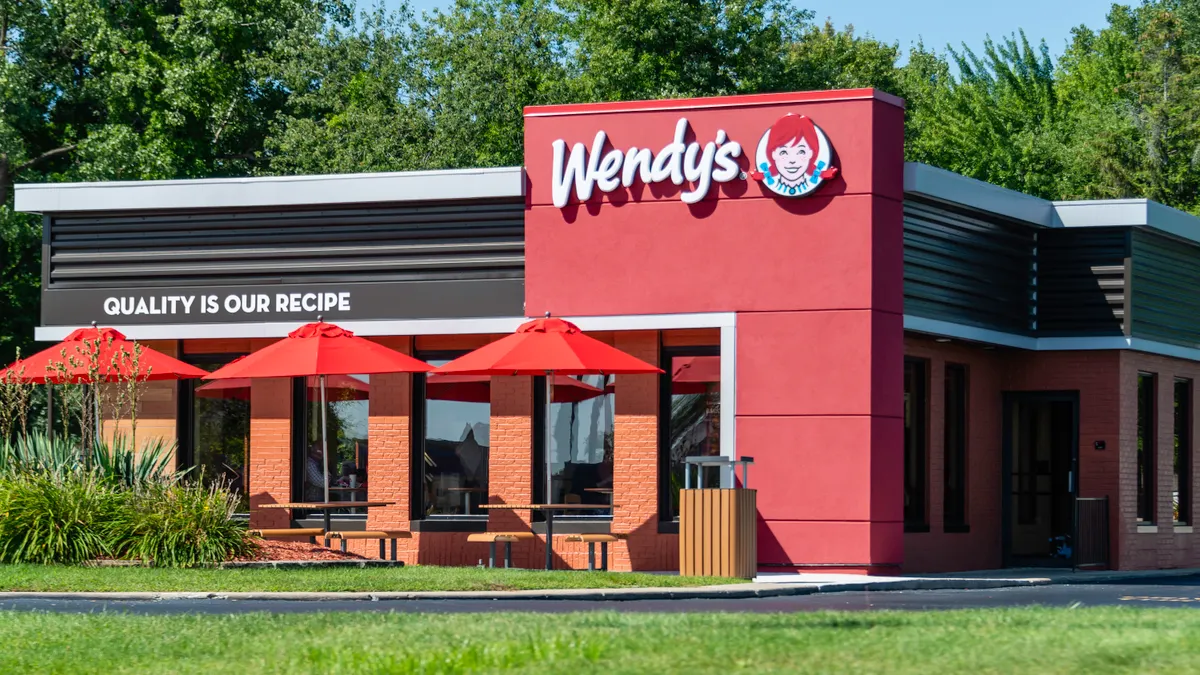
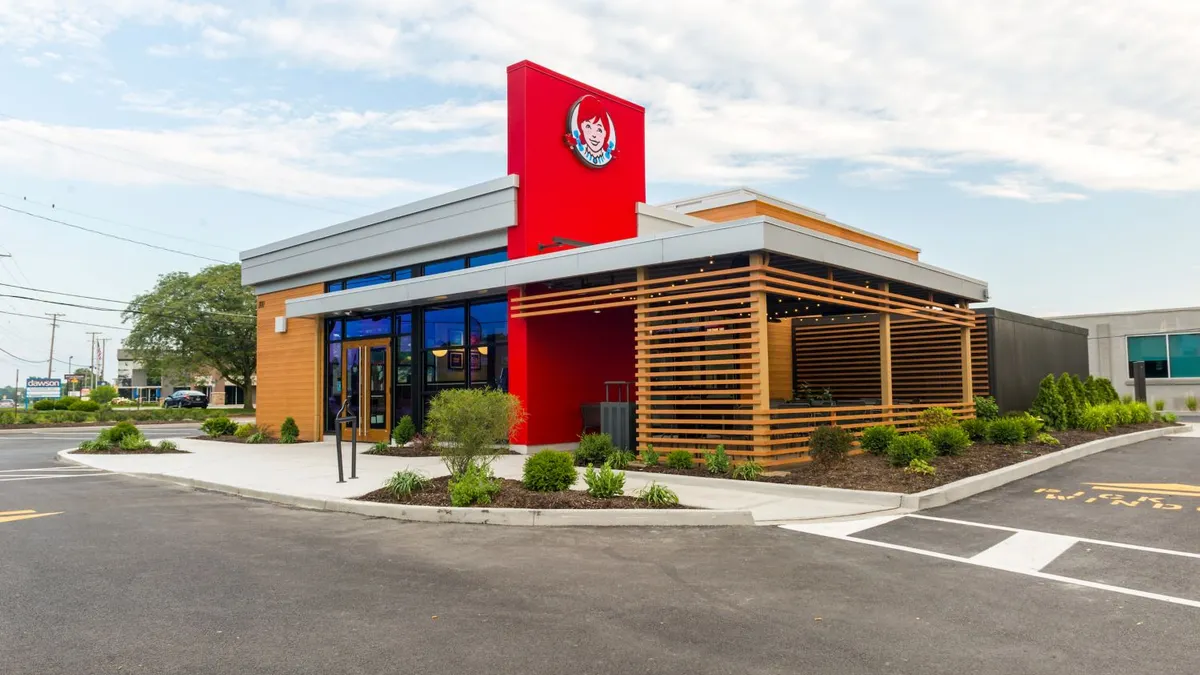
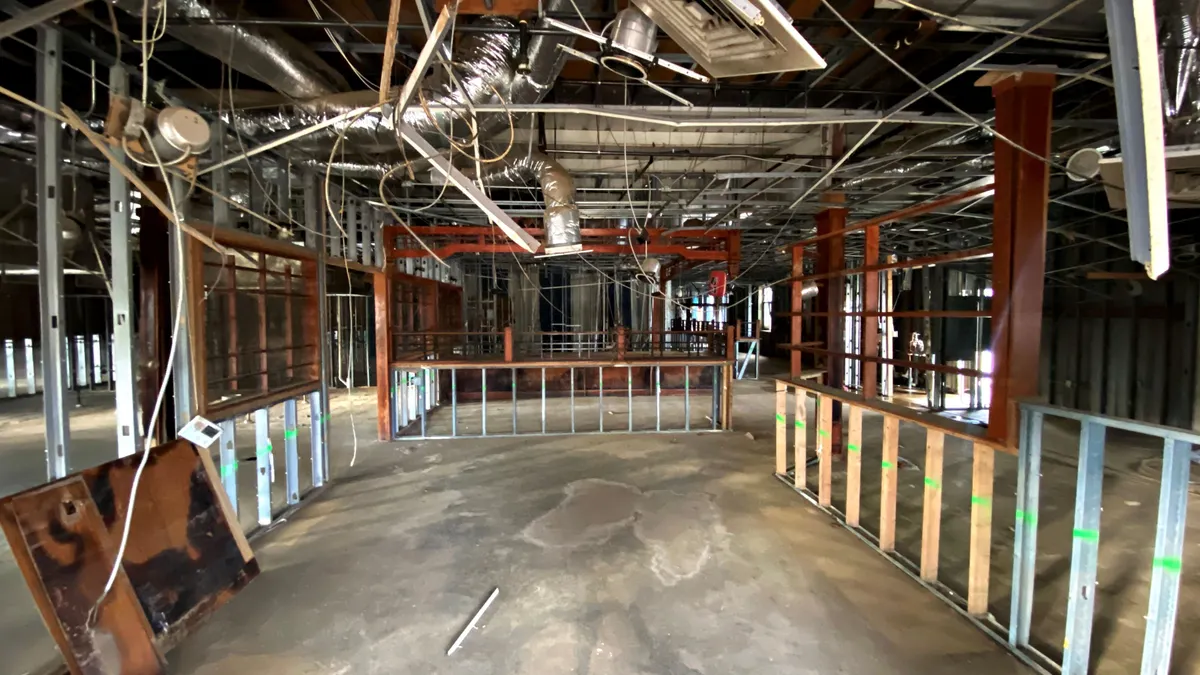
The Lookin’ Good remodels include both internal and external changes, he told Restaurant Dive. Outside, that includes new siding, awnings, lighting and signage, and some franchisees are adding a tower at the restaurant’s entry point, he said. For interiors, remodels include new floors and walls, new tables and chairs, artwork and lighting, he said. The bar was also rebuilt and refurbished.
Both worker and customer feedback has been positive, and post-renovation, these stores are seeing anywhere from a 5% to 15% sales lift, he said.
Dine is also beginning a three-year renovation cycle at IHOP and will use a modern design called California Heritage, which is already deployed on the IHOP sides of its dual-branded locations. A handful of franchisees have started on remodels, and Peyton said there will be more on these redesigns in the upcoming quarters.
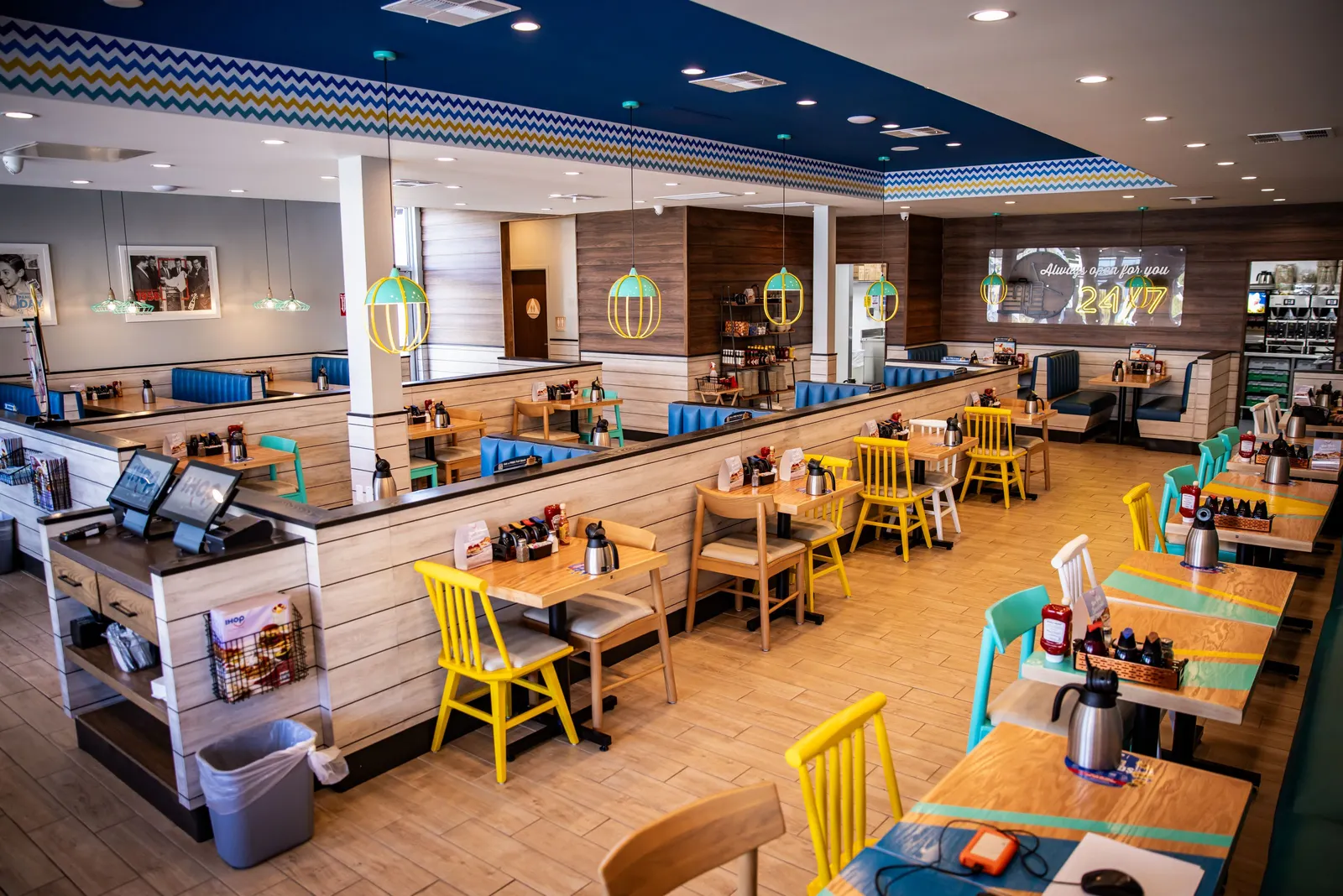
That design “brings a warm, welcoming feel to the restaurant while staying unmistakably IHOP,” he said, adding that it pays homage to the brand’s Southern California heritage. The design has blue and white tones along with yellow and orange colors, creating a brighter and more contemporary feel.
IHOP is already receiving strong customer feedback on the design of the dual-branded stores. At some locations, the IHOP portion of the restaurant is seeing higher revenue than when it was a standalone IHOP because of the refresh, he said.
“It’s very appealing to younger guests, which is part of our strategy for both brands,” he said. “As we look at menu innovation, as we look at our technology and our social strategy, as well as the physical representation of the restaurants, all of that goes through the lens of, ‘will it appeal to younger guests?’ And that's what this was designed to do with some more modern lines, more modern lighting.”
California Heritage is currently installed at 43 dual-branded locations, alongside the Applebee’s Looking Good remodel. For IHOP, nine locations have been remodeled, and the chain is adding targeted incentives for this year and next to expand on early adoption. The first two remodels have already seen double-digit increase in sales and traffic, Peyton said.
More company-owned restaurants
While Dine Brands is franchised, it now owns roughly 86 restaurants, about 2% of its system, CFO Vance Chang said. During the quarter, the company acquired 12 Applebee’s restaurants in Virginia, with plans to complete about five dual-branded conversions.
The company wasn’t equipped to have company-owned restaurants in the past, but is now better prepared with a team that has experience running locations and turning around troubled restaurants, Peyton said.
“We're seeing great progress in terms of our guest service scores, our sales scores, our brand standard scores, around cleanliness and food service and things like that,” Peyton said. “It also helps us advance our key strategies, like we can renovate those restaurants ourselves to advance the renovation schedule, but also to test the renovation and make sure that it's doing what it needs to do.”
Following the Chapter 11 bankruptcy filing of Neighborhood Restaurant Partners in March, Dine became the stalking horse bidder with plans to acquire 53 restaurants from the Applebee’s operator.
“We believe that securing these restaurants gives us direct operational insight and allows us to invest in the units through our development initiative,” Chang said.
“Although closures for construction impacted profitability of our company-owned portfolio, we're making progress,” Chang said. “In Q1, comp sales outperformed the system with close to a mid-single-digit comp sales improvement year over year.”
The company completed six remodels and two dual-branded restaurants during the quarter and expects to complete 30 remodels and eight or more dual-brands, he said. At four company-owned, dual-branded restaurants, sales are about 2.5 times higher than the previous single-branded locations.
Dine sees an opportunity to use these restaurants as testing grounds for piloting new point-of-sales technology, guest service programming, training materials and, potentially, menu innovation.
“We can see the progress we're making in the restaurants we own,” Peyton said. “They’re all trending in positive directions, particularly when it comes to growing EBITDA and profit and we think that they'd be accretive to us when we refranchise them in three years.”