Dive Brief:
- Sweetgreen’s turnaround efforts, particularly investments in regional and restaurant-level management and training, may be starting to pay off, CEO Jonathan Neman said on the company’s earnings call Thursday.
- While the salad chain suffered a 6.2% same-store sales drop in the quarter, per its earnings release, this was an improvement over Q2 2025’s 7.6% drop and its 12.9% decline in Q1 of this year.
- Neman said that in Seattle and New York, where turnaround changes are particularly advanced thanks to new regional general managers, “both markets returned to positive transaction comps in the second quarter.” Overall, Neman said, transaction comps were flat in June.
Dive Insight:
Despite the limited improvement in some markets, and the slowed transaction loss overall the brand is still in difficult straits.
“Our results are not where they need to be,” Neman said.
Consumer impact from the Cyclospora and Salmonella outbreaks impacting other brands may blunt the brand’s progress, even though it does not serve iceberg lettuce — the ingredient behind at least 6,000 out of 22,000 cyclosporiasis cases.
William Blair analyst Sharon Zackfia wrote that the cyclosporiasis epidemic has “penalized July comps by an estimated 600 basis points,” and that Sweetgreen’s comps for the third quarter may fall by double-digits.
Despite these challenges, Neman said the brand is continuing to work on its turnaround. Sweetgreen is particularly focused on preparing its restaurants for peak demand periods, when throughput is especially important.
In June, the chain reworked its throughput process and introduced weekly accountability at high-volume restaurants. As a result, “frontline peak entrees prepared per hour rose from the low 50s in May to the low 60s in June,” Neman said.
“On our busiest days, our best restaurants surpassed 250 entrees an hour, which shows the opportunity ahead as we scale this process,” Neman said.
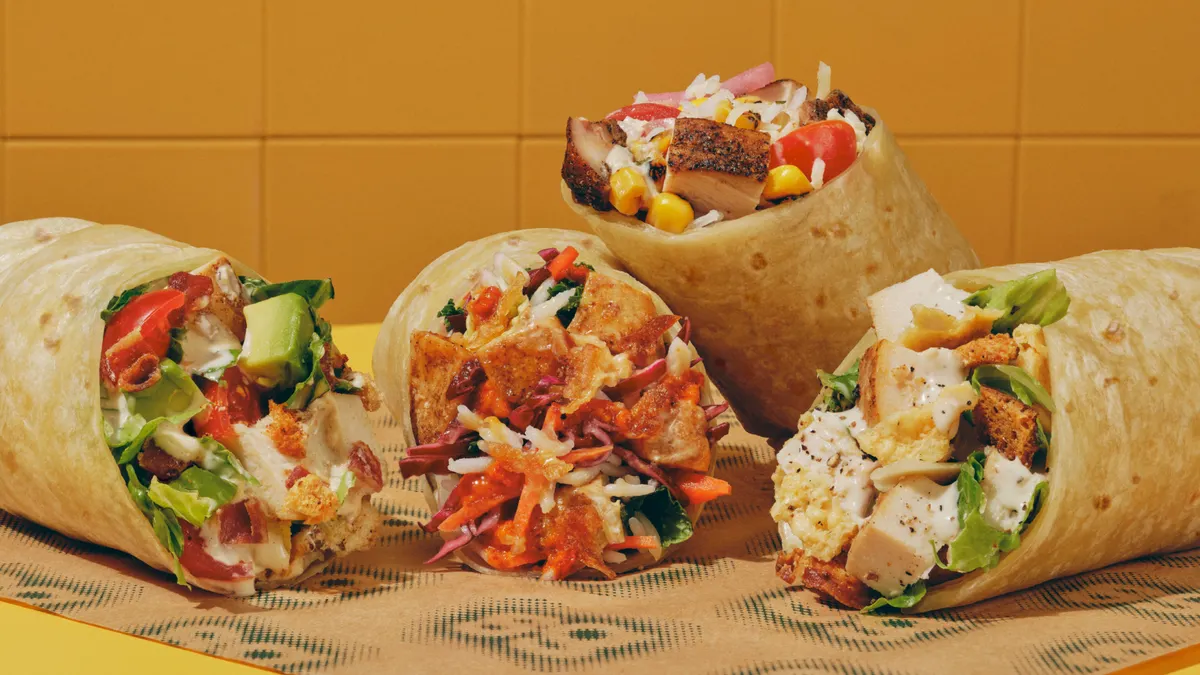
Wraps, which launched in May, accounted for about 20% order incidence, and helped drive a 200-basis-point positive shift in comps and 500-basis-point lift in transactions, Neman said. Zackfia said wraps also helped the chain improve its value perception.
Sweetgreen is also testing a new pricing architecture for its create-your-own salad options. That test began in June in Indianapolis, Neman said, before expanding to the Washington, D.C., market, and Southern California and Orange County.
“It's a much simpler way to order CYO without the price shock. It's too early to say what we're going to see around frequency or transaction lift, but so far we're pretty encouraged about what we're seeing in the customer feedback and the overall enhanced value perception,” Neman said.
Despite these changes, Sweetgreen hasn’t succeeded in drawing many new customers. Neman attributed this to a media strategy focused on engaging with existing consumers, which he said was relatively successful. Now, in a bid to attract new guests, the chain will focus its marketing efforts on increasing overall awareness and bringing in new or more disengaged customers.
While these changes could help the brand recover momentum or set the stage for a stronger turnaround once the Cyclospora and Salmonella impacts fade, Sweetgreen’s losses remain significant, with a net loss of $26.3 million in the second quarter, for a negative 13.6% margin.