Dive Brief:
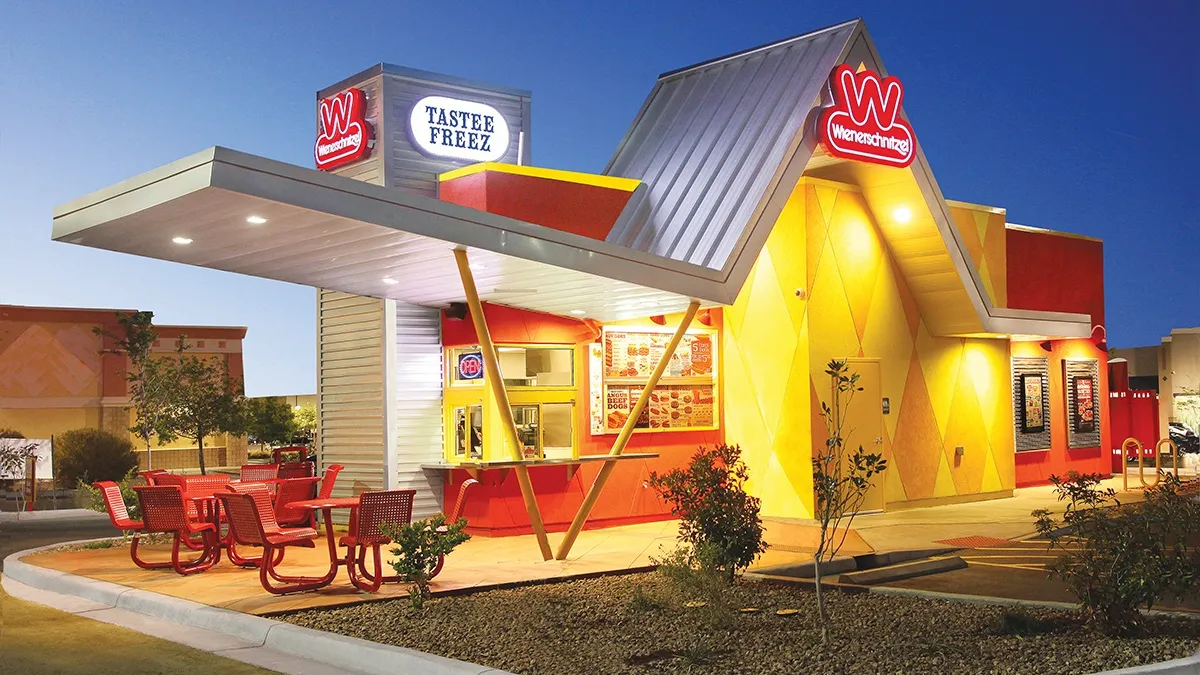
- Wienerschnitzel opened its first location on a U.S. military installation at Naval Base San Diego in California earlier this month, according to a Wednesday press release.
- The opening is part of the hot dog chain’s effort to reach large concentrations of new consumers by opening nontraditional locations in high foot traffic locations.
- Other QSR and fast casual brands are also including military bases in their nontraditional growth plans, with Zaxbys announcing it would develop its first military base unit in 2025, and Potbelly opening a location in the Pentagon in 2024.
Dive Insight:
The concentration of significant workforces at military installations means these locations offer a built-in market for QSRs. Wienerschnitzel’s San Diego location is in the Navy Exchange food court. The naval base “is one of the largest concentrations of active-duty military personnel on the West Coast,” according to the press release.
“We’re finding new ways to meet consumers where they already are while creating additional growth opportunities for current and future franchise partners,” said David Winter, Wienerschnitzel’s chief development officer, in the press release.
Last year, the chain and Walmart announced a plan to open half a dozen Wienerschnitzel restaurants inside the retailer’s stores. So far, Wienerschnitzel has opened four of those locations in Tempe, Arizona; Puyallup, Washington; Alamogordo, New Mexico; and Colorado Springs, Colorado, with two more coming later in 2026.
In 2023, Wienerschnitzel said it was looking to leverage its simple menu and operations to grow from about 320 units to about 500, ending a period of flat unit growth. While Wienerschnitzel is still far from that target, the chain now has 340 locations, with 30 more in development, according to the press release. Last summer, the brand announced a seven-store deal covering part of Virginia, its first East Coast market.
Corner lots, endcaps and high-visibility freestanding lots can be difficult or expensive to find, which could be pushing QSRs toward nontraditional development strategy. Places with high foot traffic, large workforces or significant captive audiences can help brands mitigate the risks of new development.
Wienerschnitzel said its restaurants fit into a wide range of footprints and have an adaptable business model that “allows franchisees to pursue multiple pathways for growth, unlock real estate opportunities that may not fit traditional restaurant concepts, and scale the brand across a variety of trade areas and venue types.”