The following is a guest post from Hayden Erwin, content marketing strategist at GroundTruth, an advertising platform that uses mobile device signals to measure and attribute foot traffic. Opinions are the author’s own.
According to GroundTruth’s first-party visitation data, dining out remained one of the most stable and consistent consumer behaviors in the United States in 2025. Even in a year marked by unknowns, people still showed up for their favorite fast casual spots, cafes, QSRs and fine dining restaurants.
As 2026 continues heating up, we’ve tapped into our own real-world data on how Americans dine out to show the patterns that characterized last year, giving a glimpse into what the remainder of 2026 may look like.
Here’s what we learned by tapping into the 64 million restaurant visits we measured in 2025.
Changing seasons mean more foot traffic
This isn’t remotely a surprise for any restaurant owner, operator, dining brand or franchisee, but the changing seasons have a significant effect on foot traffic patterns. What might come as a surprise is the degree to which seasons had an effect in 2025. In fall 2025, we observed an immense rise in store visitation among dining brands on our ad platform versus winter of 2024-2025.
- Fast Casual: +53.8%
- Quick Service: +49.9%
- Casual Dining: +43%
- Premium Service: +43.8%
These shifts reflect structural demand drivers including sports calendars, back-to-school periods, holiday clustering, social gathering cycles and more, confirming what you likely already know: dining demand comes in waves.
Pattern changes this dramatic can’t be taken lightly. A 40% to 50% swing upward in foot traffic presents tremendous opportunities for brands who time their ad campaigns and promotions. By understanding when people are most likely to take action, brands can optimize their strategies to drive real-world foot traffic.
How far are diners traveling?
People love a neighborhood eatery, but will they go further for some good grub? Turns out the answer is yes.
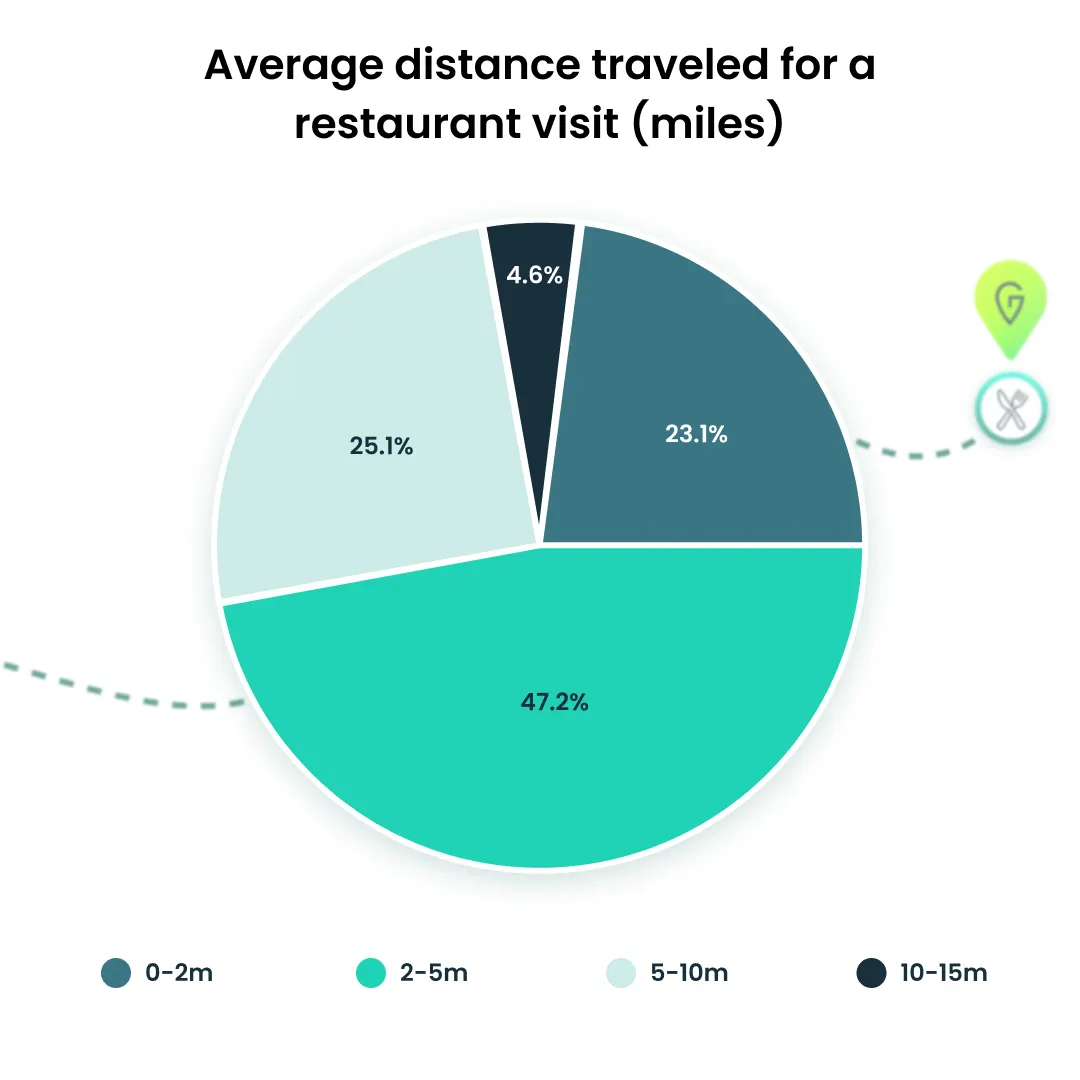
While a substantial portion of restaurant visitors love a place they can pop in and out down the street, between zero and two miles away, the larger majority of diners were willing to travel further for their favorite restaurants. The major takeaway from this data is clear, though: 95.4% of customers are eating at restaurants within a 10-mile radius of their home. 70.3% are staying within five miles.
Dining behavior is hyperlocal and proximity-driven. To meet these behaviors, winning brands leverage precision location targeting, plan at the neighborhood level and understand the importance of audience density in campaign performance.
In other words, target the people nearest your restaurant first. Then, if your audience is large enough, expand outward.
The power of the regular has never been greater
When a patron sets food in your restaurant, you want them to make memories, enjoy food, and come back again and again. As inflationary pressures remain a challenge, these kinds of customers can be more elusive, but according to our data, the many times-per-month diner is still very much in play.
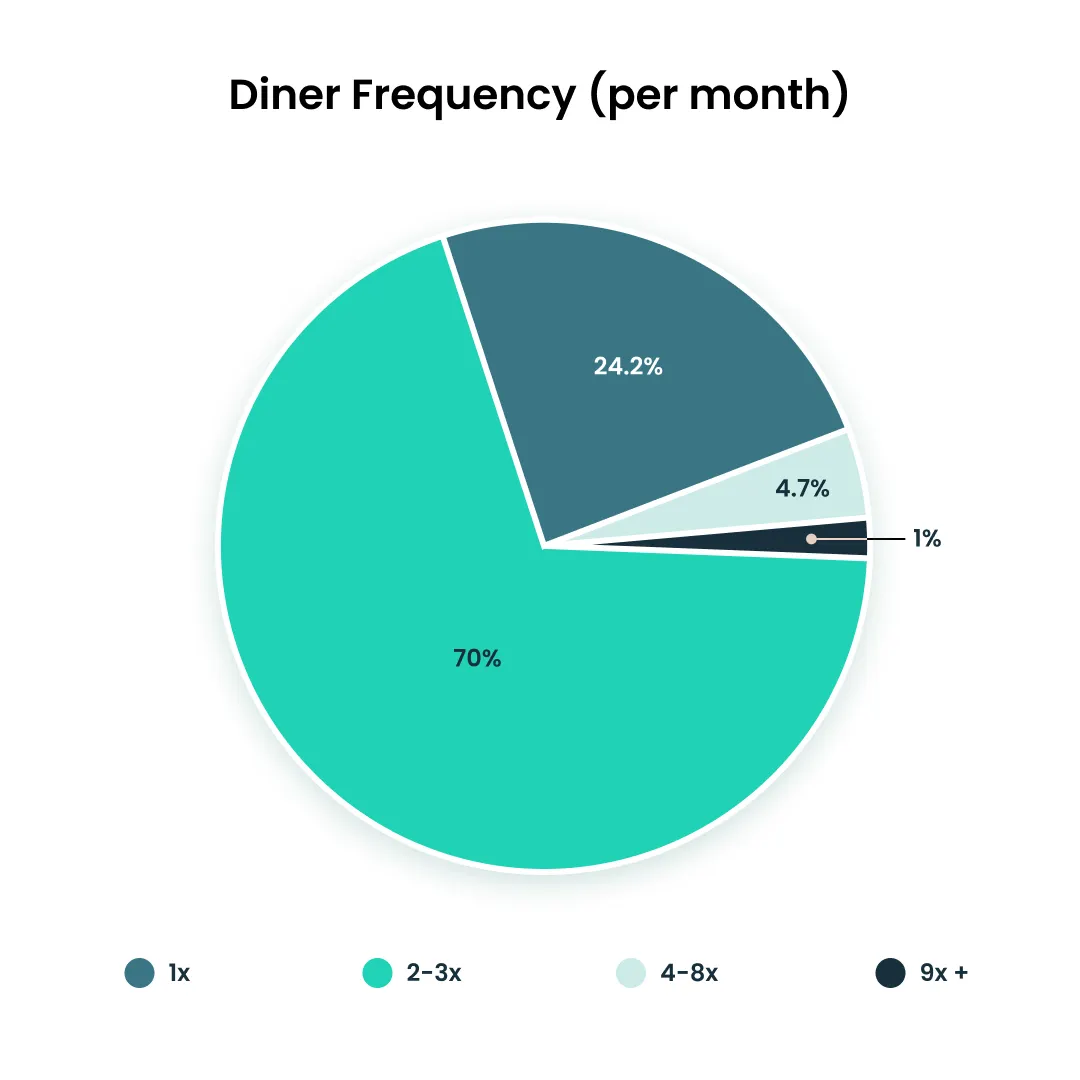
While the biggest share of diners are casual once-per-month occasion restaurant visitors, a small percentage makes all the difference: 1% of our measured visitors dine out nine or more times per month. When you account for our total of measured visitors, that means that 640,000 visits driven by GroundTruth customers came from people who visit restaurants upwards of twice per week. From there, 3 million-plus visits came from people who dine out at least once, and usually more, per week. Winning these customers can mean significant returns for your brand.
Though regular diners remain vital, one of the biggest growth levers for your restaurant isn’t gaining a few repeat visitors. 1-3x/month restaurant visitors absolutely cannot be ignored. Even a modest increase in visit frequency among lighter diners can mean serious sales, as they represent over 60 million real restaurant visitors.
What’s Ahead
According to U.S. Bureau of Labor Statistics data, the Food Away From Home Consumer Price Index increased approximately 3.4% year-over-year at the start of 2025 and 4.1% year-over-year by the end of the year.
But rising prices aren’t stopping people from dining out. Across segments and verticals, restaurant visitation remains strong. Observed visitation patterns are proving resilient, even against inflationary pressures. Though price increases may alter order value or even visitation frequency in some cases, the actual act of going to a restaurant remains an essential behavior that isn’t showing signs of slowing.