In macroeconomic terms, 2025 was the year of the K-shaped economy: by some estimates, the top 10% of U.S. households are now responsible for almost 50% of consumer spending. For restaurants, this has led to intense competition for market share and value, as brands play to the premium preferences of higher-income consumers while also seeking value-focused consumers.
The result? Home runs for the winners and major strikeouts for the losers. Check out how 2025 impacted the strongest and weakest of the publicly traded restaurant brands.
Winners
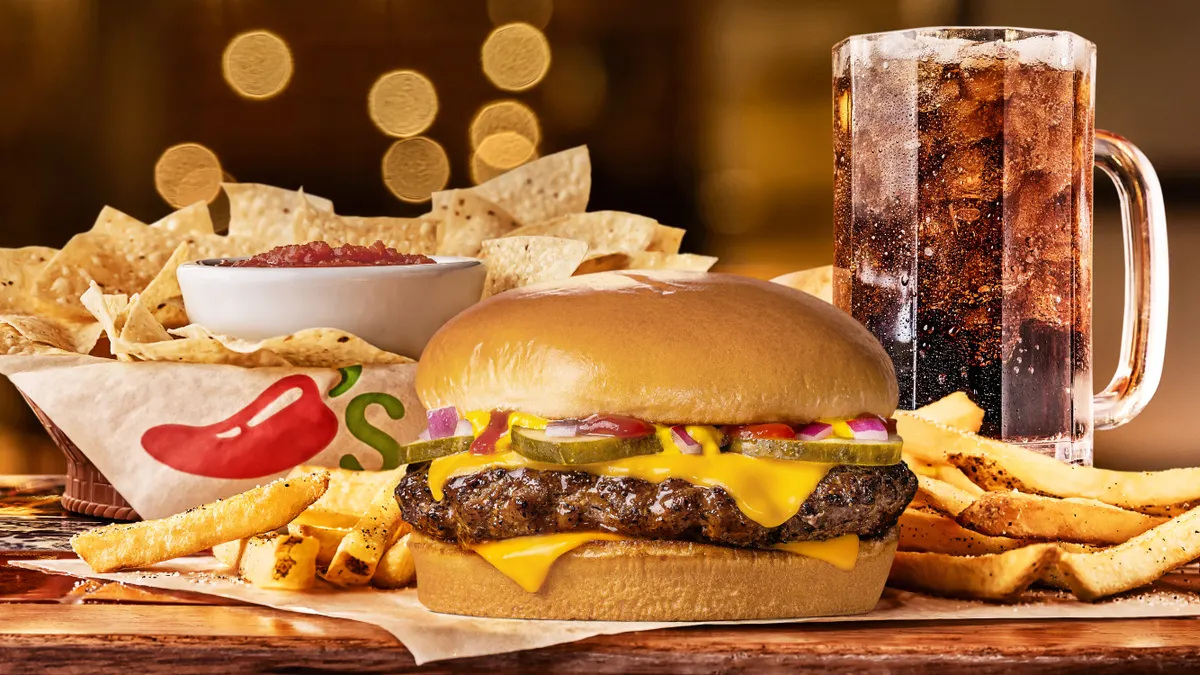
Chili’s
Chili’s was the unquestionable same-store sales champ in 2025, though this has set the brand up for some difficult comps periods in 2026. In the first three quarters of 2025 — Chili’s fiscal calendar is different from the calendar year by a quarter — Chili’s posted comps growth of more than 20%. In its most recent quarter, that success was driven primarily by traffic growth, a remarkable feat at a time when many brands faced stagnant or reversing traffic.
That dramatic expansion in sales actually led to measurable improvements in labor costs and restaurant expenses as a percentage of revenue in the last quarter, thanks to sales leverage, according to an earnings presentation.
At the heart of Chili’s winning strategy last year, as it was in 2024, was the decision to focus on price competition with QSRs.
“The ‘Better than Fast Food’ campaign we've been hammering over the past two years has positioned Chili's as an important value leader in the industry, and we are gaining market share with low-income households while others are reporting softness with that group,” Brinker CEO Kevin Hochman said on the most recent earnings call.
The brand’s success is evident in the efforts of other casual dining chains to replicate the success of its $10.99 3-For-Me menu. Casual dining competitors like Applebee’s have shifted toward price-point combos and whole meal value deals over the last two years, helping the segment as a whole outperform QSR and fast casual.
McDonald’s
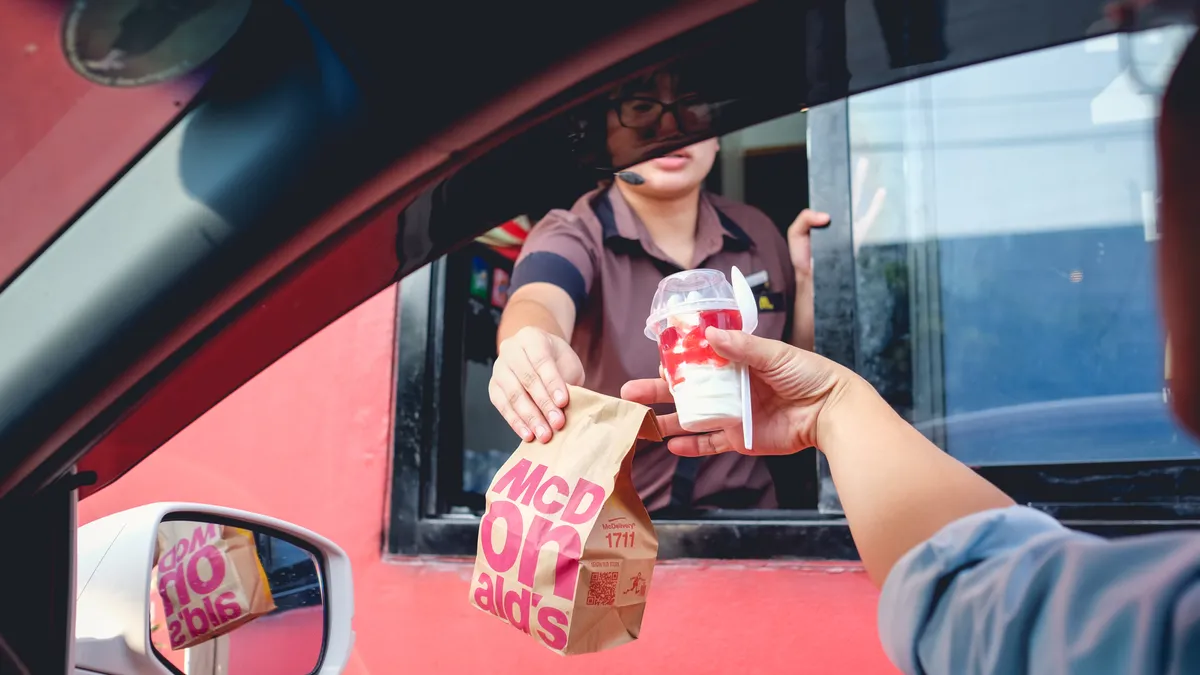
The Golden Arches, which came into 2025 smarting from an E. coli outbreak and consumer pullback that hurt same-store sales in Q1, quickly reversed this trend with gains in Q2 and Q3.
That revival was driven by a combination of strategies. McDonald’s leaned on menu innovation, bringing back chicken strips as a permanent menu item and then the Snack Wrap.
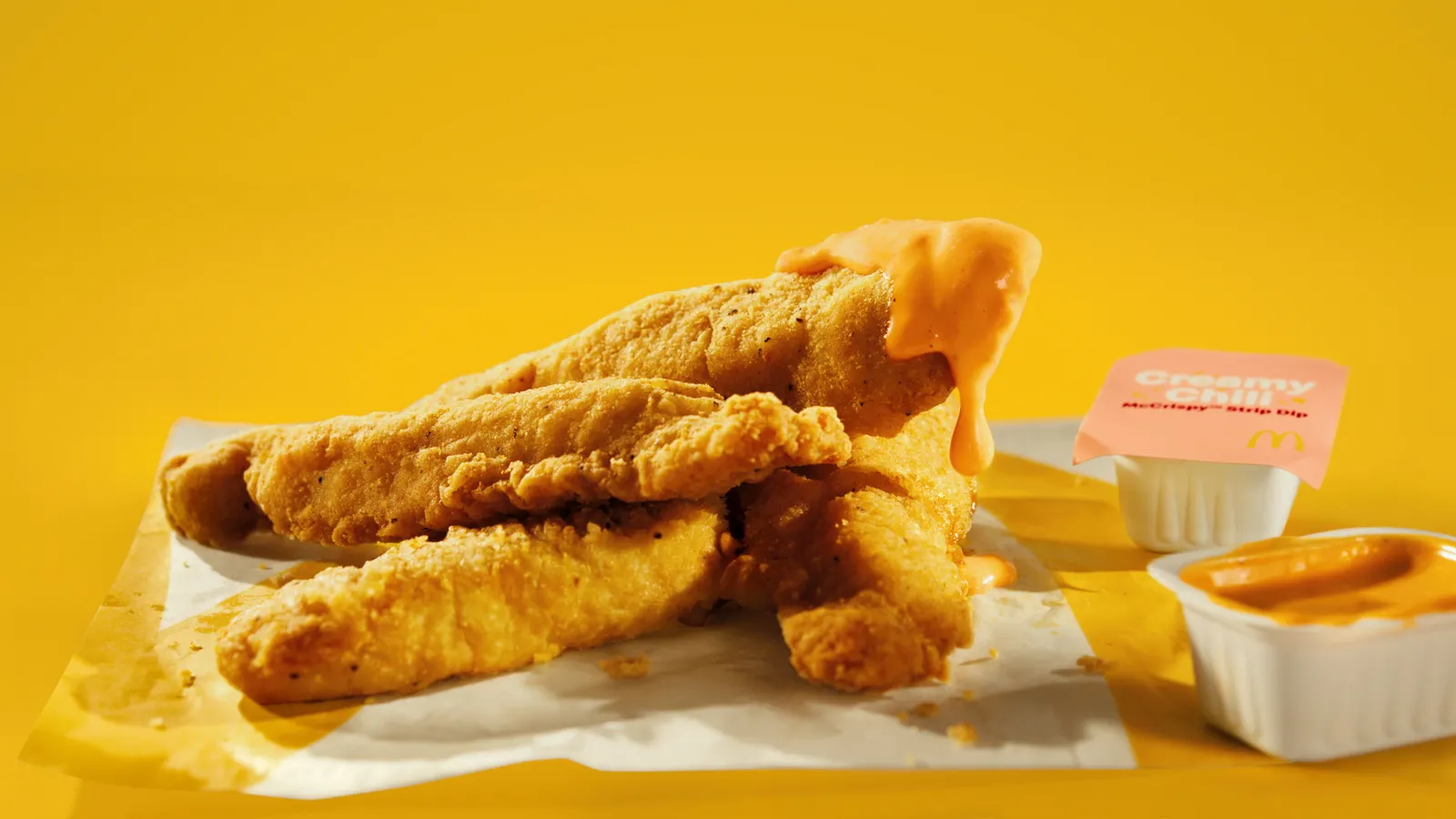
The chain also followed up the success of its $5 Meal Deal from 2024 by cutting prices on a number of core menu combos, reviving the Extra Value Meal. This move helped the chain avoid losing market share among low-income consumers, CEO Chris Kempczinski said on the chain’s most recent earnings call.
McDonald’sworked closely with its “U.S. franchisees to improve consumers' value perceptions of our core menu offerings. We heard our customers loud and clear on the need to deliver everyday value and affordability," Kempczinski said.
Taco Bell
Yum Brands’ most dynamic U.S. brand outperformed the QSR sector again in 2025, posting 9%, 4% and 7% same-store sales growth in the first three quarters, with each lapping a strong prior-year quarter.
The chain’s strategy synthesized value, novelty and premium options to position it as a chain that has something for all consumers, without saddling it with a discounted identity.
In 2025, that included everything from tweaks to its Luxe Cravings Box platform to an emphasis on customizable flavors and sauces, Ken Muench, Yum’s chief marketing officer, told Restaurant Dive in December.
Like McDonald’s, Taco Bell joined the chicken rush, with LTO nuggets and the launch of a number of crispy chicken items. The chain also leaned into beverages as a sales driver, adding Refrescas to its menu in June. Taco Bell is targeting a $3 million average unit volume and, eventually, $5 billion in yearly beverage sales. Its growth toward that sales target was aided by its Cantina Chicken Menu.
From chicken to beverages and loyalty to value items, it’s hard to think of a restaurant trend in 2026 that Taco Bell missed out on.
The coffee sector
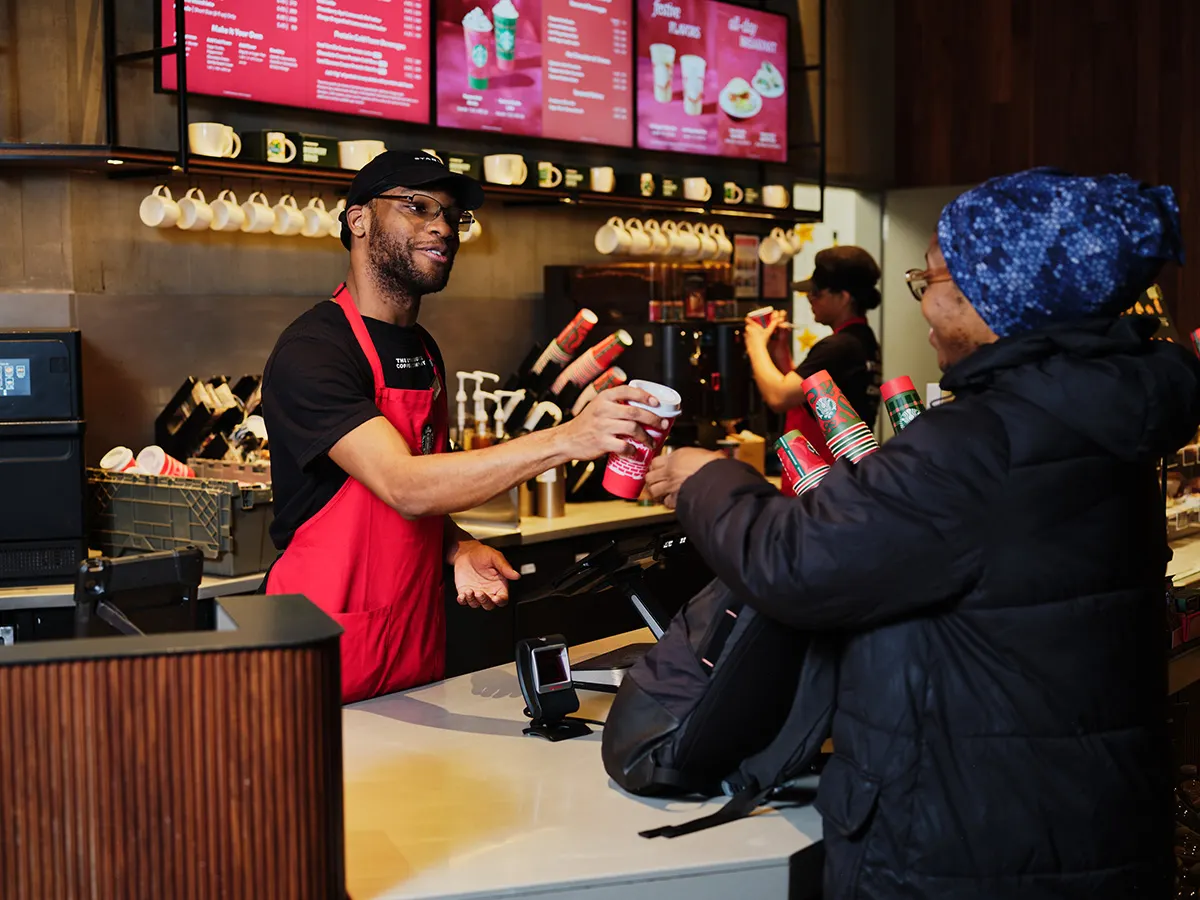
It’s premature to declare Starbucks a yearly winner — the brand’s strongest quarter in 2025 saw flat same-store sales growth, and labor unrest continues to be a challenge — but it seems that the coffee giant may be turning a corner. In the last three months of 2025, which is Q1 fiscal 2026 for the chain, Starbucks has seen some signs of success.
In November, Starbucks’ holiday launch proved to be its biggest sales day ever in North America, while LTOs drove traffic spikes throughout the quarter, according to Placer.ai data. The chain achieved this shift in fortunes all while investing heavily in its on-premise experience and identity.
Other publicly traded coffee brands saw unambiguous success in 2025. Dutch Bros posted 4.7% transaction growth in the third quarter, and strong consumer demand for food pushed the chain to take its hot breakfast program national.
Black Rock Coffee pulled off a successful initial public offering in September, raising roughly $300 million. The chain posted 10.8% same-store sales growth in Q3, a remarkable performance that puts it at the top of both coffee and QSR.
Privately traded coffee chains did well too, with 7 Brew pulling off an astronomical degree of unit growth. The chain began the year with about 320 locations and ended it with 600, signing major franchising deals with operators like the Flynn Group along the way.
Starbucks’ gradual recovery, and the evident success of other coffee chains, show that beverages and snacks are still a key area of growth heading into 2026.
Losers
Jack in the Box
Jack in the Box suffered a particularly unfortunate 2025, posting multi-year records for negative same-store sales in consecutive quarters.
At the heart of its dismal performance was weakness with its core consumers and problems conveying value.
“Our value equation was not resonating and lacked enough price-point value,” CEO Lance Tucker said on the chain’s earnings call its fiscal fourth quarter of 2025. In that quarter, the chain saw a 7.4% same-store sales decline, lapping a 2.1% decrease in the year-ago period.
The brand’s heavy concentration in California, Texas, Arizona and Nevada also hurt it in earlier quarters, as increased immigration raids in those states dampened Hispanic consumer activity — Jack in the Box overindexes with Hispanic diners.
To combat its long-term value problems and years of anemic sales, the chain’s leadership announced two different turnaround programs: Jack’s Way, a focus on in-store operations and food consistency, and Jack on Track, which is focused on strengthening profitability and fortifying the chain’s balance sheet.
The brand sold Del Taco, which saw similar streaks of sales weakness, to franchisee Yadav Enterprises for $115 million in October. The transaction price was much lower than the $575 million Jack in the Box paid for the Mexican QSR in 2021, signaling the precipitous erosion of conditions in fast food and, especially, of Del Taco’s competitive position.
Sweetgreen
Of the publicly traded fast casual brands, Sweetgreen had the worst 2025. In Q1, the chain’s comparable sales fell for the first time in its tenure as a publicly traded company. As consumers in core metro markets — Los Angeles, New York, Boston and others — sought to economize on restaurant spending, the pricey salad brand seemed a natural indulgence to cut.
Things only got worse.
The long-anticipated shift from the tiered Sweetpass subscription program to a points-based program began on April 3, just one day after President Trump announced blanket reciprocal tariffs on scores of U.S. trading partners. In the second quarter, decreased frequency from ex-Sweetpass members compounded the broad consumer trouble facing Sweetgreen, contributing to a 7.6% same-store sales drop.
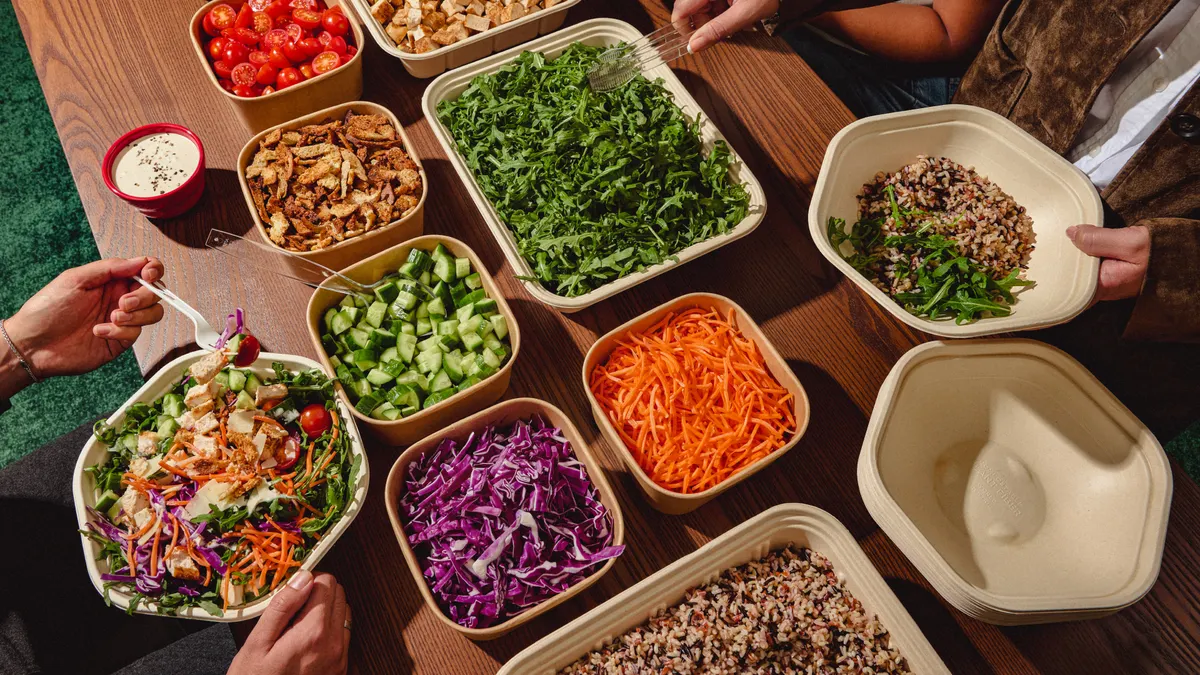
[ripple fries photo]

Sweetgreen tried to compensate by cutting corporate roles and eliminating its Ripple Fries, a new menu item that performed well with consumers but clogged up operations in the back of house.
But pullback worsened in Q3, with traffic dropping 11.7%, led by customer declines in the Northeast and Southern California. Efforts to repair its value image with increased chicken and tofu portions only pinched the ailing brand’s margins. And Sweetgreen sold off Spyce, the maker of its automated makeline, to Wonder for $100 million in cash and an $86.4 million stake in the food hall concept.
On Dec. 17, Nathaniel Ru, the chain’s co-founder and chief brand officer, announced his departure, effective Jan. 1.
Pizza Hut
For a long time, the problems in Kentucky Fried Chicken’s U.S. store system overshadowed the issues facing Pizza Hut.But in Q3 2025, KFC managed to post 2% same-store sales growth following an extended effort to turn the brand around. Pizza Hut, by contrast, saw a 6% decline, continuing an unbroken run of negative same-store sales growth stretching back two years.
The chain’s comps collapse worsened throughout the year, starting with negative 5% in Q1 as it lapped quarters with already significant decreases. Pizza Hut’s international system isn’t large enough to offset weakness in its home market, which accounts for 42% of its sales. This makes the pizza brand a drag on Yum’s earnings.
Chris Turner, Yum’s CEO, told analysts in November that the company was considering selling Pizza Hut.
“In some markets, there may be a multiyear effort that is required to reposition it as the leading pizza brand,” Turner said. “And it's possible that those efforts may best be done under a different structure, potentially under outside ownership.”
The reactivity of public markets can make it difficult to achieve a multi-year turnaround at brands, given that such efforts often see an extended period of continued sales declines before operational and branding efforts reverse stagnation — Starbucks’ years-long effort to reverse its comps declines is a recent notable example.
Fat Brands
No major, publicly traded restaurant company ended 2025 on such a dramatic note as Fat Brands. In October, Fat defaulted on some of its debt obligations, prompting its bank to declare its more than $1.3 billion in debt as payable in full and immediately in November and December.
The company ended its third quarter with just $14 million in cash and restricted cash, according to an SEC disclosure, down from over $48 million in the same measures at the end of 2024.
In Q3, the company saw its systemwide sales fall 5.5%, with same-store sales dropping 3.5%, according to an earnings release. That trouble extended to Twin Hospitality, Fat’s publicly traded spinoff that operated Smokey Bones and Twin Peaks. Fat planned to use Twin Hospitality’s IPO, which took place in January 2025, to raise funds to pay down portions of its debt.
The company has also seen turnover in its C-suite and board composition, as Andy Wiederhorn stepped down under federal investigation in 2023, before returning in 2025 after the investigations were dropped.
With such a heavy debt load, insufficient cash and anemic same-store sales growth, Fat Brands could face an exceptionally difficult 2026.