Dive Brief:
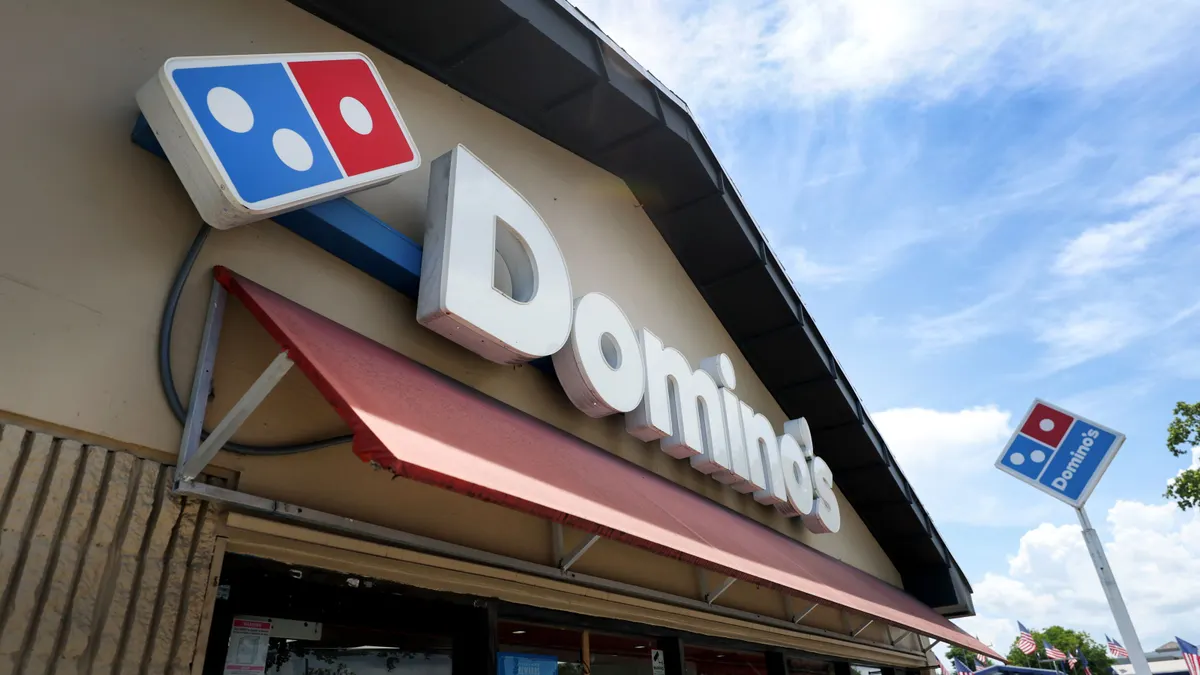
- Domino’s U.S. same-store sales increased slightly by 0.3% during the third quarter, according to an earnings release. Comparable sales benefited from order count growth within its core and aggregator businesses. This was offset by lower average ticket, which executives said Tuesday they want to improve in future quarters.
- “I believe growing orders is the most important thing a brand can do in the current environment,” CEO Joe Jordan said on a Tuesday earnings call.
- Business continues to be impacted by macroeconomic challenges, which are pressuring consumers, CFO Sandeep Reddy said Tuesday. The company expects U.S. comparable sales growth to be in the single-digits for the year, but on the low end of that range, Reddy said, adding that this updated outlook assumes that the macroeconomic and competitive environment will continue through the rest of the year.
Dive Insight:
Reddy said franchisee profitability is under pressure, in terms of year-on-year absolute dollars. The chain will focus on stabilizing that metric and then growing profitability, he added.
Domino’s has some strong marketing initiatives left on the calendar that can help drive ticket growth and ultimately improve franchisee profitability, said Jordan, who was recently appointed Domino’s CEO.
Third quarter’s same-store sales were higher than the 0.1% rise it had during the second quarter, but lower than the 5.2% growth it experienced in Q3 2025, meaning there is much room for continued improvement.
In spite of the tough environment in the QSR pizza segment, “we continue to have best-in-class franchisee economics,” Jordan said. “My job now is to turn that around, get back to profit growth along with the order count growth, continue to expand our lead and I believe push us to compete even more broadly outside of just QSR pizza.”
Jordan will focus on “turning our best performance into our everyday performance” by improved execution, ongoing value leadership and its “franchisee-first mindset.”
Domino’s has long succeeded by being “a step ahead,” Jordan said, adding that the rectangular pizza that it launched during the summer, Domino, is an example of this philosophy. The Domino was built around the need to enjoy pizza in a group, without giving up individual choice, Jordan said.
The menu item has been particularly relevant on aggregator platforms where customers typically seek out high individualized orders, making the product “another compelling reason to choose our brand,” Jordan said.
Domino’s will also continue to offer promotions, like its Best Deal Ever that it deployed during the third quarter, to drive order count, Jordan said. Under its Best Deal Ever, it added Stuffed Crust to get customers to try a premium product. Customers have been coming back to Domino’s even after that deal was completed, which may help drive ticket growth, he said.
“Consumers remain under pressure, but they continue to choose Domino's,” Jordan said. “More orders bring more customers into our system, support our franchisees, and create opportunities to drive greater frequency over time.
Despite the slow down in sales growth, Domino’s remains the strongest QSR pizza delivery company. Same-store sales declines continue to plague Papa Johns and Pizza Hut, with the former posting its steepest drop in recent history, and both closed hundreds of locations this year. Over the last quarter, Yum Brands completed its sale of Pizza Hut, with a private equity firm taking over the brand.