
Food costs have soared 34% in recent years compared to pre-pandemic levels, and continue to dog the restaurant industry, according to the National Restaurant Association. It’s a leading concern for the majority of full-service operators (95%) and limited-service operators (94%), many of whom say they’ve raised menu prices, sought alternative suppliers and reduced menu offerings in response.
Across the board, that pressure resurfaces a familiar challenge: how to do more with less. While using the same ingredients across multiple menu items is nothing new, today’s environment demands that operators be far more intentional about it by finding ways to add flavor and innovation without adding complexity or cost.
When done strategically, this approach can help improve margins by reducing waste, simplifying labor and maximizing the value of every product.
“With limited space and budgets, operators need products that are workhorses,” says Chef Yury Krasilovsky, who is culinary innovation manager with Good Foods Group. “If they can use a single ingredient three, four or five ways across their menu, then that becomes extremely valuable to their business.”
Reducing Operational Complexity
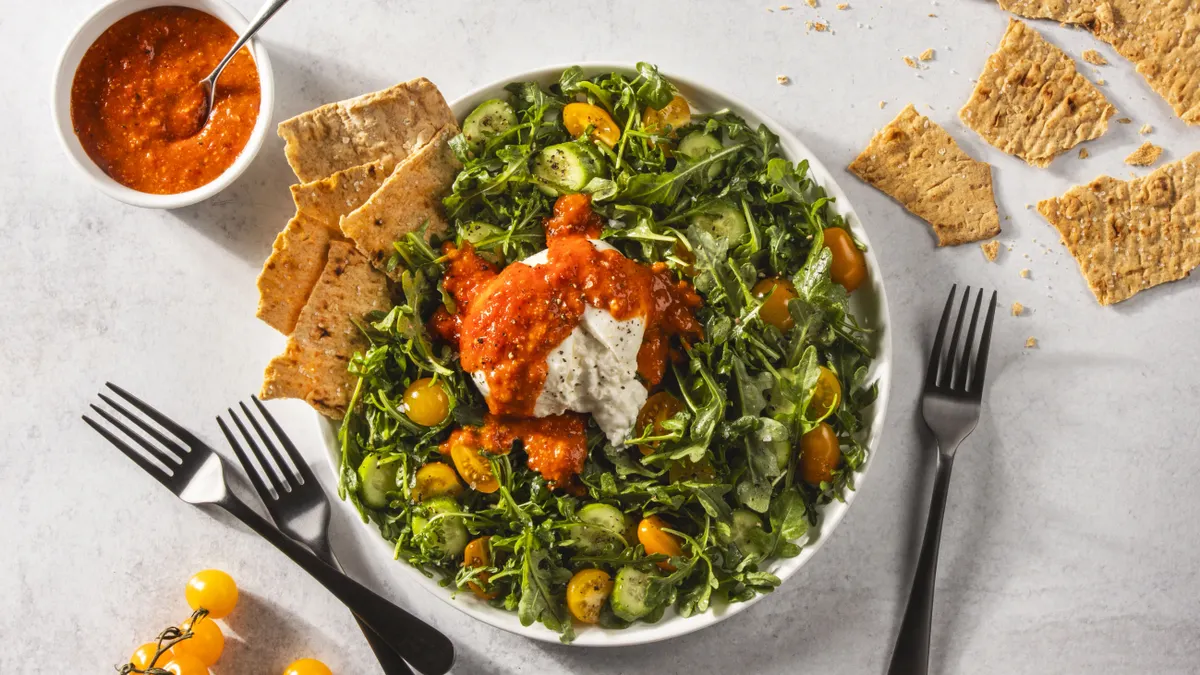
Spicy ranch, bacon jam, zesty guacamole, creamy red pepper pesto — these are all versatile sauces and spreads that can drive new business when sold in tandem with existing items like fries, tacos, burgers and sandwiches. However, when made in-house, these eye-catching condiments can also complicate operations by requiring operators to buy and stock more ingredients as well as adding labor costs with additional prep times.
Adam Isaacs, senior director of foodservice for Good Foods Group, offers an easy solution: Purchasing fresh, ready-to-use sauces, spreads and dips that can seamlessly add pizazz to existing menu items. “These products can taste as good as something you would make in-house, plus the flavor and quality are far more consistent. That’s important, whether you’re using them across multiple menu items or locations,” he says.
Plus, buying ready-to-use ingredients in bulk can boost purchasing power and reduce waste. “If you’re using an ingredient across the menu, you’re going to have minimal waste with that ingredient each day,” says Isaacs.
Unlocking Menu Innovation with Ease
For Krasilovsky, one of the more exciting aspects of his job is finding creative ways to use the same products in different ways throughout the day. When he thinks about Creamy Fire Chimichurri Sauce, he sees a sauce for a taco, a spread for a burger, a topping for a breakfast wrap, a drizzle for fries. With Mexican-Style Street Corn Spread, his mind goes to chicken sandwiches, chorizo flatbread, cheesy nachos and even soup. Aji Verde Sauce can add depth to a steakhouse cobb salad, serve as a dip for beer-battered cod or spice up a sausage and egg breakfast biscuit; Strawberry Habanero Sauce could complement breakfast tacos, Korean-style chicken wings and crispy pork belly bao; Caramelized Onion Gruyere Spread can go on top of burgers and sandwiches or be served as a French onion dip on its own.
“There are so many unique ways to cross-utilize products and discover how flavor components can make something on the menu feel exciting and new,” says Krasilovsky.
With the right products on-hand, operators can easily introduce new formats without having to overhaul their suppliers. That’s why every foodservice product Good Foods Group makes is intended to be used in a number of different ways. And for operators seeking more differentiation, custom products can offer added flexibility.
“There is limited space in kitchens and limited slots in the distribution landscape,” says Isaacs. “It’s really important to make sure that every ingredient these operators have in their kitchen wears multiple hats and earns its place. We want to make sure it’s not a one-trick pony.”
Driving Repeat Visits
Beyond efficiency and cost savings, ingredient flexibility can also help boost business by appealing to customers who are drawn to innovation. Especially when those customers already know they like a particular offering at a restaurant.
“Customers may fall in love with a salad with Creamy Fire Chimichurri Sauce, but then get burned out on salads. When they see a limited time offer for something new and different, like a wrap with that same Creamy Fire Chimichurri Sauce, they fall in love all over again,” says Krasilovsky. “If you’re able to offer those flavor profiles that they’re looking for, it gives customers a reason to come back. You’re going to see them more than you ever have.”
In an industry known for tight margins and intense operating pressures, operators are continually looking for ways to cut costs and reduce waste. By using ingredients more strategically, they can reap the benefits of innovation without the pressures of reinvention.
“For many operators,” says Krasilovsky, “versatility is already one of the most valuable tools in the kitchen.”
To explore how operators are using versatility to drive efficiency and innovation, visit Good Foods.