
Your P&L shows what already happened. A mid-shift check shows what’s happening today.
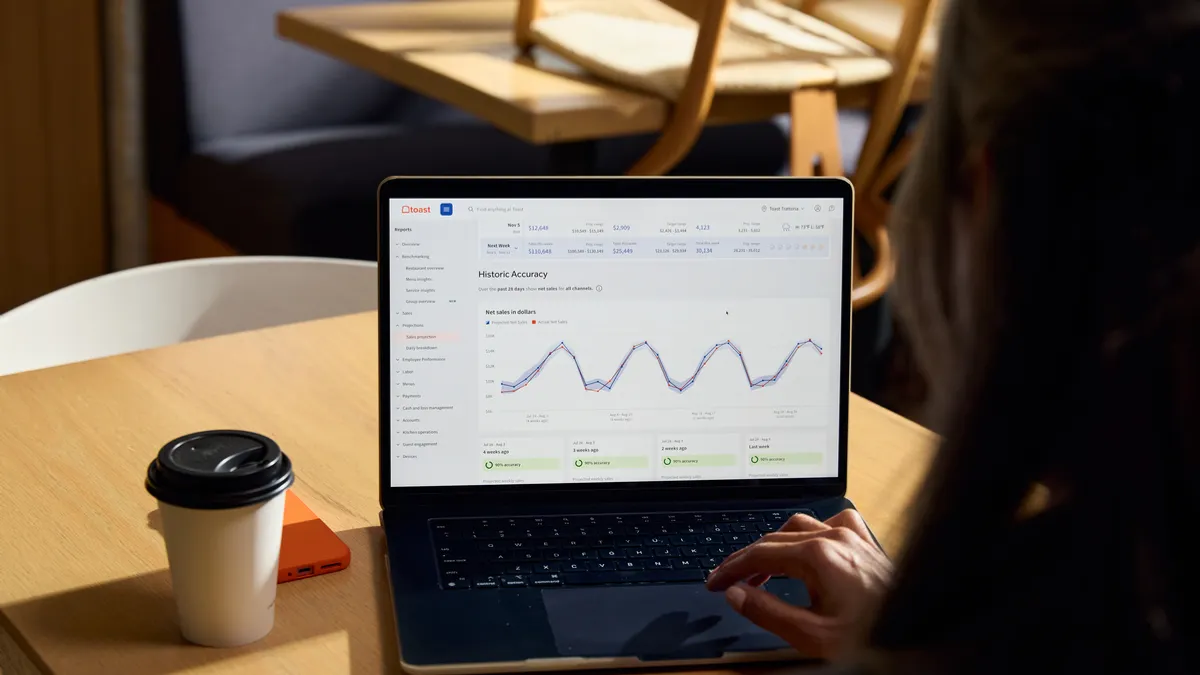
Toast’s 2026 Restaurant AI Report¹ looked at aggregated, anonymized Q2 2026 data from Toast IQ, the AI assistant built into the Toast platform. It shows what managers ask when they can check their numbers mid-shift, and loss prevention is one of the topics they bring to it.
Key takeaways:
- When auditing losses, managers directed 62% of searches at discount tracking, 25% at check voids, and 14% at manager comps.
- Comps made up 29% of fine dining’s loss prevention searches, about double the 14% platform average.
What’s the difference between discounts, voids and comps?
While all three terms are important for loss prevention, each works differently in a restaurant.
- Discount: A price reduction applied to a check, such as a promo, happy hour deal, or loyalty reward. It usually runs through a preset button or code.
- Void: The removal of an item or an entire check, either before or after payment. Voids typically follow an order error or a cancellation.
- Comp: A fully free item or check given at a manager’s discretion, like a service recovery gesture or a VIP courtesy.
The distinction matters because each one can have a different owner, a different approver, and a different risk. A server can apply a discount, but, in many restaurants, a comp should require a manager’s approval. Despite their differences, all three affect margins.
Why do restaurant managers ask about discounts most often?
One reason managers may ask about discounts most often is that they’re one of the hardest leaks to see.
They can be high-volume and easy to apply, so a single one can seem harmless. The real issue often shows up in the pattern of how they’re used. A happy hour price that runs past its window all week or a single-use code reused all night can add up fast.
Discounts also matter because they change how managers think about processes. Discount leakage often points to unclear rules or policies that change by shift. A quick search into discounts can reveal the root cause and show where to tighten policy.
Why are comps a bigger focus in fine dining?
Comps made up 29% of fine dining’s loss prevention searches, about double the platform average. There could be a few reasons they take up a larger share.
Check averages may be higher, so each comp may cost more. Guest experience is also a part of the service culture. When a meal is not made right or a dish takes too long to reach the table, a comp can make things right for the guest.
A comp is a judgment call, so reviewing one means checking consistency, not just totals. Are similar situations getting similar responses? Is one manager comping twice as often as another? Audits mid-shift show what’s happening now and let you resolve errors before money or waste leaves the building.
How to run an AI-assisted audit mid-shift
You don’t need to wait for the books to close or the monthly P&L to come out. A quick audit during service lets you fix problems in real time. Consider these tips to perform a mid-shift audit²:
- Pull the live data. Export the current shift’s discount, void, and comp reports from your POS.
- Start with discounts. Ask AI to flag stacked discounts, unusual code frequency, and discounts by server or shift.
- Check voids next. Look for voids after payment, repeated voids on the same item, and voids clustered around one employee.
- Review comps. Compare comp reasons, amounts, and approving managers against your policy.
- Act before close. Correct errors, coach staff, and document what you found mid-shift. If you document staff issues, follow your local labor laws.
AI can make mistakes. Always remember to verify anything it flags against your POS records before you act.
The takeaway
A closer look at loss prevention shows where your own leaks are. This week, consider auditing losses on a single shift. Verify your findings against your POS and make any necessary changes to your policies.
The 2026 Restaurant AI Report goes deeper on when managers use AI, what they ask about, and how usage differs by restaurant type. Read the full report for all of the insights.
¹ This report draws on aggregated, anonymized Toast IQ prompt data from April 1 through June 30, 2026 (Q2 2026), covering U.S. restaurant locations only. Retail locations are excluded. The period includes all days of the week and all hours of the day. Figures are rounded to whole percentages, so they may not sum to exactly 100. Prompts, queries, questions, and searches all refer to interactions a restaurant worker started, whether by typing a question or tapping a pre-set prompt on screen. This applies to every usage figure in the report, including the device split. This report is an analysis of prompts: the questions and requests restaurant workers entered into Toast IQ. It does not measure whether any resulting actions were completed. Where the report describes actions, such as updating item stock, it refers to changes requested through chat, which are not confirmed as saved in the product. Topic categories, sub-topics, and the loss prevention and menu groupings were assigned by keyword and phrase matching against prompt text, not by a built-in product taxonomy. Categories are therefore approximate, and a prompt touching more than one subject may be counted under a single category.
² This content is provided for informational purposes only and is not intended as legal, tax, HR or any other professional advice. Toast does not guarantee you will achieve any specific results if you follow any advice herein. It may be advisable for you to consult with a professional, such as a lawyer, accountant or business advisor for advice specific to your situation.