The most recent restaurant earnings season saw stark bifurcation between consumer segments that are still spending liberally, and those that have pulled back on discretionary expenditures. At the Restaurant Finance and Development Conference in Las Vegas last month, experts and restaurant executives said they expected this divide of the industry into winners and losers to continue, exacerbated by economic uncertainty.
Earnings data shows a bifurcation in terms of brand performances, with struggling brands remaining in the doldrums. Those that have invested in holistic value and significant brand turnarounds have seen a revival in sales.
Consumer trends
At the heart of that brand performance bifurcation is a split in consumer behavior, R.J. Hottovy, head of analytical research at Placer.ai, said. Low-income consumers, and brands that rely on them, began to see a steep drop off in activity over the summer.
“High-end consumers are fine. Sit down locations, both in fine dining and casual dining, are holding up very well, but in QSR and fast casual, [traffic] dropped off pretty quickly there,” Hottovy said.
Hottovy said the shift in consumer behavior that’s causing this bifurcation in sales outcomes resulted, at least in part, from a convergence of prices.
“Some of these chains reached the point where I'm paying $15 to $20 per entree, I just don't feel like I'm getting the value out of that,” Hottovy said. Consumers, as a result, are turning to options that offer more for the same amount of money, whether that's in portion size, innovative menu items, on-premise experience, or the perception of premium ingredients.
John Tibe, managing director at Jefferies, said the convergence of prices has created intense competition across dining segments.
“We continue to see this war at $10 to $12 where, if you rewind maybe 10 or 15 years ago, it was pretty clear, where quick service, fast casual and casual dining were [priced],” Tibe said. “Now there's a lot of competition in that low-level digit area, and the consumer is demanding more and more value for what they're getting.”
John Oakes, CEO of Revenue Management Solutions, said the brands that have managed to thread the needle and bring in consumers across income groups, rather than just high-income consumers, are ones that offer holistic value. But, Oakes said, it was important not to underplay the impact of dollar values, which are often the clearest value indicators for consumers.
“Price is still incredibly important,” Oakes said at an RFDC panel. “So we are seeing a big push to make sure that there is value on the everyday core menu, and that will continue in 2026.”
The pricing issues that have impacted many diners, Oakes said, are counteracting generational trends — Gen Z consumers may be strapped for cash, but they also want to dine out.
This value-seeking orientation, and the affective demand by many consumers, is the consumer force determining which brands have seen sales surge this year, and which have seen them sag.
Why winners win and losers lose
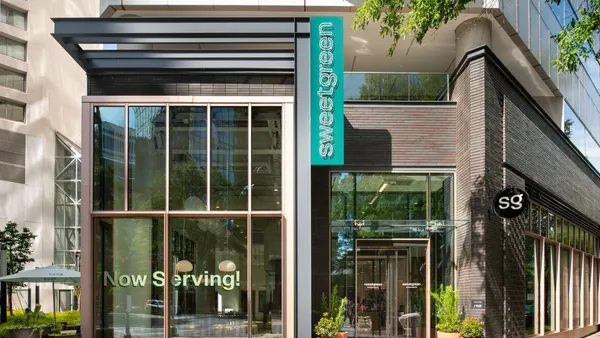
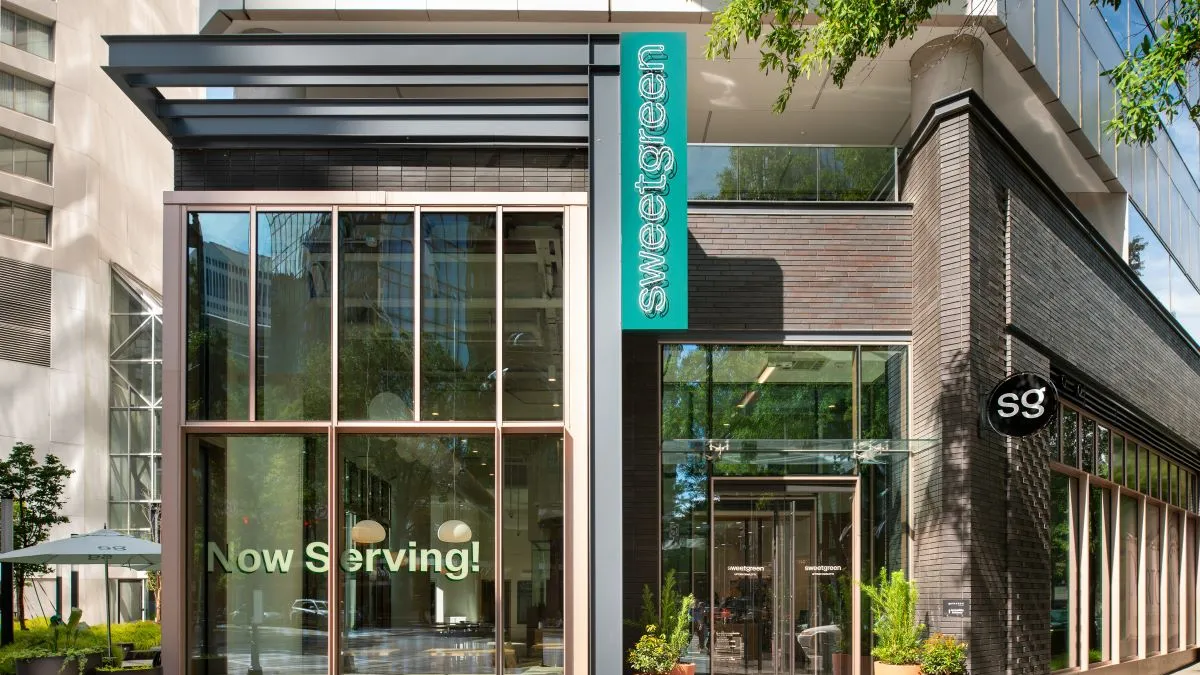
Q3 2025 saw the bifurcated consumer result in bifurcated performances. Restaurant Dive regularly tracks the same-store sales performance of two dozen major, publicly traded restaurant brands. In the most recent quarter, these chains posted a wide spread of results, from Sweetgreen’s 9.5% drop to Chili’s 21.4% growth, a 30.9% spread between the highest performer and the lowest.

While few brands lost quite as badly as Sweetgreen, which has been battered by the erosion of spending by younger consumers in its core markets, many have seen declines or stagnation in their customer counts over the last year or so. Wendy’s, for example, has seen three straight quarters of worsening sales, while Popeyes has posted same-store sales declines in four of the last five quarters.
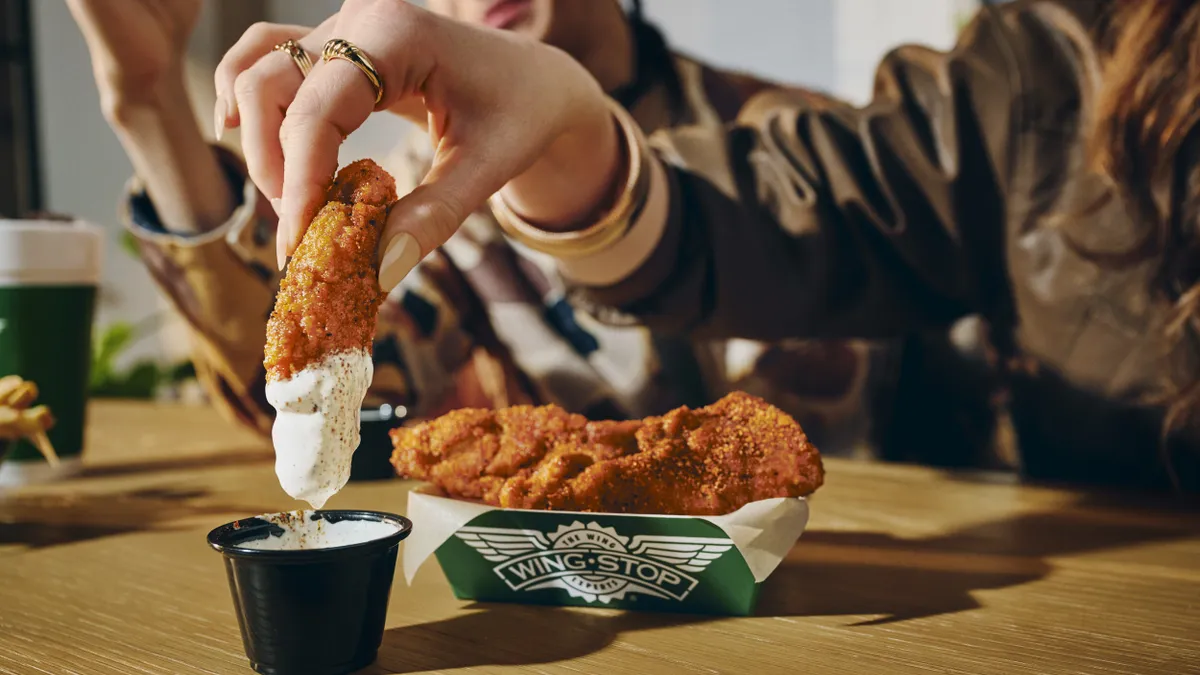
Pizza Hut’s sales woes have pushed parent company Yum Brands to consider selling the chain. Both Wingstop and Chipotle, key winners in 2024, have posted comps declines in two out of the last three quarters.
Many of these brands face consumer price sensitivity or rely on consumer demographics that are particularly pressured. Jack in the Box and Wingstop both cited the geographical concentration of their store bases in disproportionately Hispanic markets, which may be impacted by immigration raids. Chipotle cited unemployment, slow wage growth and increased student loan payments as factors crimping the spending power of its key 25- to 35-year-old consumer base.
Oakes said some of the underperforming brands have seen significant turbulence in their C-suites or changes in brand identity that resulted in a lack of focus.
Panera Brands CEO Paul Carbone echoed these sentiments at RFDC, saying that the brand had lost its focus on core aspects of the restaurant experience, like order accuracy, in favor of a tech emphasis. Carbone said further investment in labor, store remodels and ingredient quality would help the brand reverse its fortunes and return to its status as a segment leader.
There are operational commonalities across the winners, said Mike Esposito, co-managing partner at Franchise Equity Partners. Emerging chains, particularly in coffee and chicken, often have small core menus. But the variety of sauces and syrups on offer mean there’s still a wide range of possible flavor combinations.
Across the board, brands that have managed to restrain pricing, or that have made high-profile moves to cut prices, have seen some success — especially those that have combined these pricing moves with other methods of reinforcing value. Lance Trenary, president and CEO of Golden Corral, said during an RFDC panel that the chain had worked hard to keep its price increases below the rate of its competitors.
“We made a decision right at the beginning of COVID-19 that we wanted to do everything we could to own value in the family dining segment,” Trenary said. “Now we’re $3.30 less per person, on average, than our competitors.”
The results have been significant: Golden Corral has an average unit volume of roughly $4.7 million, and its sales are up 29% compared to pre-pandemic, with stronger margins than at any point in the brand’s history, he said.
No post-COVID restaurant brand turnaround has succeeded quite like Chili’s, which has led the publicly traded casual dining sector in same-store sales growth quarter after quarter since 2024. That turnaround combined a long-term investment in operations and equipment with a well-timed, value play that put Chili’s in direct price competition with fast food at that $10 price point.
Other casual dining brands have followed suit with deals that offer entrees for similar prices, like Applebee’s Two-for-$25 deal, which also includes an appetizer. That shift helped Applebee’s end a multi-year streak of same-store sales declines. McDonald’s has also followed this pricing signal by re-introducing Extra Value Meals. The latest round of earnings indicates that this consumer emphasis on value will continue, and maybe intensify, in 2026.