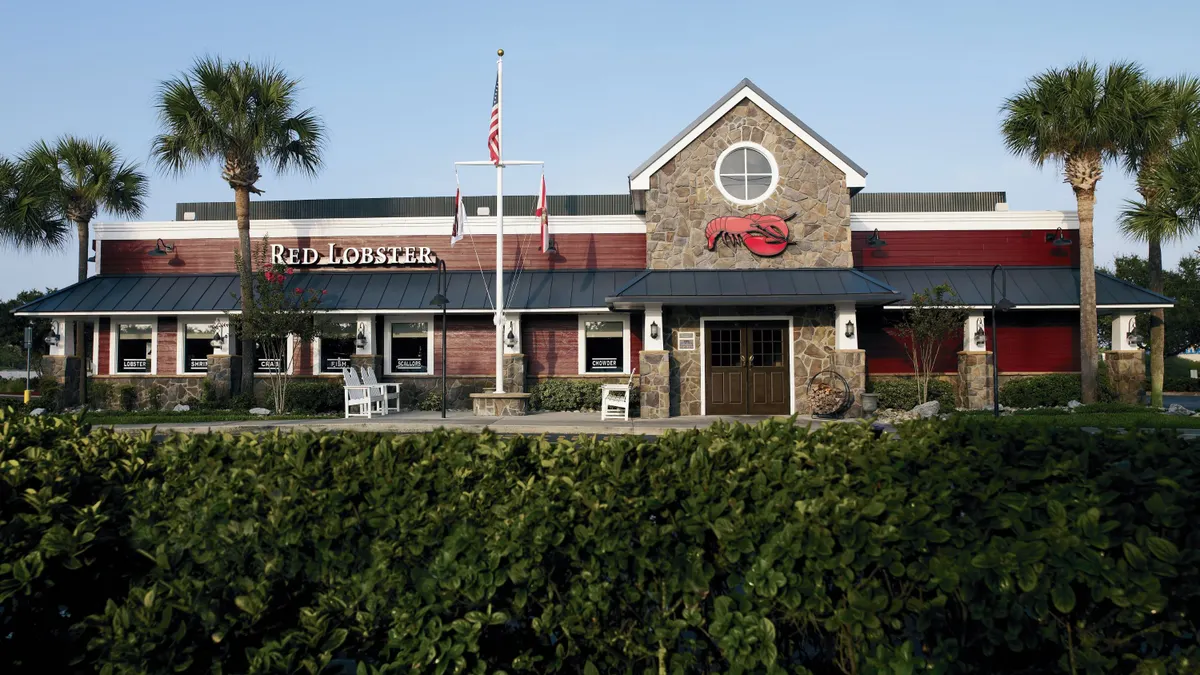
From high rent payments to an ill-fated Endless Shrimp promotion that resulted in over $11 million in losses, Red Lobster faced significant headwinds that ultimately led to its decline and 2024 bankruptcy.
Now, two years later, Red Lobster’s creditors filed a lawsuit in May seeking damages against former CEO Paul Kenny, various officers and Thai Union Group, the chain’s former owner.
In 2023, the chain was facing “significant financial headwinds and risked insolvency,” the lawsuit said.
“Instead of considering the interests of Red Lobster and all its stakeholders during this critical period—as its control over the Company obligated it to do—Thai Union doubled down on a campaign to squeeze out every drop of value that it could through uneconomic contracts that benefited Thai Union and made no economic sense for Red Lobster,” the filing states.
The lawsuit alleges that Kenny and Thai Union “engineered and implemented—over the objections of Red Lobster employees not affiliated with Thai Union—a disastrous ‘Everyday $20 Ultimate Endless Shrimp.’”. The filing called the promotion a “car crash” and said locations were “immobilized as they ran out of shrimp and were unable to turn over tables.”
The promotion was part of Thai Union’s efforts to push Red Lobster into offering more shrimp items, which required the chain to buy more shrimp at “inflated prices” from Thai Union, its exclusive provider, while underpricing the shrimp promotion to keep demand high, the lawsuit alleges.
The lawsuit claims that the plaintiffs breached their fiduciary duty and were grossly negligent when it came to acting in Red Lobster’s interest, instead pursuing practices that benefited Thai Union.
With losses only mounting and Red Lobster facing forbearance and defaulting on a $275 million loan from Fortress Credit Corporation in 2023, Thai Union began to divest itself from Red Lobster’s ownership. Without any further capital support from Thai Union, the chain ended up filing Chapter 11 bankruptcy protections May 2024.
Red Lobster and Thai Union did not respond to requests for comment by press time. In 2024, Thai Union said similar claims mentioned in bankruptcy court pleadings were “meritless allegations.”
The lawsuit lays out some serious claims, but it’s hard to say if this legal strategy is unique to Red Lobster or par for the course when it comes to bankruptcy.
“It all depends on the circumstances of the case,” said Keith Banner, bankruptcy partner at Greenberg Glusker. “But very often when a company filed a Chapter 11 bankruptcy, they are going to explore whether the prior activities of directors and officers have contributed to the downfall of the company.”
These cases tend to be successful because there is typically insurance coverage for directors and officers, known as D&O, Banner said. Creditors can work with insurance companies to negotiate based on policies and reach a settlement. Mid-market companies tend to have around $2 million to $10 million in insurance depending on revenue, industry and composition of the board, according to The Coyle Group.
“Bankruptcy is unique, because you have creditor entities that can bring actions on behalf of the bankruptcy estate,” Banner said. “A debtor can go after its former officers if they feel like they really made some bad decisions, but usually it's going to be a creditor committee or a creditor trust that immediately investigates the former directors and officers and, in this case, a major shareholder of the company.”
This particular case is unique because a major equity holder also was a major distributor of the shrimp in question. That relationship resulted in millions of dollars in sales for Thai Union, as well as millions of dollars of losses for Red Lobster.
But this type of lawsuit is certainly not uncommon, Banner said, adding that he has also filed cases on behalf of trustees against former directors and officers.
Banner said there will likely be more restaurant bankruptcies, in line with the trend of filings the industry has seen post-pandemic. Many chains hold asset-based loans, so when they have cash flow coming in, chains and operators can regularly make payments to meet their debt service. However, when the cashflow slows, as has been the case in recent years, the ability to pay that loan also goes down.
“We've had that issue with retail as well, because they'll loan based on your inventory, but if you're not making as many sales, then you can't borrow as much, and it becomes kind of a vicious cycle,” Banner said. “To the extent a lot of these larger restaurant chains follow that model, which in Red Lobster they certainly did, it can be a real problem for them.”
The creditors' trust in this case is tying up loose ends related to the 2024 filing to help pay off any remaining creditors that were owed prior to the bankruptcy, Banner said.
“They’re collecting what they can,” Banner said. “They’ll go through the process and make distributions to claims. … It’s more of that next phase.”