Several convenience store chains, including Wawa, Sheetz and Buc-ee's, have spent the past two decades turning gas stations into food destinations, eating into QSR market share. Now restaurant brands want a piece of the action.
In 2025, foodservice accounted for 28.5% of the c-store industry's $817.5 billion in total sales, up from 11.9% in 2005, according to the National Association of Convenience Stores. And foodservice has had an even bigger impact on profitability, accounting for 38.9% of in-store gross profit in 2025.
Foodservice is also having an enormous impact on fast food brands, as 15% of c-store visits are lost QSR occasions, according to a Technomic analysis of data from the third quarter of 2025.
QSRs are winning over customers because, in many instances, they’re beating fast food brands at their own game.
"Customers say they provide better food quality and — weirdly — better service than fast food chains. Almost half the people say that," Tillster CMO Hope Neiman said, citing the company's research.
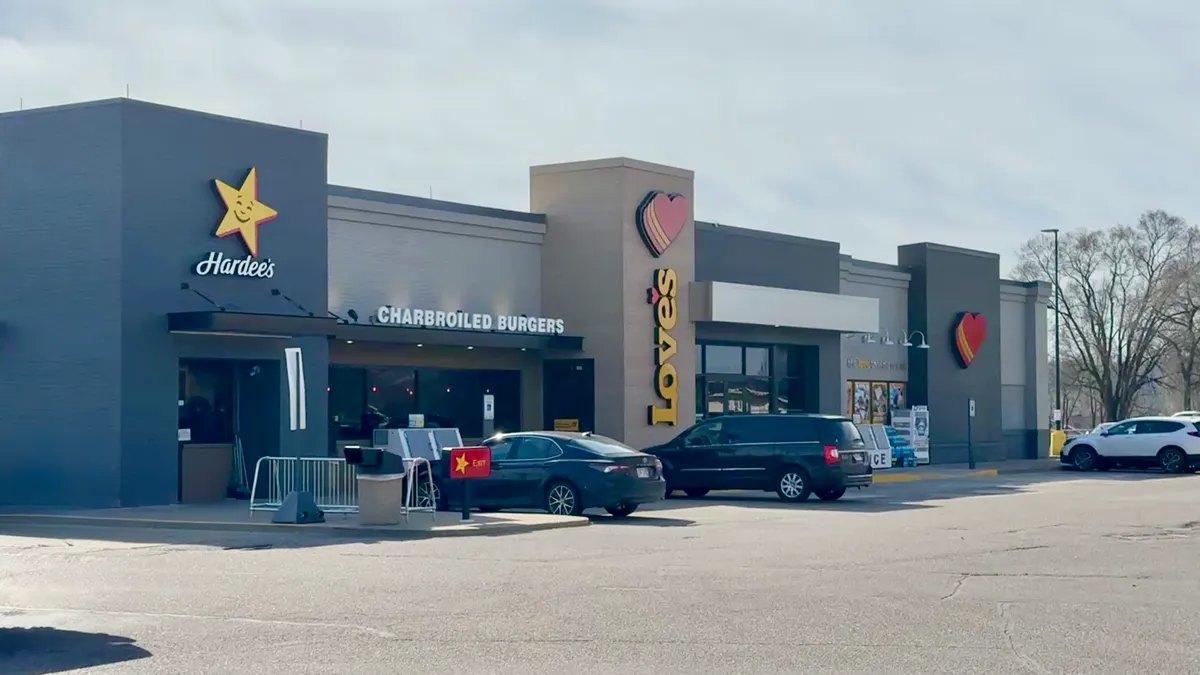
As more and more consumers flock to c-stores, opening a restaurant inside a c-store has become one of the more attractive growth channels in the industry. That’s because they offer built-in traffic and lower build-out costs than standalone units.
“At some of the higher volume places, you might have a couple thousand transactions a day come through,” said David Bloom, chief development and growth officer at sandwich chain Capriotti's, which operates several c-store restaurants.
But the same features that make the c-store channel attractive carry risks a freestanding restaurant never faces: a shared roof with fuel and tobacco, smaller footprints and, in many instances, staff who may be ringing up lottery tickets one minute and handling food the next.
For operators, success hinges on whether the brand belongs in the format at all; how much of the restaurant needs to adapt to it; and who is accountable for execution once the concept lives inside someone else's store.
Brand fit
Restaurant brands must exercise caution when entering a c-store development, as the format may be a poor fit.
The most common mistake brands make, Bloom said, is "thinking it's a fast, easy growth vehicle."
He pointed to Blimpie, which had partnerships with Kum & Go, Texaco Food Marts and other c-store and gas chains, as a cautionary tale. When those companies severed ties with the sandwich shop, Blimpie had to close most of its stores. The brand’s footprint shrank from over 2,000 stores in the early 2000s to just 96 today.
The c-store ties also “diluted the brand,” Bloom said. “Even though it helped them grow fast, in the end, they ended up with nothing.”
That’s why Capriotti's, an upscale sandwich brand, says “no” more often than “yes,” limiting itself to high-visibility, high-traffic sites with professional operators. The brand also looks “to be the exclusive operator in the sandwich category," Bloom said, ruling out c-store chains that make their own sandwiches.
Additionally, some categories may be a better fit for c-stores because their offerings travel well and match pre-existing demand. Brands focused on menu items that are easy to make, portable and stable in demand — such as pizza, breakfast sandwiches and coffee — are the strongest candidates, said Hubert Paul, a partner at global consultancy Simon-Kucher.
Tweaking the menu
Once a restaurant brand commits to operating in c-stores, it’s essential to redesign its menu and operations for the smaller, more complex format.
One of the most common mistakes brands make is offering their full menu at c-store locations. Focusing on high-volume, fast-selling items that can survive a car ride is usually a better strategy.
"You're optimizing for the car, not a seat in the dining room," Paul said.
Grab-and-go and lower-priced items are also key, experts say.
Some restaurant brands now have formats specifically designed for c-stores and other non-traditional locations. Pizza Hut Express stores, for example, carry an abbreviated menu skewed toward single-serving sizes.
But the operational risks of such a venture can be significant. A c-store associate juggling fuel, checkout, stocking and cleaning may also be responsible for preparing food, which can lead to improper handling and poor food quality.
"The food safety standard issues — that's the most dangerous piece," Paul said.
That’s why Capriotti's is so selective when choosing c-store locations. The brand insists on a separate entrance, dedicated parking and seating, its own equipment and its own staff — co-located with the store but run as a distinct restaurant.
"We want it to look and feel like a Capriotti's," Bloom said. "We don’t want to be a counter in the back of a gas station."
Given the inherent complexities of operating a QSR in a c-store, Paul urges brands to run pilot programs before scaling up their c-store business because, if you move too fast, "you're placing bets without all the information."
So, while c-stores present a massive growth opportunity for restaurant brands, experts agree that a dedicated strategy and executional discipline are crucial to long-term success.
“A lot of people assume that a c-store is just like being in a standalone restaurant," Neiman said. "And it's not."