Dive Brief:
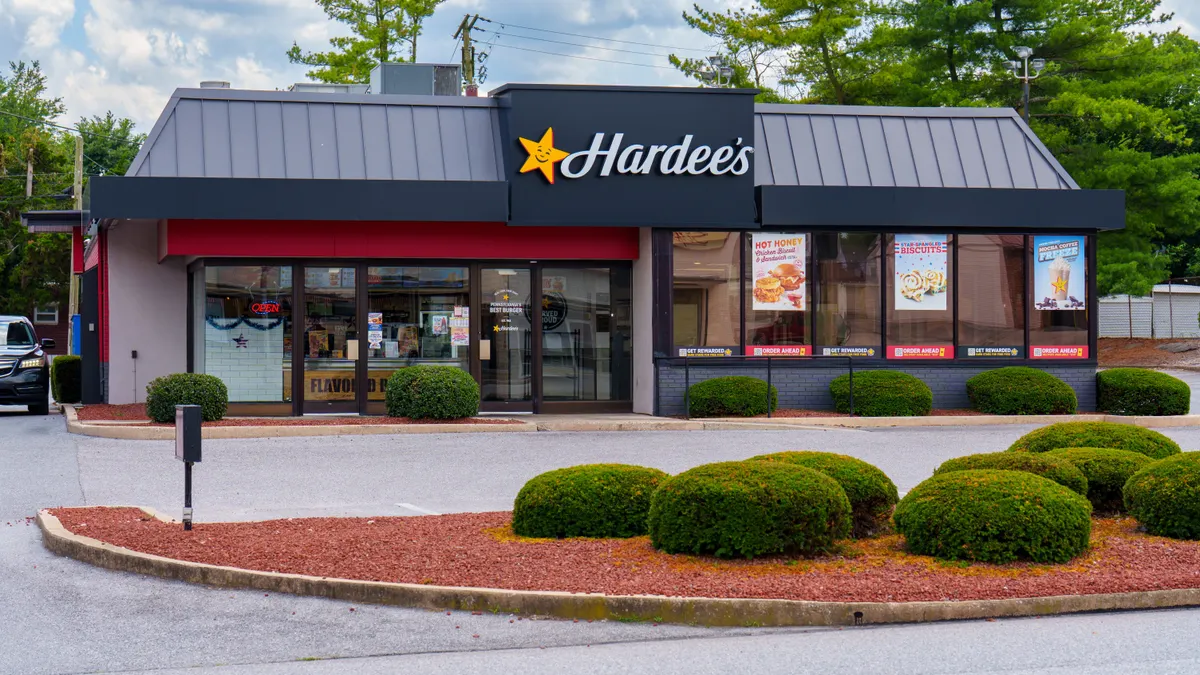
- Superior Star LLC, a major Hardee’s operator, said a combination of unexpected expenses, tax levies, rental obligations and sales problems at aging restaurants pushed it to seek Chapter 11 bankruptcy protections this month, court records show.
- The franchisee had “to absorb extensive and unforeseen deferred maintenance and repair expenses, unpaid taxes, and other latent liabilities,” following its $13 million acquisition of scores of restaurants in 2023, according to a declaration in support of Superior’s filings by CEO Brian Bonfiglio.
- CKE, the parent company of Hardee’s and Carl’s Jr., has seen a number of major operator bankruptcies in recent years, with closures and low unit volumes plaguing the two brands.
Dive Insight:
Superior Star isn’t the only franchisee to struggle after making an acquisition.
M&M Custard, a Freddy’s Frozen Custard & Steakburgers franchisee, filed for bankruptcy last year, after it faced significant challenges when it entered Chicago through an acquisition. Its Chicago assets proved to be too costly to run as they generated negative EBITDA.
While Superior Star generated about $80 million in gross revenue in 2025, unexpected expenses drained the company of millions of dollars it otherwise would have spent on debt service or operational improvements, according to the declaration.
The company said those expenses were allegedly a result of omissions by Starcorp, which sold the restaurants to Superior in 2023.
Two of Superior Star’s C-suite executives’ salaries are split “between the Debtor and Starcorp, LLC and/or Starcorp HD, LLC (collectively, “Starcorp”), the seller of the Restaurants.” The responsibility for and scale of the alleged omissions is not explicitly alleged in the declaration.
In addition to those expenses, the decrepitude of restaurants suffering from deferred maintenance “suppressed demand by creating an unattractive invitation to potential customers.” This issue was exacerbated by rising food costs.
Superior closed underperforming units in the lead up to its filing, but still had to pay rent on some of those units. Hardee’s franchise disclosure document listed 32 terminations or closures involving Superior Star last year. By the time the operator filed for Chapter 11, it possessed 59 stores, according to court records.
Superior Star fell into delinquency in paying some state sales taxes, which resulted in “in the taxing authorities unexpectedly levying the Debtor’s bank accounts.” Those tax levies were the factor that pushed the struggling operator to file for bankruptcy, the declaration stated.
The franchisee hopes the bankruptcy process will address “the claims and liabilities of its franchisor and the entity from which the Restaurants were acquired,” and that it can emerge from bankruptcy as an operationally durable company capable of paying its taxes and employees.
Other restaurant chains facing unit closures or major franchisee bankruptcies in recent years have reinvested significantly in their store bases. Burger King, which faced several major operator bankruptcies starting in 2023, launched the Reclaim the Flame program, a significant investment in remodels and marketing that has since returned the chain to same-store sales growth. After sustaining sharp declines in its comps, Jack in the Box announced a triage reimaging program earlier this year that focuses on improving the curbside aesthetics of its restaurants.