Third-party aggregators like DoorDash and Uber Eats continue to take a large slice of pizza delivery operations, but in-house delivery isn’t going away anytime soon, industry experts and national pizza chain executives say.
In fact, most operators — including Pizza Hut, Papa Johns, and Domino’s — post listings on at least some third-party aggregators to capture diners who frequently order on those platforms, said Benji Bahena, a research analyst at Euromonitor International.
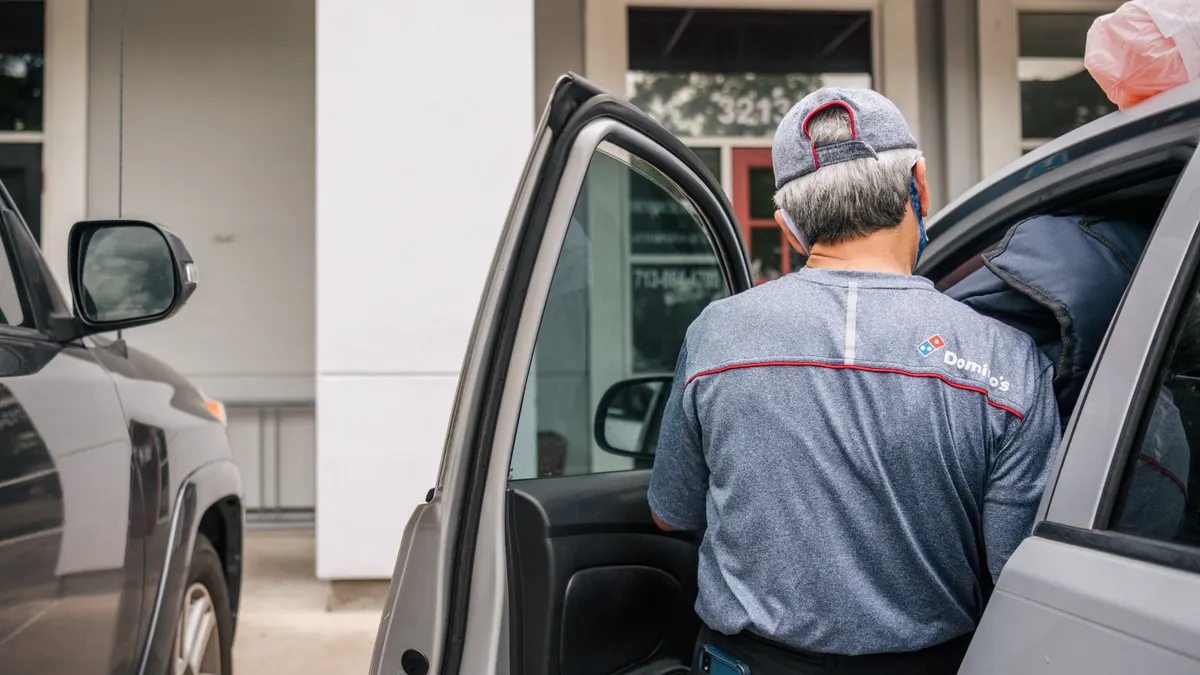
But the nature of those partnerships vary. Large companies still deliver their pizzas using in-house drivers when orders are placed through their apps or websites, while mid-range pizza chains could be more reliant on third-party delivery platforms, said Bahena. In Domino’s case, its drivers still deliver the pizza even when orders are placed through the aggregator platforms.
That’s because there are a number of benefits to delivering in-house, and drawbacks to completely outsourcing the service through the aggregators, Bahena said. First-party delivery, for example, allows pizza restaurants and chains to avoid the costs of operating on a third-party platform, like fees, he said.
Pizza chains have also touted better experiences and food quality when orders are delivered in-house.
Michigan-based pizza chain Hungry Howie's uses third-party delivery platforms to boost incremental value for individual franchisees, said Moe Shrikian, the company’s executive vice president and general counsel. But the chain continues to invest in its first-party ordering and delivery capabilities so it can strengthen customer loyalty, support repeat business and help the chain maintain a direct connection with guests, he said.
“The key is meeting customers with the convenience they want without losing what makes a brand unique,” said Shrikian. “We see third-party delivery as one tool in the toolbox, useful for reach and incremental occasions — while our owned channels remain critical for delivering the best experience and building long-term customer relationships.”
Such a hybrid model for pizza delivery will most likely continue into the future, said Bahena. Pizza chains at all levels benefit from the volume and exposure they get from the ubiquity of delivery apps. But it is a “double edged sword,” he said.
The “increased overhead and lack of easily identifiable differentiators on third-party systems behooves operators to maintain a presence outside of third-party applications as well,” Bahena said.
Benefits of in-house delivery
Last month, Papa Johns reported year-over-year declines in total delivery in the fourth quarter of 2025 despite “notable strength in Uber Eats’ performance,” said CEO Todd Penegor during the chain’s Q4 earnings call.
The third-party marketplace has gotten more competitive from a price standpoint since Papa John’s first joined the platforms five years ago. But the company competes where the consumers are, said Ravi Thanawala, CFO and president of the company’s North American division during a panel discussion at UBS’s Global Consumer and Retail Conference in March.
According to the Auguste Escoffier School of Culinary Arts’ 2025 Consumer Dining Trends report, most consumers regularly use third-party apps for food orders — including a large percentage of Gen Z and millennial diners.
“If the consumer is in the aggregator, we’re going to push hard to fight for share and continue to gain share there,” said Thanawala.
While Papa Johns’ aims to continue growing and expanding on third-party platforms, it is also looking to improve its first-party ordering experience through innovation. First-party delivery can provide a better product and experience to customers, experts said.
According to a study released in January from mystery shopper company Intouch Insight, pizza deliveries that were completed in-house often had higher temperature scores, satisfaction and speed scores than orders completed by third-parties.
The in-house ordering digital experience allows Papa John’s to engage with its consumers directly, and innovation, such as a partnership with Google Cloud on AI-backed delivery and ordering, helps them meet consumer expectations, said Thanawala during the UBS Conference panel.
Through the partnership with Google, Papa Johns is trying to figure out how to differentiate its first-party delivery experience, Penegor added during the UBS panel discussion.
“Whether that’s voice ordering, whether that’s easy group ordering leveraging AI. Those will be fun things that will only happen if you get into first-party through our app,” he said.
Plus, completely moving over to third-party apps for delivery — even for small and mid-sized shops — can be challenging and lead to missed opportunities.
Pizza operators that have historically delivered in-house, often have purchased some kind of equipment or delivery infrastructure, such as a stock of warming bags or in-car heaters, that, if they fully shifted to third-party aggregators, would become sunk costs, said Bahena.
Brands may also miss out on relatively low-cost advertising opportunities by switching to third-party delivery drivers, since having delivery workers driving around with a simple sign identifying the brand can boost exposure, he said.
Third-party delivery will not go away, either
Hungry Howie’s partnered with DoorDash in 2020 to support delivery fulfillment for orders that were placed through its first-party channels such as its website, app, or the phone, said Shrikian. The partnership allowed the company to maintain the direct relationship it had built with its customers, while leveraging DoorDash’s delivery network to meet demand and improve convenience, he said.
The chain later expanded to other marketplaces such as Uber Eats and Grubhub to reach more guests who were using the apps and thereby capture incremental occasions, he said.
Third-party platforms can introduce the Hungry Howie’s brand to new customers and improve discoverability at key decision moments — helping to drive incremental orders, particularly at times when there is high demand or in areas where customers strongly prefer ordering through such apps, Shrikian said.
They can also come with higher average checks at times, and can help boost marketing for limited time and seasonal items, said Shrikian.
Visibility on third-party aggregators can be particularly crucial for mid-range pizza chains trying to break out of a hyperlocal range, said Bahena. But, with a large number of operators listed under the “pizza” section of the third-party delivery apps, a restaurant’s listing could also easily get drowned out, while the profusion of options could force shops to lower prices to compete there, he said.
For Hungry Howie’s, third-party delivery has performed as a complementary and “largely additive channel” for participating franchisees, Shrikian said. In the markets where it’s fully enabled, third-party delivery drove incremental occasions — helping to drive between 5% and 25% in additional demand, he said.
Still, the company was intentional about protecting their guest experience when they evaluated third-party marketplaces, and refused to work with new platforms until they had agreements that established “clear, shared expectations for how the experience should work,” Shrikian said.
Such agreements ensured the accuracy of the menus and orders, item availability controls, food pickup and coordination procedures, delivery handling requirements, and customer support processes, among other guidelines, he said.
The third-party aggregator models work best when there are “clear, shared expectations with our partners, so the guest experience is consistent,” said Shrikian.
Bahena said he would not be surprised if the level of partnership and dependency pizza operators have with third-party platforms cycles on and off, as they navigate consumer reactions to the platforms, legislative changes, and the macroeconomic environment.
Consumers could push back on the high delivery fees charged by the aggregator platforms, prompting pizza operators to offer loyalty bonuses to customers that order directly from their app or website instead, Bahena said.
Even in such a scenario, pizza companies may still not fully divest from third-party aggregators — meaning the current hybrid standard will remain the standard, he said.
People who have subscriptions with third-party apps DoorDash Dash Pass, Uber One, and Grubhub+ tend to place repeat orders with restaurants that they like and trust, Shrikian said. For Hungry Howie’s, those platforms will continue to be an important part of the chain’s broader off-premise ecosystem in the immediate and long-term future, he said.