
Ask a facilities executive at almost any national retail or restaurant brand when their buildings were last accurately documented. The honest answer is usually that nobody remembers. Somewhere in a file room or on a shared drive sits a set of as-built drawings and facility data, most of them years or even decades out of date. Walls have moved. Electrical panels have been rerouted. A tenant improvement here, a code retrofit there, but none of it is reflected in the plans and facility data that everyone still relies on when it's time to build again.
That gap between what's on paper and the actual existing conditions has become a financial liability. Unfortunately, it gets more expensive every year as brands accelerate how often they touch their real estate.
The cost of guessing
Multi-site renovation programs live and die on accurate information. A crew shows up expecting a straightforward tenant improvement and finds an undocumented structural beam, a mislabeled gas line or critical dimensions that differ from the plans. The result is the same every time: change orders, schedule delays and a budget that no longer matches the one that was approved. Multiply that across a rollout of 200 or 400 locations, and a rounding error at one site becomes a material risk to an entire program.
The exposure isn't limited to construction costs. Outdated documentation creates blind spots that flow into the design and planning process, such as ADA compliance, fire and life-safety systems and codes that have changed since a building was last permitted. For publicly traded retailers and franchise brands alike, that's a quieter, but no less real form of liability. The kind that surfaces in an insurance claim, a compliance audit, a store that cannot open or a lawsuit rather than a change order.
From tape measures to digital environments
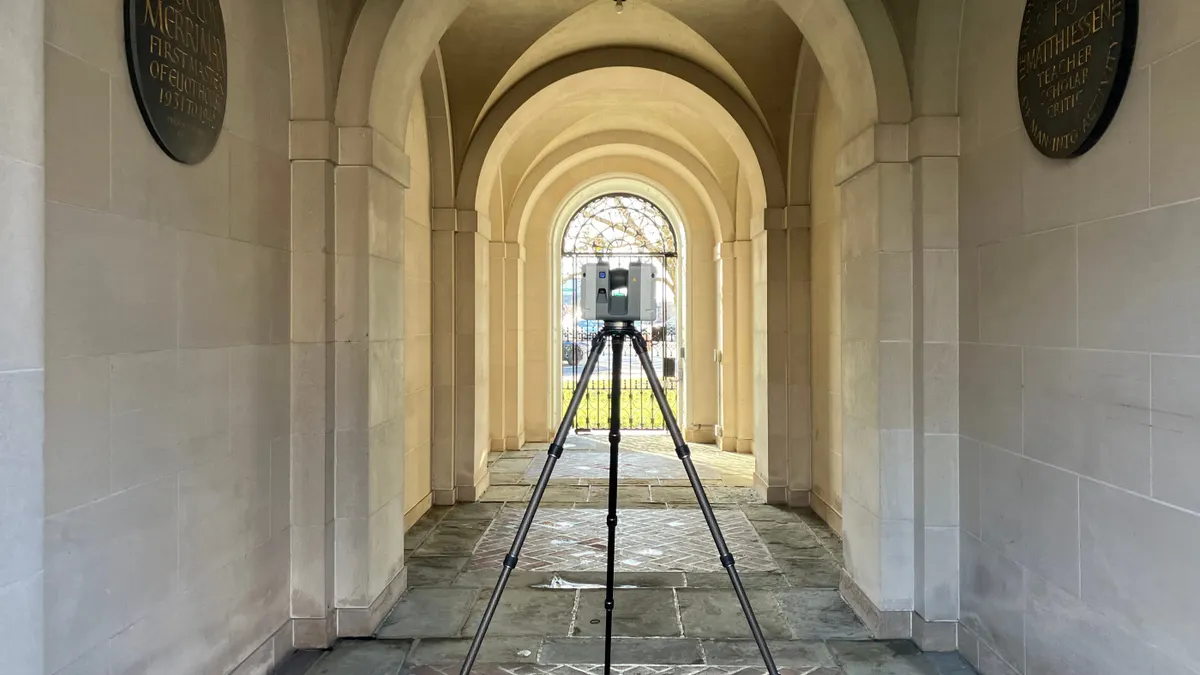
The technology now available to close that gap has matured considerably. 3D reality capture — laser scanning paired with Building Information Modeling (BIM) — produces a highly accurate digital model of an existing building in a fraction of the time a manual survey takes, with a level of precision and reliability that no tape measure or field sketch can match. Precise location of every wall, rerouted ductwork or any deviation from record drawings due to undocumented renovations and field conditions can be captured as they exist today, not as it was drawn years ago.
Sevan Multi-site Solutions has used reality capture as the foundation for renovation programs across major retail, restaurant, convenience store, fuel and pharmacy brands, including McDonald's, Starbucks and Shell, assessing more than 2.8 billion square feet of existing conditions before a single wall comes down. The payoff shows up in program performance. On a 650+ location remodel program with McDonald's, reality-capture documentation helped compress total completion time from a five-year timeline to 2.5 years, largely by eliminating the field surprises that stall multi-site construction. Along the way, the program cut change orders from 10% to 3%.
Chipotle's digital-ordering rollout shows the same principle at the individual-site level. Sevan installed roughly 1,300 Digital Make Lines and Digital Order Pick-Up Shelves across locations in nine states, each within a three-to-five-day window. Hitting that pace required precise knowledge of existing kitchen conditions at every site. This included electrical capacity, equipment clearances and structural constraints, details that are impossible to guess and expensive to discover mid-build.
That front-end accuracy is the whole point. Most brands don't find out the potential disconnect between legacy records and the actual existing conditions until a crew is already on site, and by then the fix means change orders and delays. Sevan documents and digitizes real existing conditions before any work starts; this facilitates broad collaboration between stakeholders using accurate data, so any surprises can be addressed in the model, not in the field.
This work provides continuous value of an accurate digital record through the project cycle and the asset lifespan. When a building has an accurate digital record, companies are building on a foundation of sound data for every remodel, upgrade and compliance review that follows.
Why this matters more right now
Retailers and restaurant brands are touching their physical locations more often than they used to, not less. Buy-online-pickup-in-store initiatives, kitchen automation, footprint reduction and EV charging installations are driving construction into buildings that haven't been accurately documented in years. Every one of those projects carries the same risk when it starts with outdated information: costly surprises, delayed schedules and compliance exposure that could have been caught in advance.
An accurate digital record is an asset that pays dividends across every future renovation, remodel and system upgrade a building will undergo. For brands planning construction at scale in the next several years, the question isn't whether to invest in accurate documentation; it's how long they're willing to keep absorbing the costs and consequences of not knowing the actual existing conditions from the start.