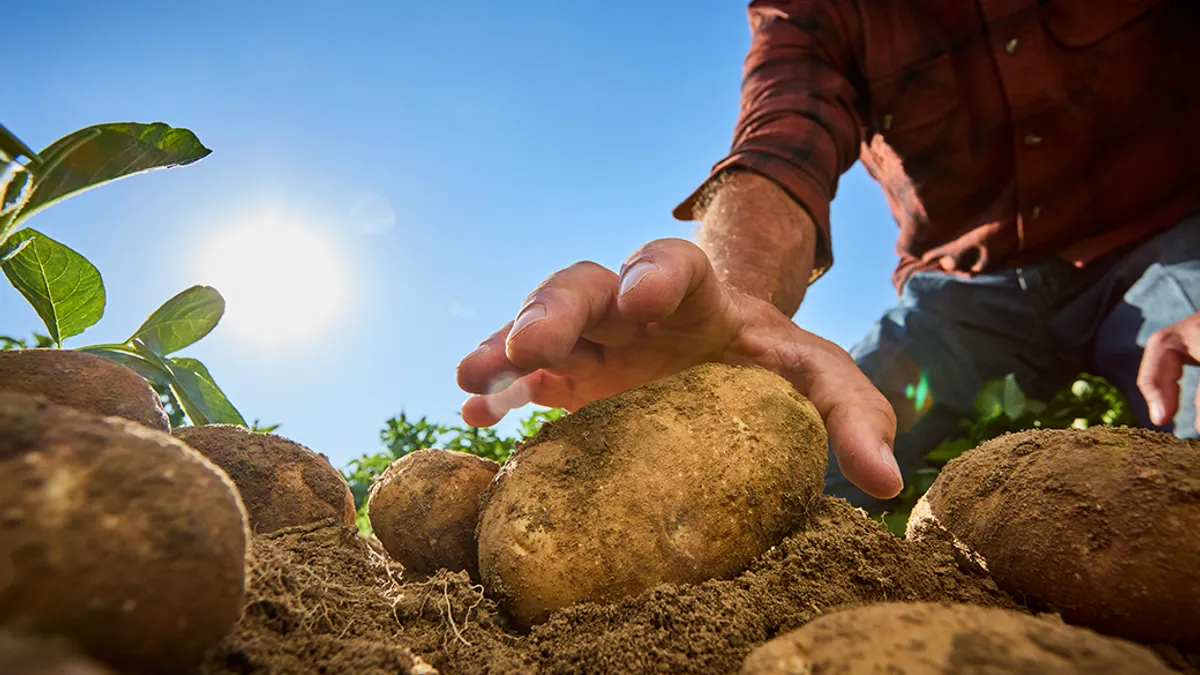

It starts in the soil. Before a potato becomes a fry, before it lands on a restaurant plate or in a delivery bag outside someone’s door, the potato grows in dirt that someone has to care for. Water must reach it and energy is needed to process it. People have to plant, harvest and transform the potato into something customers want to order again.
That chain of decisions, from field to fryer, is where sustainability either happens or doesn’t. As the food service industry faces rising pressure from consumers, regulators and its own operating costs to do more with less, the companies that supply restaurants are being asked a clear question: What are you actually doing?
Lamb Weston, one of the largest frozen potato processors in North America, is set to release its newest sustainability report this spring. It comes at a time when the gap between consumer expectations and what operators communicate remains wide. The data indicates that this gap is a missed opportunity.
Consumer expectations, by the numbers:
- Over 90% of consumers say sustainability is personally important
- 58% say it influences their everyday food choices
- Gen Z is 32% more likely to call sustainability “very important”
- 53% of consumers are more likely to visit restaurants offering sustainable plant ingredients
- 67% would pay more for sustainable ingredients
- Only 35% of operators actively promote their sustainability practices
Why it should matter to operators
In contrast, on the operator side of this compelling data, only 30% rank sustainability as a high priority and 35% do not promote their sustainability efforts at all. This disconnect offers an opportunity for the operators who do communicate their practices to stand out.
What a commitment to quality and sustainability looks like in practice
Lamb Weston centers its approach on three key areas: potatoes, products and people. Essentially, this means the sustainability conversation doesn’t begin in a boardroom. It starts in the Pacific Northwest's growing regions, where the company collaborates with local farmers on sustainable farming practices and has recently partnered with Atlas Agro to source locally produced green fertilizers.
On the operations side, the company has invested in Pulsed Electric Field technology to cut water and energy use during processing and has spent the last several years developing advanced water reclamation systems across its facilities. The result, according to its most recent report: 800 million gallons of fresh water saved, 1,800 tons of waste reduced and 12,000 metric tons of greenhouse gas emissions avoided. The company has also invested $25 million in sustainability initiatives.
Packaging is part of the equation, too. Lamb Weston has developed recyclable paper bags for its North American fry products, a change that sounds small but scales quickly across a distribution network of that size.
The consumer connection
For operators, the takeaway isn’t that sustainability is just a feel-good initiative. It’s what increasingly drives traffic. More than half of consumers say they’re more likely to visit a restaurant that offers sustainable plant ingredients and more than two-thirds say they’d pay more for them. Plant-forward menu items are also on the rise. Mentions of “plant-based” dishes in menus have increased by 34% over the past four years and vegan dishes featuring fries have increased by 31%. Nearly one in three consumers is willing to pay a premium for plant-forward options.
What to watch for
Lamb Weston’s upcoming sustainability report, expected this spring, will offer a fuller picture of where the company stands on its environmental and social commitments across People, Food and Planet. For operators and distributors tracking which suppliers are walking the walk, it’s worth a read.
Data cited from Datassential (Selling Sustainability, August 2024; 2025 Trends; Consumer Preferences; MenuTrends; Plant-Forward Opportunity) and Lamb Weston ESG Report, 2024.
Header Image Source: Andrea D’Agosto. Andrea is represented by Artist Representation LLC