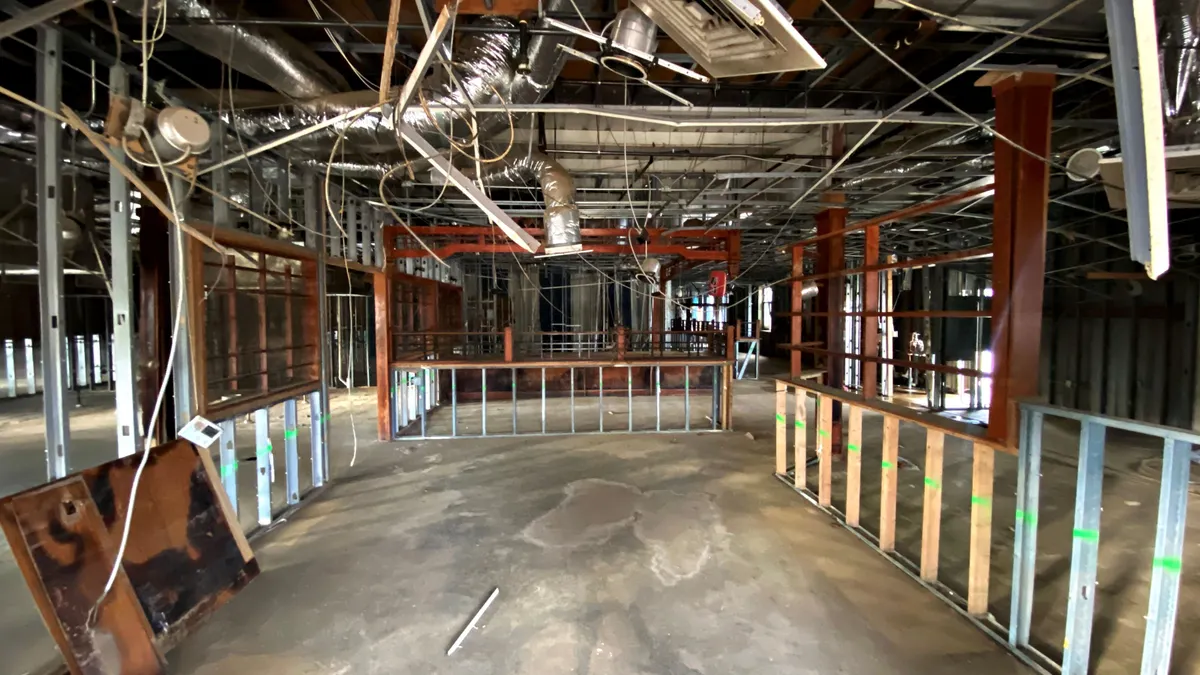
As construction costs climb, more operators are eyeing second-generation restaurant spaces — sites with existing kitchens, hoods and grease traps — to cut development costs and open faster.
Building from scratch can cost 1.5 to two times more than converting an existing restaurant, said Alexis Readinger, founder of Los Angeles-based hospitality design and architecture firm Preen.
“Most of the cost in a build gets attributed to the back of the house and all the systems behind it,” Readinger said.
That lower build cost matters most for franchise systems, where development costs directly impact unit economics.
“Every dollar you don't have to invest upfront is a dollar that doesn't have to be recovered through restaurant operations,” said Sam Ballas, founder and CEO of East Coast Wings + Grill.
The savings are most achievable for smaller brands and emerging chains, which have more flexibility to adapt to an existing space. Highly standardized chains like In-N-Out and Chick-fil-A build to precise specifications and are unlikely to compromise that consistency for a real estate deal.
Not always a deal
The biggest mistake is assuming that every second-gen restaurant space is a bargain.
“A lower initial construction estimate doesn't necessarily mean a lower total investment,” Ballas said.
The problem often comes down to a mismatch between the inherited space and the new concept. Operators see existing equipment and assume savings — then end up reworking the layout anyway because the space doesn't fit what the new restaurant actually needs.
“Penny-wise, pound-foolish,” Readinger said.
That’s why operators need to know when to walk away, said Danny Bendas, managing partner at Synergy Restaurant Consultants.
“Don't get emotional about it. It either works or it doesn't,” Bendas said.
Match the concept
The strongest case for a second-gen conversion is when the new concept closely matches the prior one, particularly in kitchen layout and equipment.
"Second-gen makes the most sense when you're going like-for-like in concept," Readinger said. "If I want to do sushi and I can take over a sushi place, from an infrastructure standpoint, it's brilliant."
But when the concept shift is significant — say, converting a fast casual burger restaurant into a full-service kitchen — the savings shrink quickly.
So, operators need to verify that a space has everything the brand requires before signing a lease.
“Operators will sometimes say, ‘I can get this location at a really good deal, but I can't do X,’” Bendas said. "If X is integral to your brand, you can't exclude it. The space is not right for you.”
Do the homework
It’s also important to understand why the previous restaurant closed.
“There's usually a reason a restaurant space became available,” Ballas said. “You need to understand that reason and determine whether it was concept-specific, operator-specific or a fundamental problem with the real estate.”
Operators should research the history of the location — and even reach out to the previous owner, if possible.
“It could have been a bad location, a terrible street view or lack of parking,” Bendas said.
Second-gen spaces can also come with unwanted baggage, causing brands to start on the wrong foot.
“Sometimes there needs to be such a dramatic overhaul from concept to concept because you have to erase the bad reputation that’s associated with that location,” Readinger said.
The building itself demands the same scrutiny, as a thorough equipment assessment is critical.
Stainless steel work tables are “pretty bulletproof,” but refrigeration and deep fryers may not be worth keeping without a close review of their condition, Bendas said.
Operators should also negotiate the removal of unwanted equipment as part of the lease.
“Have the owner get rid of it for you as part of your package, so you don't have to incur the cost of removal, disposal and everything else,” Bendas said.
Ballas also warned that existing systems, such as HVAC, may look like an asset until it “needs to be replaced six months after opening.”
“This must be managed with lease negotiations,” Ballas said.
That’s why operators need to involve real estate, construction, operations and design teams early in the process. The goal is to avoid designing “something that looks great on paper but creates operational challenges,” Ballas said.
"The goal isn't to open the cheapest restaurant," Ballas said. "The goal is to make the smartest investment."