Enter The Brass Tap in Round Rock, Texas, and be transported to the Wild West.
The restaurant is inside a Western-style saloon in a historic town outside of Austin. Wild West decor like a longhorn skull on the wall mixes with modern fixtures, a liquor wall and a row of beer taps.
Travel hundreds of miles west to The Brass Tap in Marina, California, and enjoy a beer just blocks from the crashing waves of a nearby beach. That restaurant has a traditional indoor dining room and large open doors that let out onto a patio offering a beer garden space.
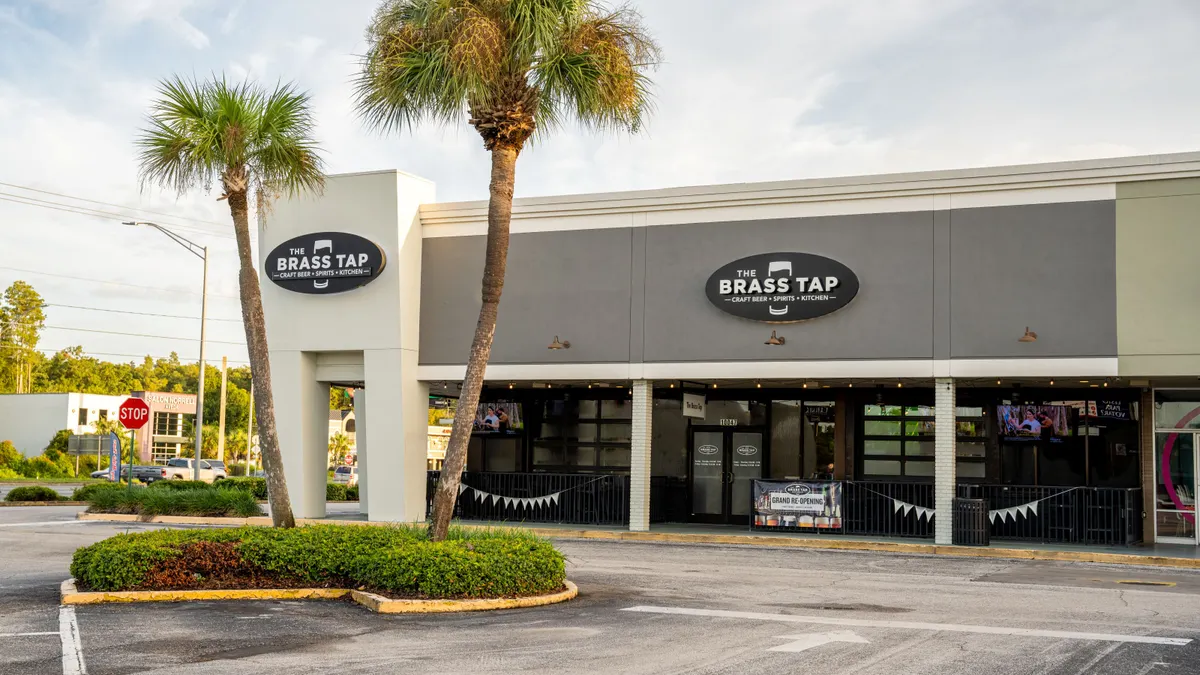
While all Brass Taps have the same logo, menu, branding and interior elements like its tap wall and liquor display, operators can generally design their restaurants around local elements, said Scott SirLouis, The Brass Tap’s chief operating officer.
“We keep these consistent brand touch points, but take the rest of the look and feel of the place, and really work with the franchisee to customize it and to make it individualized to their particular location in their community,” he said.
The Brass Tap’s competitors aren’t necessarily other chains, but local, independent restaurants, and the company wants to be seen as aesthetically on par with these establishments, he said.
“We want to be seen as the local neighborhood place,” SirLouis said. “The front of house feels like a local independent neighborhood place, and then we run all of the behind-the-scenes things like a chain.”
This strategy is working. The Brass Tap plans to open nine units this year with another eight planned for 2027, SirLouis said, adding that it has 38 units committed and in its pipeline, nearly doubling the chain’s 52-store count.
SirLouis added that he hopes to open 10 to 12 restaurants annually in the near future, and the chain will continue to rely on operators with local connections to ensure the success of the brand.
Creating local connections
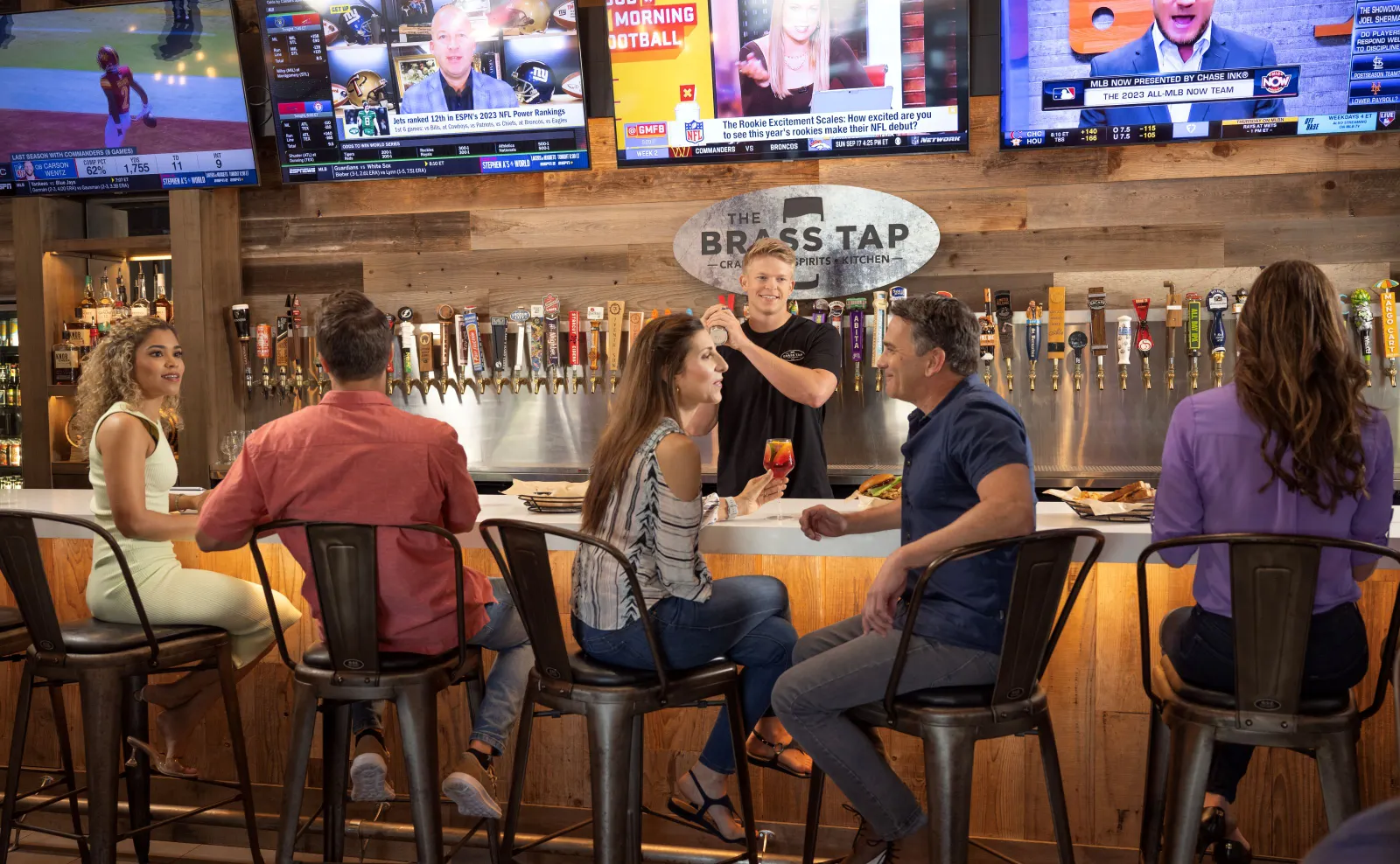
Restaurant operators typically have close connections with local businesses, be that through the beer suppliers or the events they host. At least one-third of the 45 to 60 taps at a Brass Tap restaurant need to be local brews, SirLouis said.
“Most of our franchisees are owner/operators, and so they're a member of the community, they know the local businesses. They know the trade zones, they know the people around them. So they're the front lines,” he said.
The Brass Tap restaurants host events and activities to engage with the local community. A restaurant in Marina, California, partnered with a local dance studio. Customers could buy tickets, which provided them a couple of drinks and access to a buffet as well as dance lessons from the instructors.
The Brass Tap allows franchisees the autonomy to create their own events. If they’re successful, corporate will share the ideas across the system so other franchisees can try similar events. The Bras Tap will offer best practices and advice on how to execute, how to post about it on social media and on other marketing collateral and artwork that could help promote the event, he said.
The chain’s marketing department also comes up with ideas, like themed trivia nights, that operators can offer their guests.
“It’s that mix of local execution and ideation with the corporate-level support that allows our franchisees to be successful,” he said.
The backing of a robust chain
Being a part of a chain means receiving efficiencies, purchasing power, systems, processes and tech support, SirLouis said.
Parent company FSC Franchise has almost 300 units across three brands and a half billion dollars in revenue, SirLouis said. That includes a full IT department, accounting team, restaurant operations support and construction teams, he said. The company also has an in-house architect. All of these departments are set up for rapid growth and can support The Brass Tap’s aggressive expansion pipeline, SirLouis said.
“We are part of a larger organization and we should easily be able to scale up to that,” he said.
The Brass Tap’s growth is coming both from new franchisees and existing operators. One Atlanta-based operator plans to open a second and third location after running a single location for many years.
About two-thirds of The Brass Tap locations are owned by single-unit operators while the remaining third are owned by multi-unit franchisees. With muti-unit operators, Brass Tap makes sure that there is a local general manager only working on those units, similar to an owner/operator, and not juggling other brands, SirLouis said.
“If you’re an owner/operator, you’re the most important person in the place,” SirLouis said. “If you’re a multi-unit operator, then your GM is the most important person in your business. The franchisees that embrace that have been very successful at running multiple stores.”
Experimenting with mass media, food extensions
As the chain densifies, it has also been experimenting with mass media advertising campaigns. In the Dallas-Fort Worth area where it has 11 locations, it did some connected TV ads for the first time. That campaign focused on The Brass Tap’s food and value specials and was very successful, SirLouis said.
The campaign in Dallas was particularly aimed at emphasizing Brass Tap’s food as well as off-premise channels, SirLouis said. Results from that campaign were “encouraging and positive,” and the brand is looking into other markets like the Washington, D.C., and Baltimore area where it is nearing a similar density to Dallas to support a successful campaign.
That marketing is part of The Brass Tap’s strategy to shift its brand positioning to focus more on food, he added. Currently its sales mix is about half alcohol and half food, but the chain is trying to change that mix to 55% food and 45% alcohol. Off-premise has also not been a big part of The Brass Tap’s business and is “uncharted territory” and a big opportunity for the chain, SirLouis said.
“While we will always be beverage-led, and people come to us for craft beer, craft cocktails, great wine program and social events, we also think that there is upside to helping people understand how great the food is, because we do have fantastic food, and that will help us both drive our lunch sales and also our our off-premise sales,” SirLouis said.
The chain plans to enhance its current line up, like expanding its burgers, adding more wing sauces and upgrading its sharables, SirLouis said. It is working with culinary consultants and an in-house culinary team to ensure there is a craft approach to its food.
“Craft can be an overused word, but it really is at the heart of what we're doing,” SirLouis said. “ It's a little more thoughtful, it's a little more creative, it's a little more curated.”