Dive Brief:
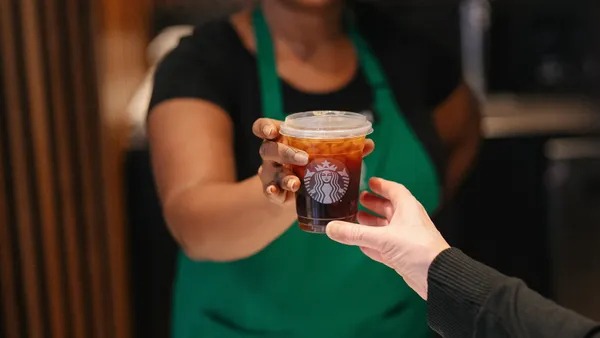
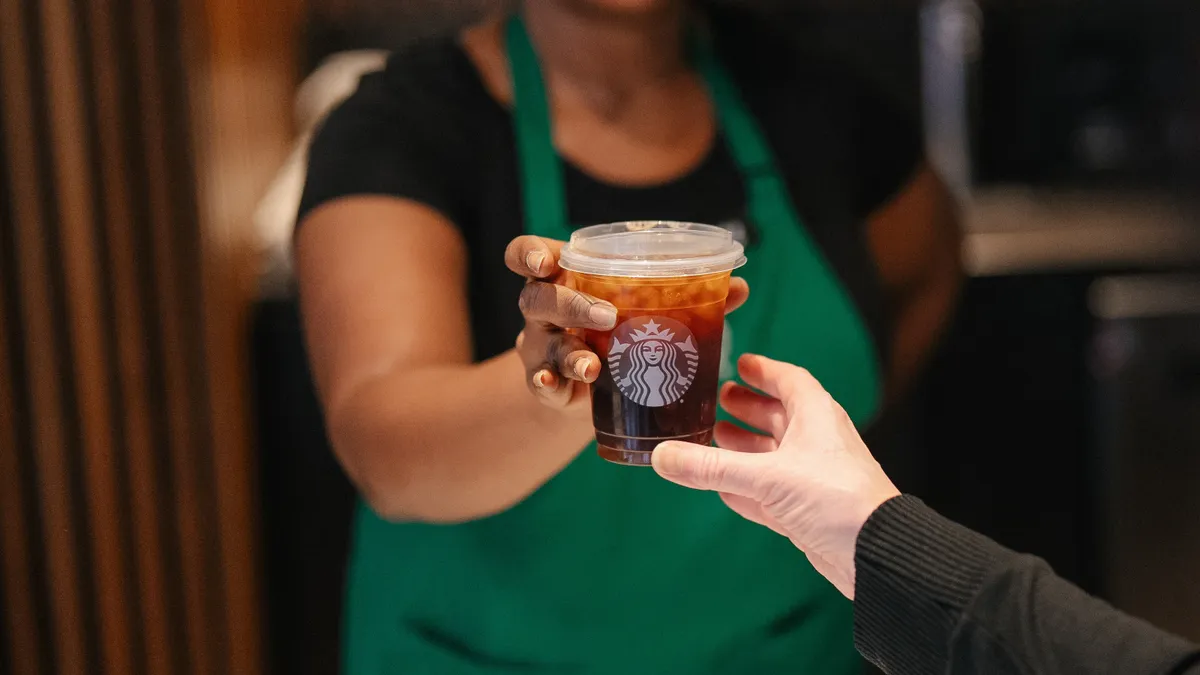
- Starting in July, Starbucks will pay quarterly performance bonuses of up to $300 to baristas and shift supervisors in cafes that meet key sales, operational and customer satisfaction targets, the chain said Thursday.
- The brand is also adding tipping across more ordering channels, including mobile-order-and-pay.
- Starbucks said the new program was meant to align worker incentives with customer experience goals under the Back to Starbucks plan.
Dive Insight:
The new changes accompany an ongoing effort to hire or promote thousands of workers to the newly created “coffeehouse coach” role, a full-time assistant store manager role between hourly shift supervisors and the store manager level. Starbucks said it plans to fill 90% of retail leadership positions through internal hiring.
The chain estimated that between the expansion of tipping across channels and the addition of the performance bonuses, incomes for frontline workers could rise between 5% and 8%. The coffee giant also will shift towards weekly pay. These changes and the performance incentive could help the brand reduce turnover.
The chain expects improvements in customer satisfaction and store performance to offset its investments in the incentive bonuses.
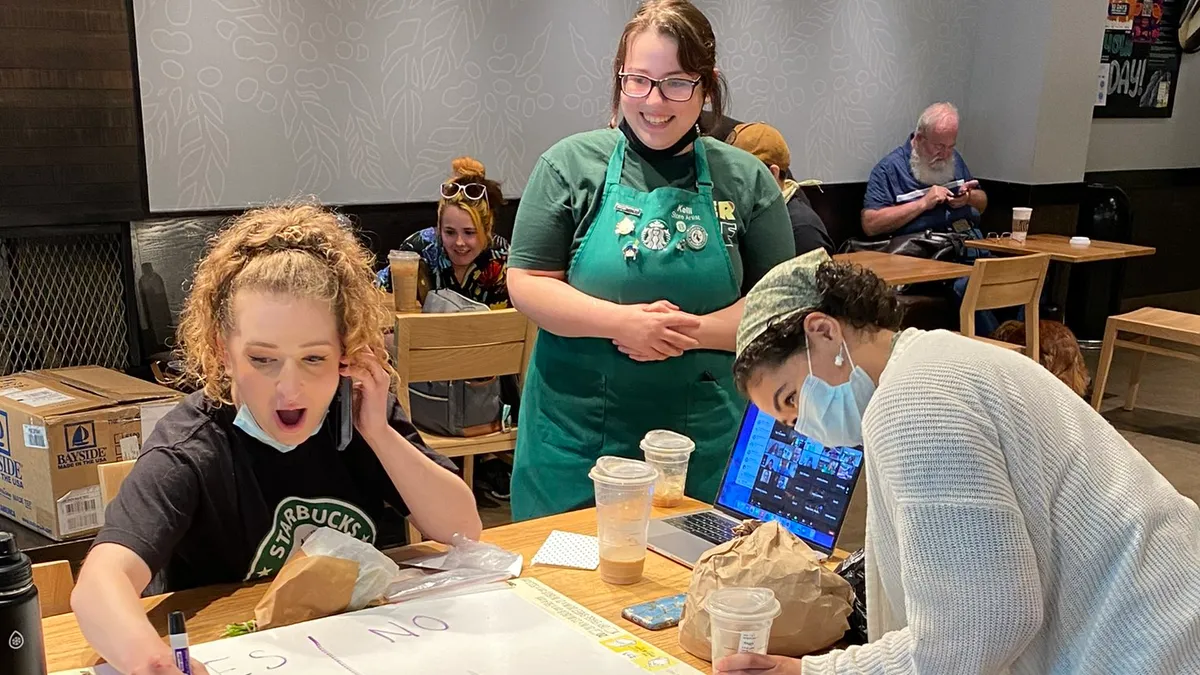
At stores represented by Starbucks Workers United, the company said the new changes would be subject to collective bargaining, as required by federal labor law. The company and the union have edged closer towards restarting bargaining, since SBWU trimmed its basic wage demands by about 15%. Both union and company representatives have said the parties are willing to restart in-person talks.
The Back to Starbucks turnaround plan has included significant investments — as much as $500 million — in hourly labor, as well as in coffeehouse renovations intended to make stores more welcoming.
Early parts of the turnaround plan were focused on smaller additions to the customer experience, such as the return of the coffee condiment bar in late 2024, followed by a shift away from loyalty discounting and a marketing campaign meant to reinforce premium brand positioning.
These changes slowed and then reversed the chain’s loss of traffic, with Starbucks returning to same-store traffic increases late in 2025.
In the announcement of the incentive program, Starbucks highlighted internal labor metrics it said showed the success of its turnaround. Shift completion rates have risen as new scheduling tools have made it easier for workers to trade shifts, turnover is down and about 1 million people applied to work at Starbucks last year, per the press release.