In 2026, restaurants may be backed into a financial corner.
Turbulent trade policies could raise food costs when many diners are already tightening their discretionary spending, forcing operators to get creative to keep sales healthy.
“Restaurants are set for a humbling year,” BTIG analyst Peter Saleh wrote in the analyst firm’s December 2025 forecast for this year, citing depressed valuations, pending unit closures, consumer price sensitivity and strategy overhauls. “Looking ahead to 2026, we expect a central theme to be market share gains by existing category leaders.”
Few chains are reporting positive sales growth, but QSRs may stand to reap the rewards of consumer spending anxiety, as diners trade down from casual and fast casual to save money, said Victor Fernandez, chief insights officer at Black Box Intelligence.
Still, there is opportunity for restaurants across categories to improve their 2026 outlooks, experts said. Cost savings strategies, innovation around affordable menu items like chicken and dipping sauces, and signaling value beyond just price — through novelty ingredients or wellness-focused formulations — can make a brand stand out.
Check out the six trends Restaurant Dive will be watching in 2026.
Traffic and sales will flounder
Consumers will likely continue to pull back on spending in 2026, experts said, which would strain restaurant sales and traffic. As of November, Black Box Intelligence measured four consecutive months of comparable sales and traffic declines, Fernandez said.
“Profitability and survival becomes a question, and it’s a challenge when you see that sales are trending down,” Fernandez said.
Only about one-third of the brands that Black Box Intelligence tracks saw positive comp sales in 2025 and even fewer saw traffic growth, he added. The number of chains to post positive comps this year is likely to decline, especially as 2025’s winning chains, like Chili’s, will lap very high comparables.
Circana anticipates less than 1% traffic growth in 2026, said David Portalatin, senior vice president and food industry advisor at Circana.
“Growth in foodservice is about winning the battle for market share,” Portalatin said.
Cost saving takes a front seat
Food costs are expected to increase in 2026, especially for beef, and managing supply chains will be particularly challenging as tariffs hit various imports.
“Supply chains are really screwed up again,” said Phil Kafarakis, president and CEO of IFMA, The Food Away from Home Association. “Tarrifs have a lot to do with that. … There’s a lot of uncertainty with the physical mechanics of moving stuff from around the world, and the logistics [are] a nightmare.”
With consumer spending compressed, restaurants won’t be able to raise prices much, if at all, to make up for increased costs. That means operators will be much more focused on controlling costs in 2026 compared to growing revenue, said Bryan Solar, SpotOn chief product officer.
“Figuring out how to manage costs in order to be profitable is going to happen at a clip that has not happened historically for restaurants,” Solar said. “The ones who don’t, unfortunately, I don’t think they’re going to be as successful.”
Technology can help restaurants better manage costs, and SpotOn has been working with customers through its product suite to help preserve profits, Solar said.
“The big thing is going to have to be agility,” Kafarakis said. “You are really going to have to have a couple of plans in place to be able to move them quickly and then experiment as you go.”
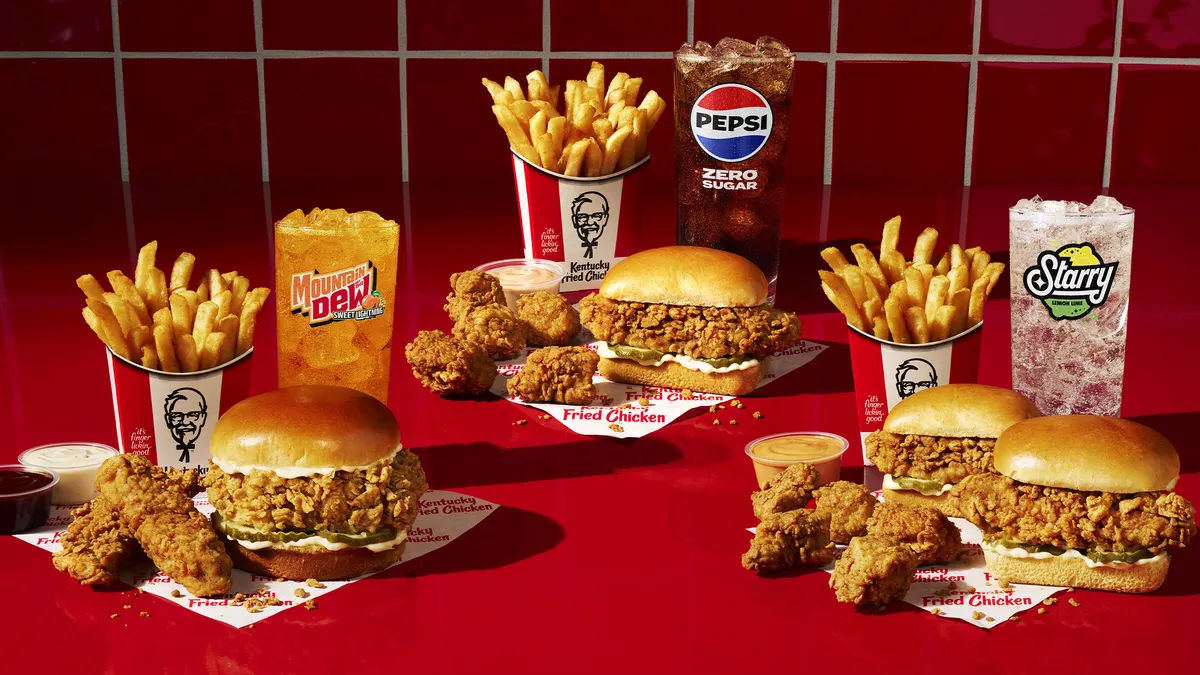
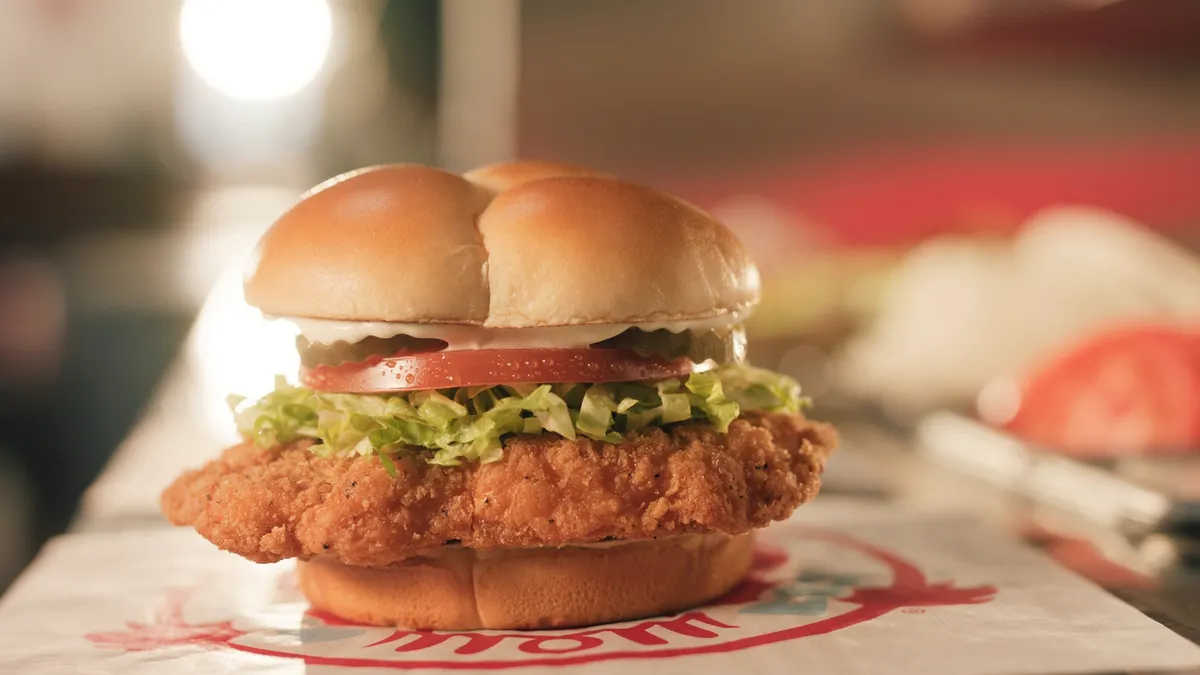
Chicken will still be king, and sauce will be the crown prince
High beef prices will make chicken more appealing for both operators and consumers, said Stacey Kincaid, VP of product development & innovation, US Foods.
“Operators are looking for solutions to help balance out their costs and offer customers choice and value,” Kincaid said. “If you can offer a chicken burger — as well as your beef burger — at a lower price, then that's an option that might attract more diners than the place down the road.”
Sharon Zackfia, group head of William Blair’s consumer section, noted the trend toward bold sauces, spicy chicken and similar dishes is reflective of a larger pivot.
“There's an ongoing shift to more robust flavors,” Zackfia said. “We've seen that for years now, food keeps getting spicier or more exotic in its flavor profile. I don't think that's changing anytime soon. That's a generational element.”
More customizable flavors and sauces are likely, with greater customization coming to core menu items through new additions, like sauces or LTO versions of permanent offerings, said R.J. Hottovy, head of analytical research at Placer.ai. This accords with predictions made by Yum Brands CMO Ken Muench, following Yum’s release of a report that found customization — and an accompanying consumer desire for control — were major factors in QSR purchasing decisions.
Consumers will opt for health — and quality
Portalatin said a growing diner emphasis on health and freshness may benefit chicken concepts, as well.
“Many consumers do perceive chicken, oftentimes, to be the ‘better for you’ choice,” Portalatin said.
Outside of protein choices, consumers may opt for smaller dishes, Zackfia said, which is driven by interlocking demands for value and health.
“I do expect, over time, more of an evolution towards smaller portions,” Zackfia said. “There's just no question that if people are on GLP-1s [weight loss drugs], they're not eating as many calories.”
Zackfia also said the problems facing-bowl based fast casual chains have been overstated, as consumers will still want the healthier, vegetable-heavy options offered by brands like Cava and Chipotle. Both brands, it’s worth noting, lapped strong comps quarters in 2025 and could benefit from a reset of the calendar.
Portalatin said specifically that consumer health preferences are often framed around finding high-protein options.
“The pursuit of protein is at the forefront for many consumers. We continue to see growth in the number of consumers who described their ideal restaurant meal as being a high protein restaurant meal,” Portalatin said. This has already pushed the brand to add new menu items, like Chipotle’s meat snack cups, which debuted in late December.
Hottovy expects the health preferences to extend to beverages, whether that’s a greater uptick in items like Starbucks’ protein cold foam, or a preference for a general healthy aura.
Value will take on a wider definition
The emphasis on value meals, particularly at specific price points, was a major trend in 2024 and 2025, as lower-income consumers began to reduce their restaurant spending. Hottovy said he expects that trend to continue.
While previous pullback impacted mostly lower-income consumers, Hottovy said the slowdown grew worse with middle-income cohorts in the second half of 2025, and consumers are entering 2026 particularly primed to look for value.
Some are shifting spend to value grocers, c-stores and dollar stores, Hottovy said. Restaurants’ efforts to win back those cash-strapped consumers will be one of the defining features of 2026.
“Value is certainly a part of the equation,” Hottovy said, and pricing may converge around the $10 to $12 price point, where many casual dining chains, led by Chili’s, are competing with QSR brands. Value plays by Chili’s and others upended the usual dynamics between the two segments, where value and convenience reined in QSR to the detriment of casual dining, which emphasized experience and hospitality to a greater degree.
QSRs, Hottovy said, are seeing backlash from consumers dissatisfied with pricing.
“Our data does show that [casual dining brands] are taking some share from quick-service restaurants. So it is resonating with consumers,” Hottovy said
Mark Wasilfesky, head of restaurant franchise finance at TD Bank, said the value meal might be nearing the end of its utility in the present cycle, as they can threaten brand power over time.
“You don't want to survive on a value meal. You want it to help you through certain times. You want to do an aggressive push,” Wasilefsky said. “I think LTOs are better vehicles for bringing people in than value meals, and they can be very effective.”
Beyond price points, brands are likely to find other ways of conveying value to consumers, Zackfia said.
“We'll see more ways to create menu innovation that incorporates value — so not necessarily discounting — it may even be like a more premium item, but at a more compelling price point,” Zackfia said. “[Gen Z] customers right now really need a reason to come in.”
Retention will be increasingly important
Labor retention will be a key focus for the industry. Many casual chains — like BJ’s Restaurants, The Cheesecake Factory and LongHorn Steakhouse — have touted improvements in turnover rates, which help improve same-store sales. BJ’s, for example, changed its training to be more balanced between digital modules and on-the-job training, a move that resulted in higher employee satisfaction.
Fernandez said that some restaurants are hitting “record-setting retention” levels and seeing turnover ease — an assertion born out by significant decreases in key Bureau of Labor Statistics measures of sectoral turnover.
With unemployment rates creeping up, there will be fewer incentives for workers to move around, Fernandez said. He added that wage pressure has declined over the past two to three years and may be lower still in 2026, though there are countervailing factors.
Retention will be key for restaurants as the labor force is expected to continue to shrink because of immigration raids and changes to immigration standards under the Trump Administration.
“A lot of kitchens are powered by immigrants,” Solar said. “There’s a feeling that labor cost is going to go up in 2026.