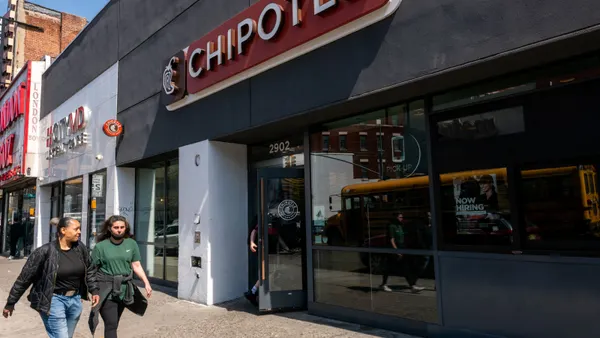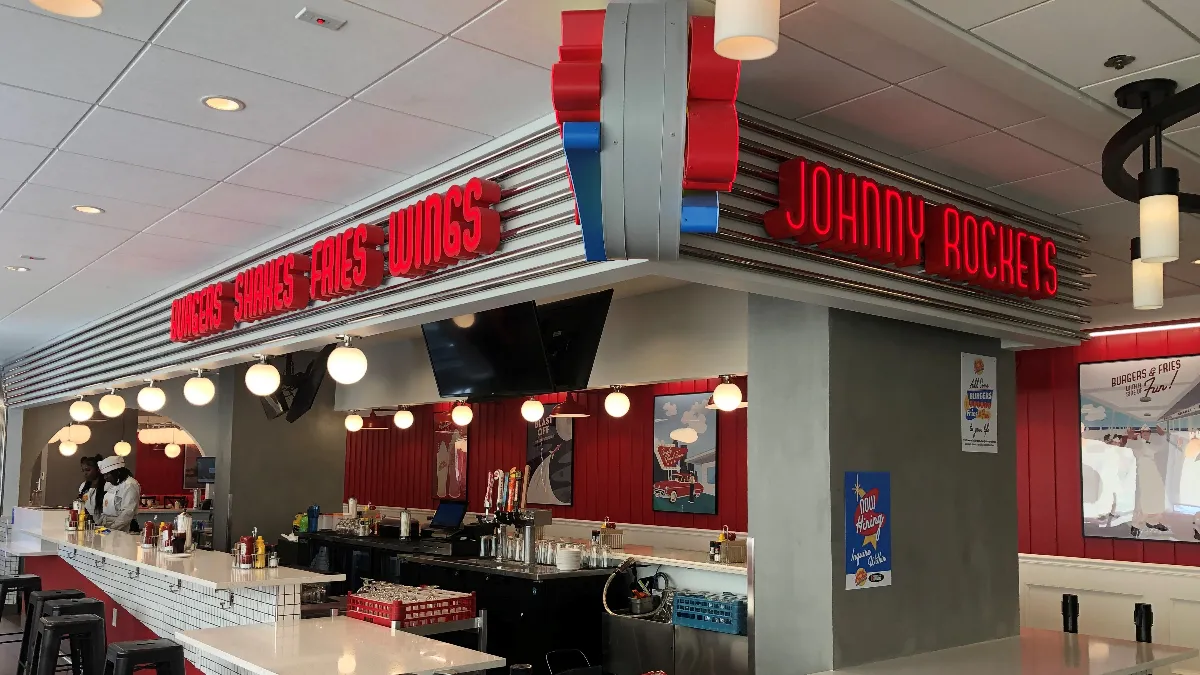
Order a burrito at Chipotle and the cashier might ask if the restaurant made it “perfect for you today.” Tip a Cold Stone Creamery employee, and the crew will sing. Time a visit to Johnny Rockets right and the servers will drop what they’re doing to dance.
Canned phrases, scripted songs and choreographed dance routines aim to boost brand consistency and create a distinctive and memorable experience, experts say.
“Customers can trust that experience is going to happen,” said Nate Brown, founder and executive director of CX Accelerator.
But brands risk alienating customers and employees, as the success of these efforts often hinges on a delicate balance of strategy, hiring, execution and customer preferences, experts say.
“When they create scripts they’re essentially trying to mandate behavior — but it backfires more often than it doesn’t,” said Jeannie Walters, founder, CEO and chief experience investigator at Experience Investigators. “It’s pretty obvious when somebody is not talking like a human would talk.”
Oftentimes, brands are targeting children, not parents, with these initiatives.
“Your kid’s not going to remember the name Joe’s Crab Shack, but they are going to remember the place where the waiter did the Macarena,” Brown said.
While creating a kitschy, memorable experience can help drive initial interest, the novelty can wear off after a few visits, which can limit repeat business long term.
“Everybody wants frequent guests. So ask the question: Could some of this wear off and actually prevent people from coming back?” Walters said.
Does the shtick hold up?
These bits usually work better when employees enjoy doing them, and fall flat when they don’t.
Cold Stone’s practice of teaching its songs during onboarding is, according to Brown, a design feature — it lets applicants opt out of the job before they ever hit the line.
“Put yourself out there unabashedly,” Brown said. “If you’re going to have employees do these silly things, you’ve got to make it abundantly clear that not only is this something you’re going to have to do, you need to enjoy it.”
But the constant demand to perform can wear on employees, even those who enjoy it initially. Walters pointed to sociologist Arlie Hochschild’s research on emotional labor, which found that faking emotions at work — called surface acting — can lead employees to burnout quickly.
“They don’t feel fulfilled when they’re being told to smile without really wanting to,” Walters said.
Customers can feel it, too, as performative joy often reads as the opposite, which can keep them from coming back.
Chipotle’s “perfect” script may be particularly problematic because it sets their employees up “for not being able to deliver on that promise,” Walters said.
It also sounds like the product of a corporate boardroom resulting from “a stupid process that got rolled downhill and isn’t really serving anybody very well,” Brown said.
So what does work?
Brown and Walters pointed to Chick-fil-A’s “my pleasure” as an example of a canned response that sounds like something a human would actually say, making it seem more authentic, while making it easier on employees.
But Trader Joe’s chatty cashiers are the gold standard for how to hire and train frontline workers.
“Trader Joe’s hires people who are comfortable talking to customers. They hire people who are naturally warm,” Walters said.
When employees are naturally friendly and people-oriented, brands don’t need to give them scripts or routines. Instead, brands should provide their staff with guidance about the type of experience they need to deliver.
“You’ve got to give them the principle, and then let them have some freedom in terms of how they express that,” Brown said.
Dutch Bros Coffee, which often ranks near the top of the segment for customer satisfaction, gets it right, too.
“Their brand is so pervasive — the music, the energy of their employees, the incredibly kind, just upbeat, peppy way the employees talk. I love it. I think it’s so amazing, and it’s very, very authentic,” Brown said. “I’m more loyal to Dutch Bros because of that.”
But that’s not true for every consumer.
“My wife hates it because it’s over the top for her. She’s never going to go to a Dutch Bros,” Brown said.
But brands rarely hear from customers who never come or don’t return, creating a massive blind spot for those looking to boost loyalty and gain market share.
“You’re never going to hear from those customers because they’re not going to set foot in your restaurant,” Walters said.