Dive Brief:
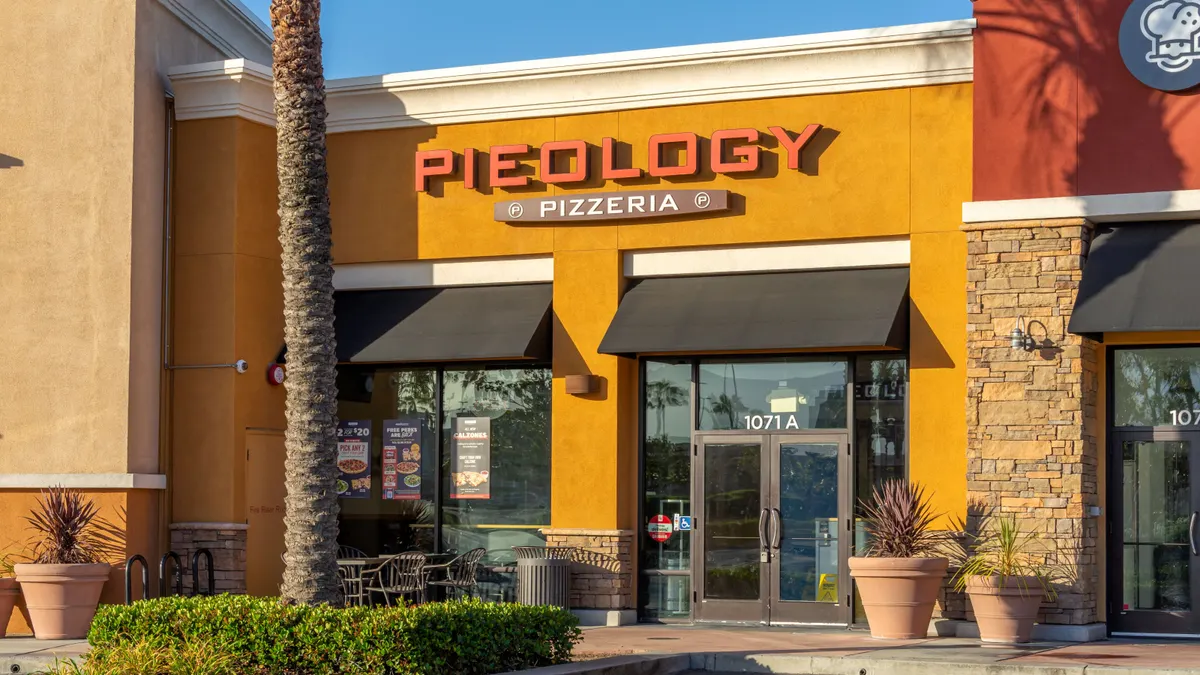
- Pieology, a fast casual pizza brand, filed for Chapter 11 bankruptcy protections this week, according to court filings.
- The brand’s filing follows an extended performance decline. In 2022, the chain had 130 stores, but at the time of filing it had 45 locations, including 29 franchised units. That number does not include the 17 restaurants it closed in the runup to the filing.
- Pieology’s troubles became acute when funding needed to overhaul operations at 29 underperforming stores fell through earlier this year. The brand failed to secure an alternate capital injection, according to court documents filed by Pieology founder Carl Chang.
Dive Insight:
Coming out of the COVID-19 pandemic, Pieology pivoted toward off-premise dining at considerable cost, according to the filing. In early 2024, the pizza brand began to undertake a further series of changes to its company-operated restaurants aimed at improving its operations. Those alterations included installing new kitchen appliances — like high-efficiency cooking and refrigeration equipment — simplifying the menu and pricing structure and making labor deployment more efficient.
This turnaround plan “produced measurable improvements in throughput, customer satisfaction, store-level performance, labor efficiency, and food-cost consistency,” Chang said in the filing.
Pieology sought to bring the improvements to a larger part of its store base, including 29 locations owned by a franchisee who was significantly past due on obligations owed to the brand. The chain negotiated to take control of those stores in March.
“The goal of the transaction was to stabilize system‑wide performance, regain operational control over struggling restaurants, and expand the operational improvements across a larger group of stores,” Chang wrote.
Such a strategy, however, relied on an infusion of capital to pay for new equipment and store refreshes while offsetting short-term operating losses at underperforming stores. Investors withdrew the funding shortly before the non-cash deal transaction closed, but Pieology proceeded with the plans to avoid the franchisee’s potential implosion.
The pizza brand sought investments from other sources, including private equity, but did not obtain it.
“Without the capital infusion required to stabilize the acquired stores, the Debtors’ liquidity rapidly deteriorated,” Chang wrote.
The added cost of operations rapidly burned through Pieology’s cash, and the chain decided Chapter 11 was the best way to protect the value of its business.
The strategy problem — acquiring underperforming restaurants with the intent of reviving them — mirrors moves made by other bankrupt operators in recent years. Meridian Restaurants Unlimited, a major Burger King operator, built a portfolio of restaurants specifically targeted for a turnaround, but failed to finish the plan, instead filing for Chapter 11 in 2023.
The second half of 2025 has seen a significant number of restaurant bankruptcies, as consumer pullback following inflation has exacerbated many of the negative macro-trends impacting the sector in recent years.
Bravo Brio filed for bankruptcy in August. A month later, eatertainment chain Pinstripes went belly up, followed by Razzo’s Cajun Cafe, which faced sharp competitive pressure on value from deeper-pocketed casual dining rivals. Last month, one of Freddy’s Frozen Custard and Steakburger’s biggest operators filed for Chapter 11 after its Chicago expansion dreams became a liquidity nightmare. And Fat Brands is in hot water with its creditors over defaults on more than $1.3 billion in debt.