Dive Brief:
- Restaurant and foodservice sales are expected to reach $1.55 trillion this year, a 4.8% increase compared to last year, the National Restaurant Association said in its 2026 State of the Industry Report last week. Eating and drinking places are expected to account for nearly $1.2 trillion of those sales.
- However, much of that increase will come from menu pricing rather than increased traffic, meaning inflation-adjusted sales growth will likely be around 1%, the association said.
- The restaurant industry faced major headwinds last year as consumers, particularly low-income cohorts, pulled back on discretionary spending due to inflation and economic uncertainty. A plurality of consumers — about 40% according to the NRA — report dining out with lower frequency than in the year-ago period.
Dive Insight:
Both full-service and limited service restaurants told the association that their top challenge this year will likely be the economy, followed by food and labor costs. Over half of operators said traffic declined last year compared to 2024, while only 15% said there was an increase. There is still plenty of potential demand, however, as 70% of consumers said they would go to restaurants more if they had money.
Even with this demand, a majority of operators expect sales to be the same or lower than 2025.
Only 29% of limited-service restaurants expect their sales will be higher this year than last year, while full-service operators are somewhat more optimistic, the NRA wrote. About one-third of full-service restaurants said they expect sales to be higher this year.
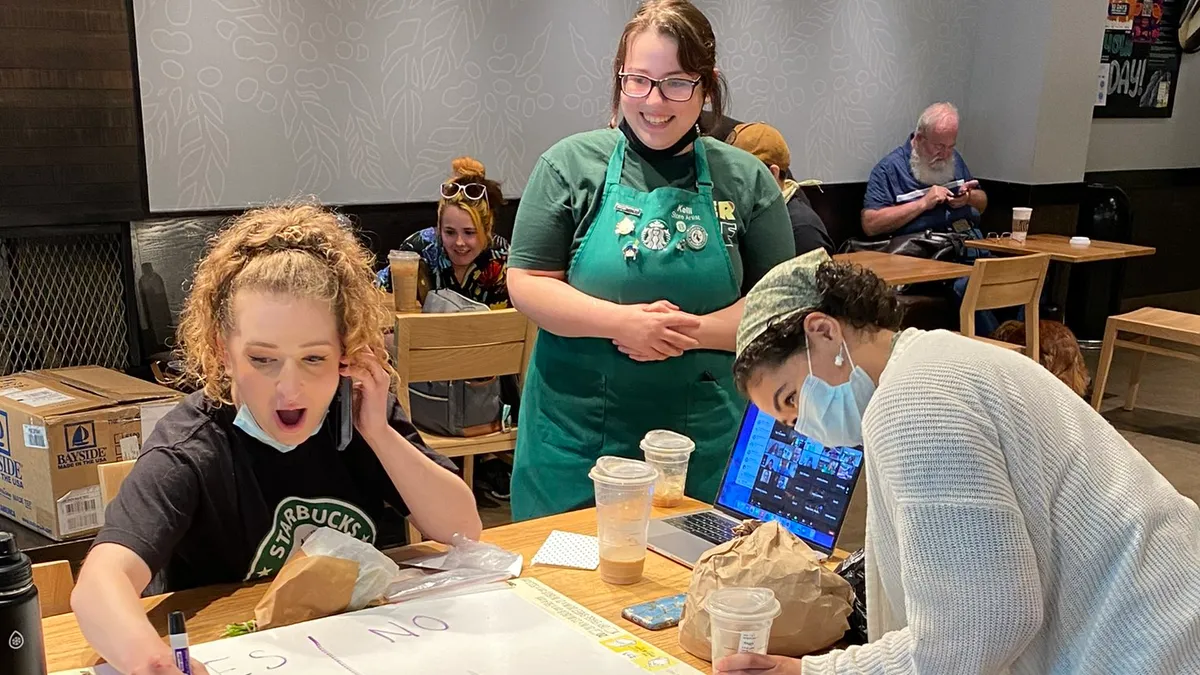
However, there are some bright spots, including for fast food chains that saw a drop off in sales last year. McDonald’s U.S. posted one of its strongest quarters since 2023, with same-store sales up 6.8% in the fourth quarter, as its value options helped bring back low-income consumers. Burger King also posted same-store sales growth of 2.6% — nearly double the growth it reported in the year-ago quarter. Even Starbucks, which faced years of declining transaction growth, reversed that traffic trend in late 2025.
Value remains a top priority for consumers choosing where to dine out. Among all adults, 75% said value is a top priority when picking a limited-service restaurant while 70% said that helped them determine when going to a full-service restaurant. Those percentages are somewhat higher among younger Gen Z and millennial diners.
“Success for operators this year will hinge on their ability to get the math right in a still‑challenging economic environment,” Chad Moutray, chief economist for the National Restaurant Association, said in a statement. “After a year when 60 percent of operators reported softer customer traffic, there is cautious optimism for improvement. At the same time, operators remain laser‑focused on controlling costs while delivering value and providing satisfying menu innovation.