
Domino’s on Monday launched the “Pizza Can’t. The Domino Can” campaign in support of its new Domino product, per details shared with Marketing Dive. The Domino, a rectangular, Detroit-style personal pizza, is intended to meet consumer needs around personalization while bringing pizza to new dayparts and meal occasions.
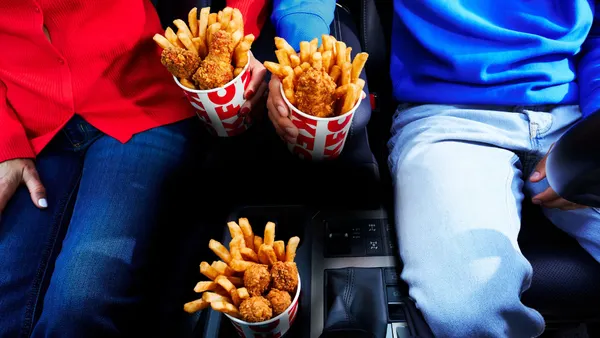
A 60-second hero spot shows several instances where a traditional pizza doesn’t stack up, including eating in the car, while rock climbing or gaming, or meeting the topping needs of an entire family. All four scenarios go horribly wrong, as the car careens off a cliff and the family pizza night turns into a window-smashing brawl. The hyperbolic, darkly comedic campaign is attention grabbing but could prove controversial — a risk the brand was willing to take.
“I'm a firm believer that great advertising is polarizing, and if you're doing advertising that is safe and expected, it certainly won't break through today with how fragmented media is,” said Kate Trumbull, Domino’s executive vice president and chief marketing officer. “I think these ads are going to break through and drive a tremendous awareness and trial and hopefully conversation.”
The ad will run during the 2026 NFL international season opener on Netflix on Sept. 10 and during the Emmys on Sept. 14. The campaign also includes three 30-second ads that expand on specific scenarios and a 15-second product-focused ad that will run across linear, Netflix live spots, online video, connected TV, paid digital and social channels.
In New York, high-impact out-of-home placements will appear at the Nasdaq marketsite and locations including The Trident and Everest. A run of limited-edition tote bags will carry the Domino during New York Fashion Week in September as well.
“It's easy to talk ad nauseum about the positives and not disrupt consumers in ads,” Matt Talbot, co-founder and chief creative officer at Domino’s agency of record WorkInProgress, said of the campaign. “What better way to stop people in their tracks and reconsider what role pizza can play in their lives than to say there's some things pizza can't do?”
Empowering consumers
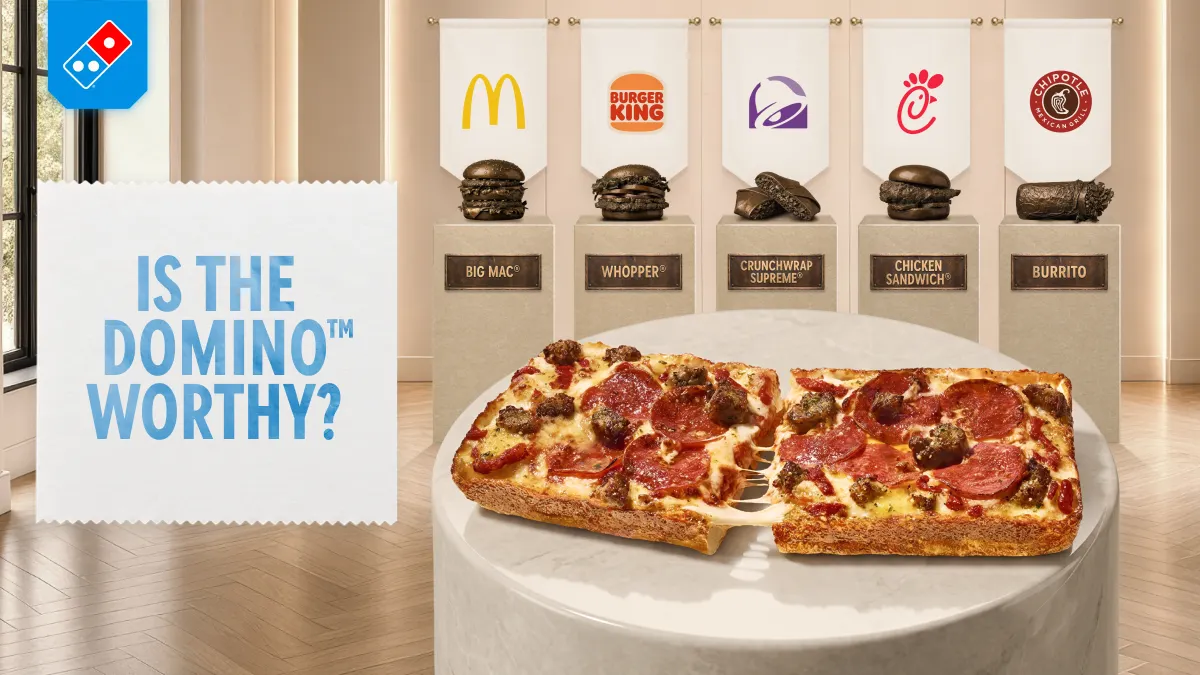
As part of the effort, Domino’s is also running an “Is the Domino Worthy?” promotion. A social video takes on leading fast-food chains directly and positions the Domino as a competitor to their iconic menu items.
“In fast food, there are items that are just beloved, known and iconic, and they tend to be super craveable, portable and memorable,” Trumbull said. “We're going to leave it up to customers to decide if our Domino deserves to sit alongside fast-food greats.”
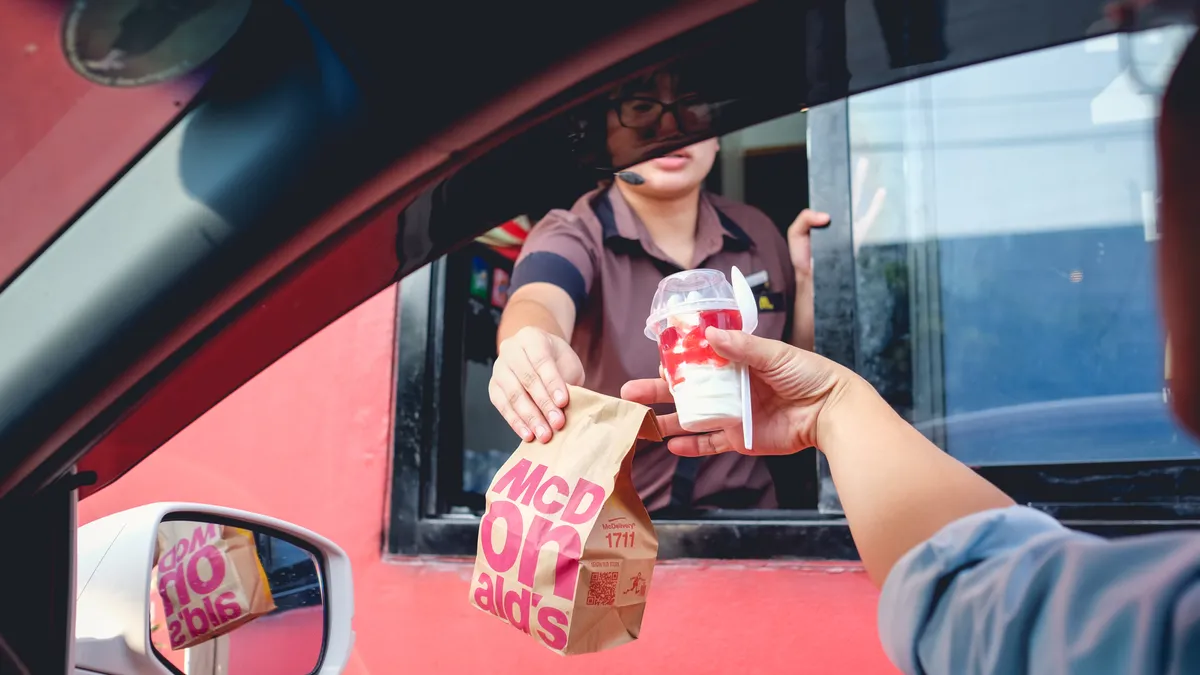
Consumers who purchase a McDonald’s Big Mac, Burger King Whopper, Taco Bell Crunchwrap Supreme, Chick-fil-A chicken sandwich or Chipotle burrito and upload their receipt to a microsite will receive an offer code for a free Domino, while supplies last. The chain plans to give away $1 million worth of the Domino as part of the effort.
Domino’s last year ran a campaign that took aim at fast-food chains by comparing an eight-slice pizza to a similarly priced — and sliced — cheeseburger. As competitors in the pizza space Pizza Hut and Papa John’s continue to see sales declines — and as its own U.S. sales momentum slows — Domino’s sees an opportunity to take share from fast food in other dayparts and on third-party ordering apps.
“We finally have something that is for one [person] and customizable in this way, so we have to make people think about pizza differently, and putting it alongside these other items for the first time [demonstrates] traditional pizza could could never be head to head against them, but the Domino can,” Talbot said.
The Domino promotion comes on the heels of the chain’s efforts to turn consumers into beta testers of its new digital ordering system. Customers who placed a qualifying online order between Aug. 3-30 were eligible for a $5 off coupon, and while feedback was encouraged, it was not required for the discount.
“I learned at [Procter & Gamble], ‘consumer is boss,’ and that's been a consistent thing from Domino's as a brand,” Trumbull said. “It's meaningful when we can actually resolve attention and pay people for giving us that feedback, so we've been learning a lot through the process. The campaign has been really successful.”