Dive Brief:
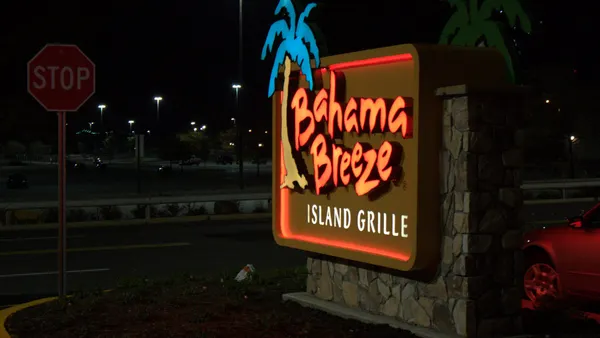
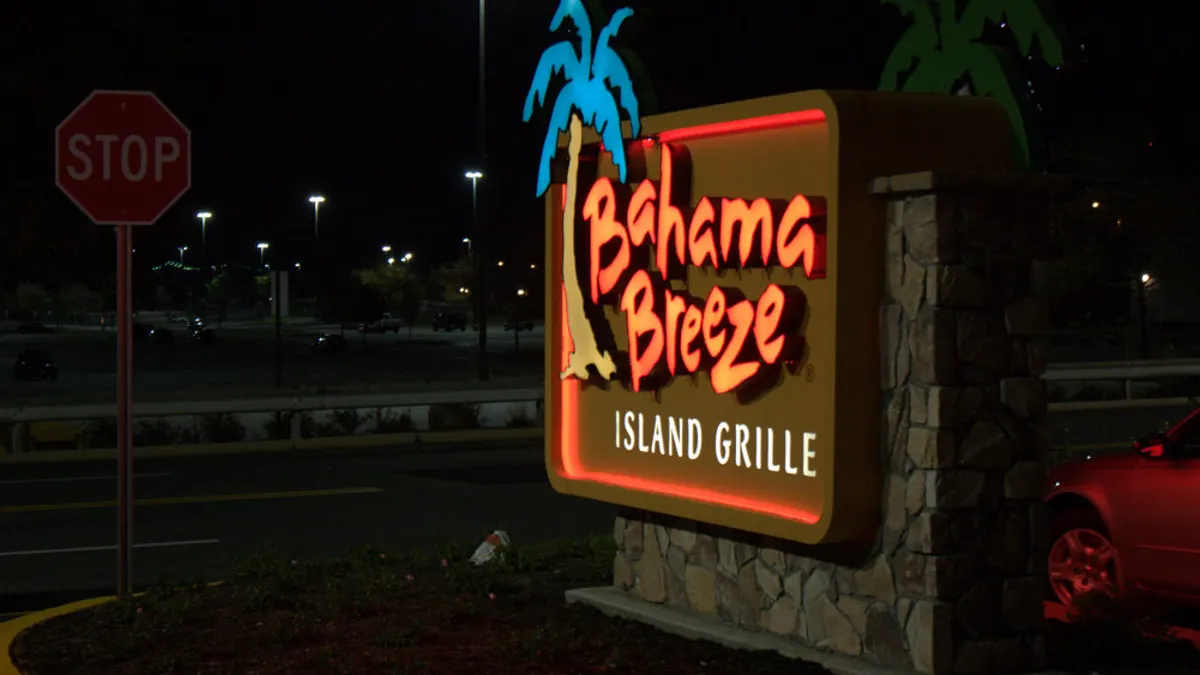
- Darden will close 14 Bahama Breeze locations and convert the remaining 14 into a different Darden brand, the company announced Tuesday, marking the end for the chain.
- The move follows a review of Bahama Breeze’s brand positioning and strategic potential, which saw Darden contemplate a sale of the chain.
- The closing restaurants will continue to operate until April 5, while the conversions will take place over the next 12-18 months, the company said.
Dive Insight:
Last May, Darden closed about one-third of Bahama Breeze’s store system and announced, a month later, that it was looking for strategic alternatives for the brand, including conversions or a sale. Those closures were part of a broader retrenchment by the company meant to aid its smaller brands in focusing on core, profitable units.
The closures impact all of Bahama Breeze’s Delaware, West Virginia, Michigan, Pennsylvania and New Jersey stores, as well as five in Florida and one each in North Carolina, Virginia and Georgia. Ten Florida locations and one in each of the Carolinas, Georgia and Virginia will be converted to new concepts.
“The conversion locations are great sites that will benefit several of the brands in its portfolio,” the company said. Darden will try to place as many of the impacted workers as it can in other roles in its portfolio, according to the announcement.
Darden does not “expect these actions to have a material impact on its financial results,” according to the announcement. Darden did not say which brands it would convert the Bahama Breeze units to.
Despite the success of a number of full-service and casual brands — Darden’s Olive Garden and LongHorn Steakhouse both posted significant same-store sales growth in the last quarter — many brands are closing units. In September, Twin Hospitality announced it would close or convert the majority of its Smokey Bones restaurants.
Bravo Brio, which went bankrupt last year for the second time, closed some stores in the runup to its filing and planned to use the Chapter 11 process to shutter other underperforming units. Outback closed a considerable number of stores in preparation for its brand turnaround last year. Hooters, Bar Louie and Razzoo’s Cajun Cafe all closed units and filed for bankruptcy last year.
Those closures, and the long-term expansion of the fast casual sector, have led to a glut of casual dining real estate, with landlords facing high vacancies and brands facing expensive renovations in units that might not offer a return on investment. This dynamic has opened up second-generation space for brands looking to convert vacant units, however. The intense inflationary environment of the last several years has eroded the pricing advantage of fast casual and QSR brands, though, opening strategic opportunities for full-service and casual brands that can take advantage of consumer desires for a holistic value experience.