Restaurant Brands International announced a series of strategic initiatives on Thursday during an investor day that are meant to extend and expand on the success of its Reclaim the Flame brand renewal at Burger King. Those plans include changes to its core menu items, broader operational use of artificial intelligence, extending its higher marketing fee rate and continuing the refranchising of restaurants formerly operated by Carrols.
These four strategic shifts constitute a continuation of RBI’s work over the last few years to reposition and modernize Burger King in its core market.
Whopper updates
As quick-service restaurants’ pricing advantage over fast casual has eroded, the pressure has mounted on brands to find ways to improve the quality or perceived value of menu items. McDonald’s is currently testing the Big Arch Burger, a large burger with two patties, and premium elements including a custom-designed sauce and white cheddar cheese, for example. And Burger King’s Whopper update is likely a response to the same industrial pressures.
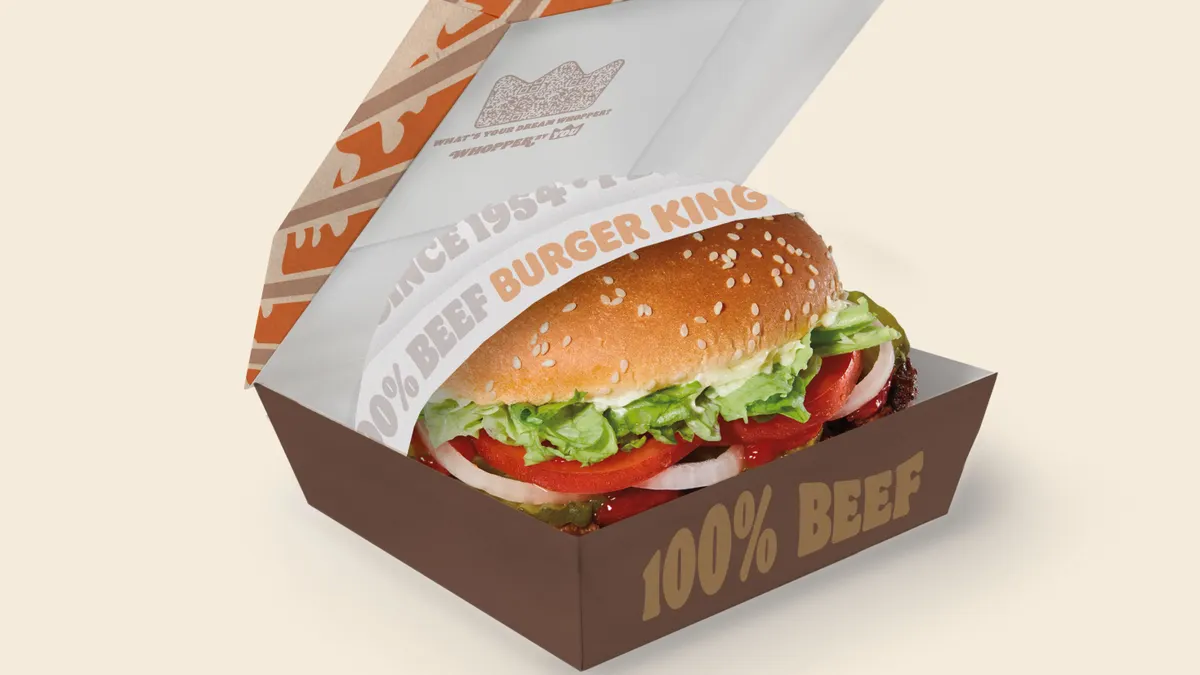
Burger King is updating its core Whopper Burger with a new glazed bun, redesigned packaging and reformulated “better-tasting, creamier mayo,” the company said in an email.
Additionally, Burger King is swapping the previous packaging of the Whopper — a paper wrapping — for a box to maintain the integrity of the sandwich. There has been no change to the burger’s meat or to its lettuce, tomato and onion toppings.
Burger King said the changes were tested in select markets and have performed well after a development process spanning years.
“The enhancements have been in development for several years, alongside broader operational modernization efforts,” the company said. “The specific updates were informed by direct Guest feedback and focused on the elements people said matter most: bun quality, topping freshness, flavor balance, and overall consistency.”
Burger King declined to share the specific impact of the changes on cost-of-goods-sold for franchisees, but said that it and franchisees have invested in the sandwich while working to insure costs did not increase. The chain has focused for several years on boosting the four-wall profits of its franchisees following several major operator bankruptcies.
Deploying an AI-assistant
The burger chain is also deploying a voice-AI tool through its restaurant headsets called “Patty” that can assist workers and managers and remove stockouts from digital menus and the brand’s app.
Patty is meant to unify “[point of sale], kitchen equipment, inventory, and digital ordering into one command center,” the brand said in an email. It was designed using an OpenAI voice model.
In addition to removing out-of-stock items from digital ordering channels, Patty can support operations by answering “questions about menu item preparation and product details,” without interrupting service.
The model is also designed to “analyze drive-thru audio to promote order accuracy and provide coaching insights,” the brand said.
Other QSR giants have invested in similar back-of-house automations. Yum Brands, for instance, launched a comprehensive in-house tech system called Byte that includes an AI-powered restaurant coaching app active across thousands of restaurants.
Marketing spend will continue
When Reclaim the Flame launched in 2022, Burger King pledged $150 million toward improving and expanding its brand voice. RBI also turned up the marketing contribution from franchisees to 4.5%. On Thursday, RBI announced that it would extend this elevated marketing rate through at least 2027. Roughly 97% of franchisees voted in favor of extending the rate, the company said.
“The ad fund rate will continue at this level in 2028 if the business achieves $230,000 in franchisee profitability by the end of 2027 or if the franchisees vote to extend again,” the company said. “This continued investment supports sustained marketing share of voice and demonstrates strong franchisee confidence in the brand's trajectory.”
The Reclaim the Flame marketing investments over recent years have included initiatives like the infamous Whopper earworm that foregrounded the core of Burger King’s menu in messaging.
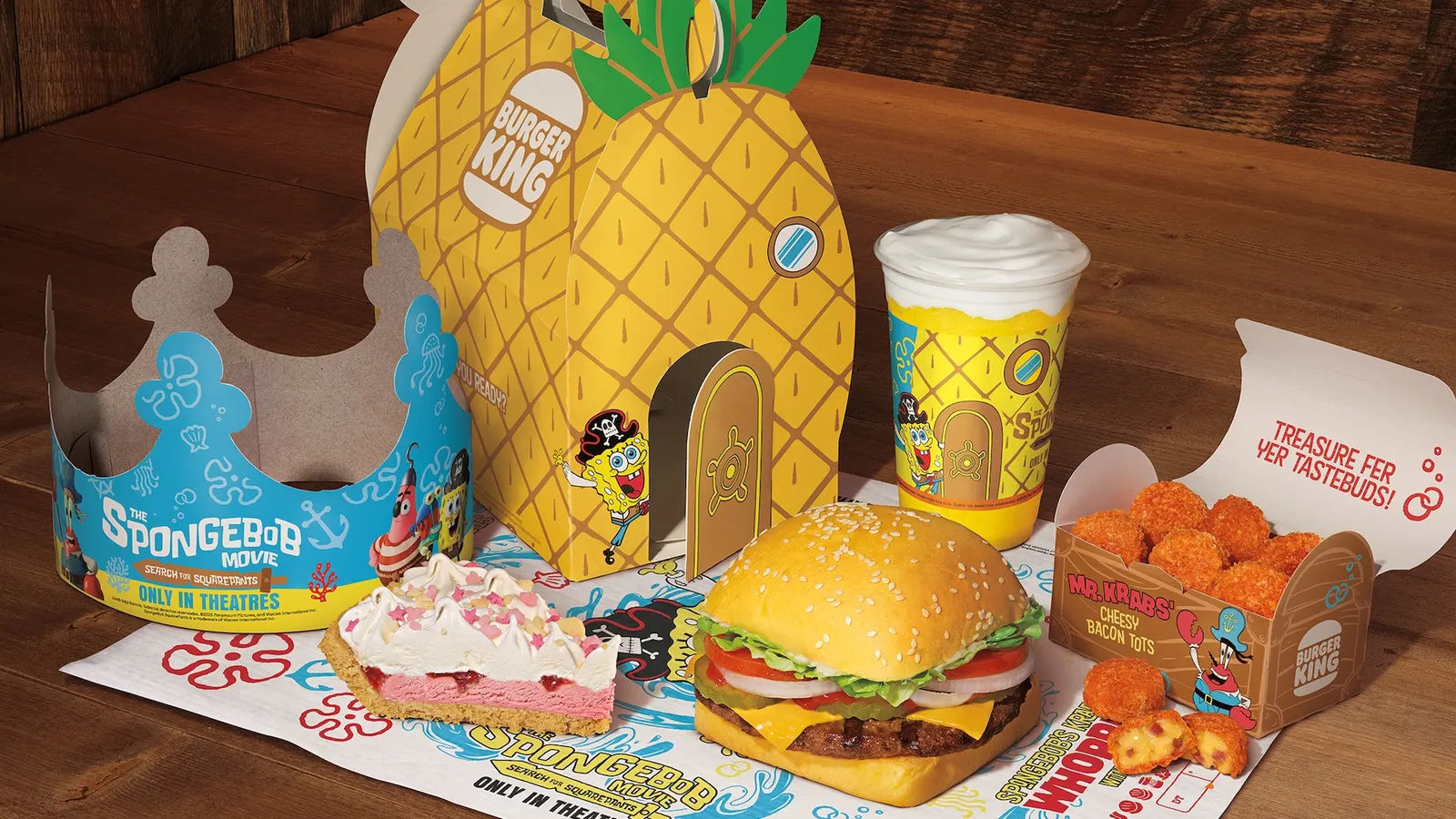
More recently, the chain has focused on value and culturally relevant limited-time offerings. On RBI’s Q4 2025 earnings call, CEO Joshua Kobza highlighted several recent advertising drives.
“In December, we launched the SpongeBob SquarePants menu, featuring the Krabby Whopper with an iconic square yellow bun alongside cheesy bacon tots, bacon tots, a strawberry short cake pie and a frozen pineapple float,” Kobza said. The promotion increased the portion of sales comprised of kids meals to its highest level in over a decade.
Increased and expanded marketing should help the brand build awareness for menu initiatives — like the revised Whopper — and LTOs in the near future. In Q4 2025, Burger King posted 2.6% same-store sales growth in the U.S. while competitors Wendy’s and Jack in the Box saw significant sales erosion.
Refranchising is ahead of schedule
When Burger King acquired more than 1,000 restaurants from Carrols in 2024, the chain said it might take five to seven years to refranchise those stores.
RBI accelerated that timeline last year, and CFO Sam Siddiqui said in the announcement that refranchising is now a major strategic priority.
“We're committed to becoming a simpler, 99% franchised business over the next few years,” Siddiqui said.
Siddiqui said on the earnings call that the brand was about two years ahead of schedule when it came to refranchising its Burger King system.
“We had talked about refranchising really beginning in earnest in years three through seven,” Siddiqui said on the chain’s earnings call. The brand sold about 100 restaurants to operators last year as part of this program.
“The most critical thing is that we get the restaurants into the right hands, the hands of local owner operators who are going to be aligned to driving great guest experiences,” Siddiqui said, noting the chain plans to speed up its refranchising cadence this year.