
For a guest watching their spending, a holiday dessert can be an affordable way to make a meal feel special. For a restaurant managing costs, that extra purchase can help build the check. The opportunity lies in creating something guests want to order and kitchens can consistently deliver at a worthwhile margin.
Datassential’s Desserts 2026 report points to a ready audience for seasonal offerings, finding that 53% of consumers who eat dessert at least once a month look forward to, or go out of their way for, a seasonal or limited-time dessert from a particular restaurant each year. As operators plan their Thanksgiving and Christmas menus, that anticipation makes a strong case for dessert limited-time offers, or LTOs.
“The sweet spot is creating something that feels new to the guest while using ingredients, equipment and processes already in place,” says Chef Michael Buononato, Senior Vice President of Creative Food Solutions, a culinary innovation firm.
A seasonal special can give guests a reason to return without requiring a whole-menu overhaul, Buononato notes.
Familiar flavors, fresh reasons to order
Familiarity often guides a guest's decision when choosing whether to spend a little more. They know the chocolate and peanut combination in SNICKERS®, the cookie crunch of TWIX®, or the candy shell of M&M’S®. Those associations make it easier to imagine the dessert and feel confident about trying it.
“I like to use that familiarity as the starting point and then give it a restaurant-specific twist,” Buononato says.
The next step for operators is considering how the candy complements the dessert’s other flavors and textures. Caramel Apple Crunch Cookies made with M&M’S® Caramel Chocolate Candies, for example, bring together cinnamon apples, oats and streusel with a recognizable candy inclusion. It’s the appeal of a caramel apple in a familiar cookie format, with plenty of texture to make each bite satisfying.
Build for the busiest shift
A dessert may look great in development, but the real test comes when the dining room fills up and the kitchen has to deliver it during the dinner rush.
“I’ve always said the best restaurant products are exciting to the guest and almost boring to execute,” Buononato says. “If it can be executed correctly during the busiest fifteen minutes of a Friday night, you probably have a good restaurant product.”
He looks at prep time and shelf life, along with practical questions such as where ingredients will be stored and how much station space the build needs. Datassential’s guidance on successful LTOs reinforces the value of easy preparation and using ingredients already in the restaurant.
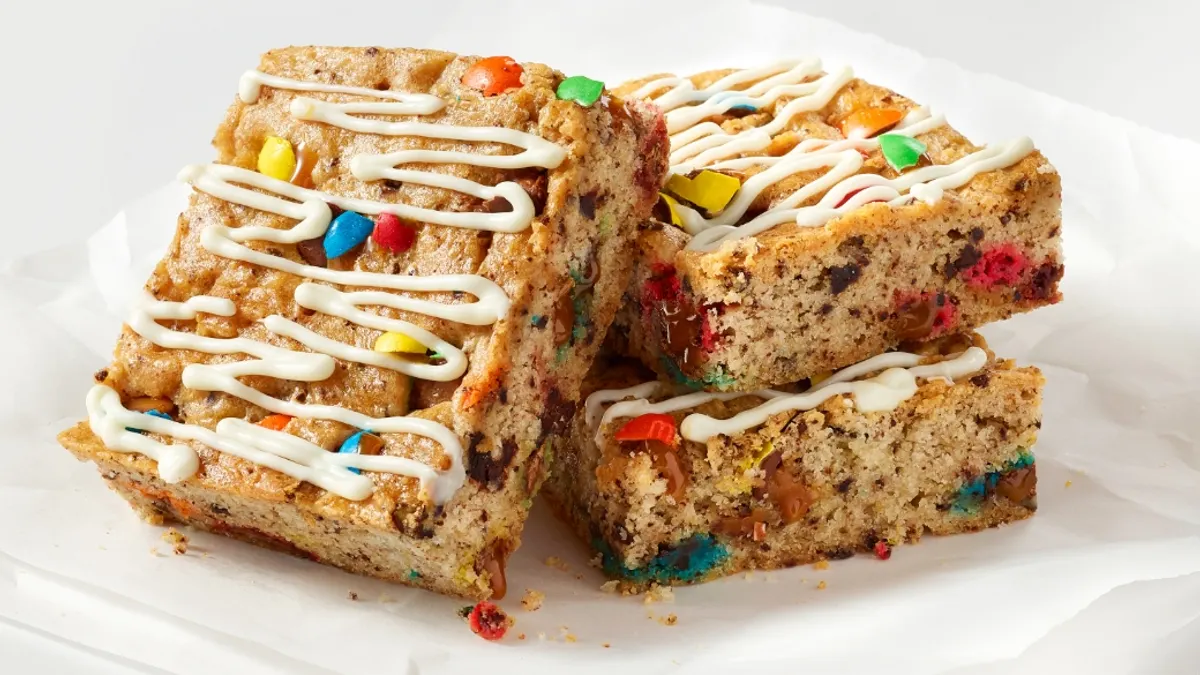
A batch-friendly recipe can put those principles into practice. Brownie Bars made with M&M’S® Caramel Chocolate Candies and DOVE® Dark Chocolate start with a cake-mix base and bake in a sheet pan before being cooled, portioned and finished with white chocolate sauce.
Using the same candy in the bars and caramel apple cookies gives operators more ways to sell through inventory and reduce waste. Buononato recommends looking for those connections early, whether the shared ingredient is a candy piece, sauce, or crumble.
“The trick is making each item feel intentional so the guest doesn’t feel like we’re just rearranging the same ingredients,” he says.
A little treat for one—or enough to share
When guests decide how much dessert to order after dinner, a smaller portion can make both the price and the commitment feel more manageable. A shareable option gives two or three diners another way to enjoy a treat at a price that feels reasonable to the table.
“I’m a big believer in giving the guest permission to say yes to dessert,” Buononato says. “The important thing is that it still looks generous and complete. Smaller should feel intentionally designed, not like the restaurant simply took something away.”
Pan-baked desserts like the brownie bars give operators flexibility to test serving sizes. By calculating the yield and cost per portion for each size, they can set a price that feels worthwhile to the guest and leaves room for the restaurant’s return.
For a communal holiday treat, Pumpkin Pecan Pull-Apart Rolls made with TWIX® Cookie Bars combine spiced pumpkin dough, a pecan topping and TWIX pieces inside and on top.
Give every dessert a job to do
An appealing price for the guest is only half the equation, so operators also need to know what’s left after making and serving the item.
“I never look at food cost percentage by itself,” Buononato says. “I want to know what the item contributes and what it takes to get it to the guest.”
That means considering labor and waste alongside ingredient costs, portion control and selling price. A few extra touches can add up quickly during a busy shift.
The strongest holiday dessert earns its place twice: when the guest decides it’s worth ordering and when the kitchen can deliver it consistently and profitably.
To explore how you can tap into today’s dessert trends—from candy-inspired creations to seasonal LTOs—connect with the Mars team today.