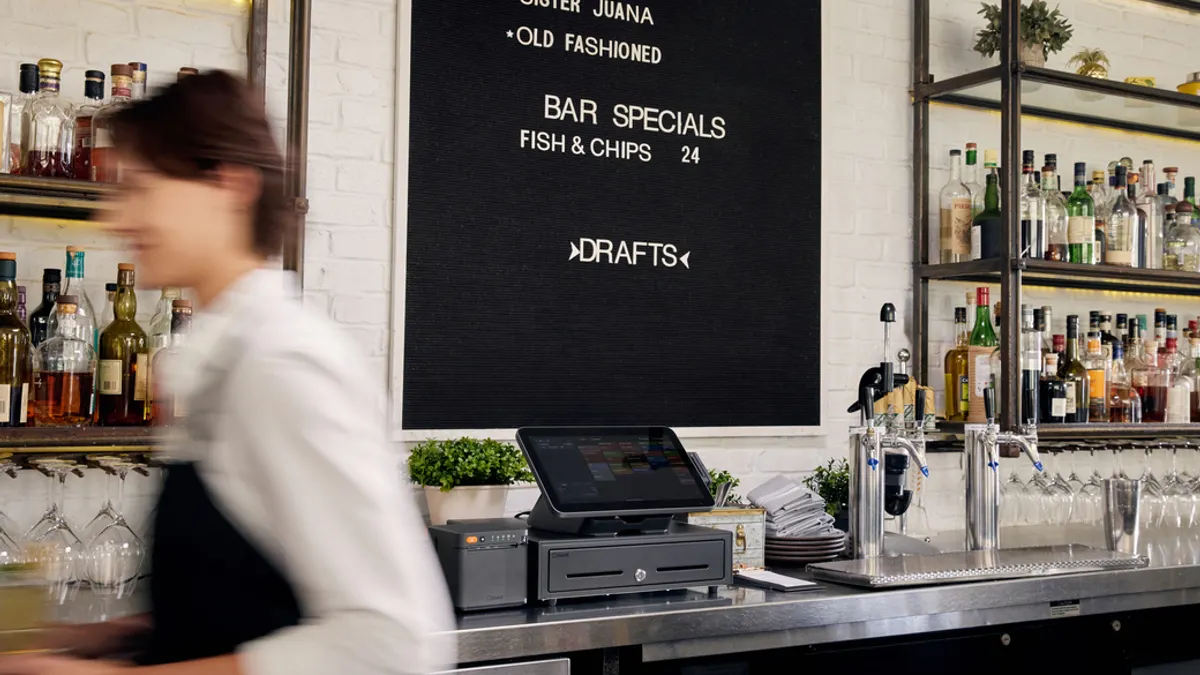

Choosing a POS system is one of the most significant technology decisions a restaurant operator makes, and switching to a new one can sometimes feel even harder. It’s like getting a new phone; it works better, but you still have to set it up and learn to navigate it.
Many operators already know their current system isn't cutting it. But the idea of switching is overwhelming, and it keeps them stuck. According to a study conducted by Toast, 37% of operators opt out of switching their POS simply because it would take time. [1] That's too many restaurateurs suffering in the long term to avoid the short-term hassle.
Toast spoke with an operator who made the switch and is reaping the benefits. Understanding their priorities, including stability, scalability, and industry-specific support, can help operators make a more confident decision when it’s their turn.
Why operators decide to switch
Most operators don't wake up one morning and decide to overhaul their tech stack. It can be a slow build. Small frustrations pile up, with a crash here and a support ticket that goes nowhere there, until one day something goes too far.
Krishna Buford, [2] owner of Flava Wings, a newly available franchise based in Houston, TX, knows the feeling. Her restaurant ran on Square for about four and a half years, and it worked fine at first. But as the business needs changed, it became apparent that a new POS partner was needed.
“Square was what we needed when we needed it, offering functional simplicity that is great when starting in business. We also opened our second store with Square, despite system outages that were never at a convenient time and came out of nowhere,” Buford said. “The crashes would sometimes last for hours, and we had a high-volume store, so it was, at times, a mess.”
Buford’s team got creative with the workarounds when, for example, there would be an area internet outage. “The system could work offline, but to capture the sales, a Wi-Fi connection was required within a certain amount of time. We literally had to bring the terminals home from each store and connect to our home Wi-Fi, so we wouldn't lose the sales,” she said.
It became clear that a change needed to happen. “The lack of support, the failing systems, and no backup plan for the Wi-Fi. That's when I made the pivot to Toast,” Buford recalls.
Her story isn't unusual. Once operators commit to switching, their evaluation criteria tend to snap into focus fast.
Choosing a POS System: One operator’s three non-negotiables
A system with stability
Let's start with a big one. In restaurants, downtime isn't an inconvenience. It can mean lost revenue and frustrated customers. Every minute a POS is down during a rush is a minute you don't get back.
That's why stability can be crucial for operators evaluating a new system. And we're not just talking about “it turns on” and “loads eventually.” Stability means real reliability and offline functionality when the Wi-Fi gets flaky.
For Buford, it was non-negotiable. “I needed to understand that the next POS company we went with had the infrastructure for a stable system,” she said.
After switching to Toast, she noticed the difference immediately. “With Toast, I can look at [Toast Now] and see that all systems are on. There's been only one time something wasn't online, and I didn't even have to call support. Everything was right there for me to reset.”
And that Wi-Fi backup she'd been missing? “If the Wi-Fi goes out, we don't have to bring a terminal home.”
When asked about the single biggest operational improvement since switching, her answer was simple: “System stability. That would be the one.”
Scalability and growth support
Many operators are building for tomorrow. The right POS should grow with you, whether that means opening a second location, adding online ordering, or expanding your marketing. A system with multi-location management, consistent reporting across stores, and the flexibility to scale with you makes all the difference.
“In order to grow, you've got to have partners that can grow with you,” Buford said. “If you're not partnered with companies that can support your growth, then you're not going to grow efficiently.”
For Buford, scalability shows up in the details. She pointed to features like printing QR codes on third-party delivery receipts to convert those customers into direct customers. Or text-to-pay for customers who order by phone. [3] This kind of forward-thinking helps a growing restaurant build real customer relationships.
She's also been leaning into Toast IQ, an AI assistant. “I asked it to create a marketing plan for 2026 with the goal of increasing sales… It gave me an entire calendar for the year, and I'm running it right now.” The results? “The January promo took our sales up 3.62% over the year before. The February program was a hit. Now I'm running March, and we're off to the races.”
Industry-specific expertise
Here's a question worth asking: Was your POS built for restaurants like yours?
It's a distinction that matters more than you might think. General-purpose systems can handle transactions just fine, but the hospitality industry has unique needs that require specific solutions.
Buford felt the difference firsthand, she said. “Toast is built for restaurants, and its features reflect that.”
She pointed to text-to-pay [3] as a standout example. “Things like text-to-pay [3] are genius. When customers call in orders, you want to give them the security of handling the payment themselves.”
It's no surprise, then, that when operators are ready to make a switch, 40% consider Toast as one of their options to reach out to. [1]
Choose the best POS system for your restaurant
Switching POS systems takes effort. But staying with one that can't keep up with your business can have a cost too, and all the little things can compound every single day.
If your current system is crashing during rushes, leaving you without support when you need it, or can't scale with your ambitions, it might be time to evaluate what's out there. The operators who've made the switch will tell you: The grass really is greener when your POS actually works.
Learn what’s actually different about Toast here.
Methodology
[1] To help better understand the restaurant industry, Toast conducted a blind survey of 652 SMB restaurant decision-makers in the United States from November 5, 2025, to November 21, 2025. Respondents were not made aware that Toast was fielding the study. Panel providers granted incentives to respondents for participation. Using a standard margin of error calculation, at a confidence interval of 95%, the margin of error on average is +/- 4%.
[2] Krishna Buford is a member of Toast’s Customer Advisory Board.
[3] Text-to-pay is currently a limited beta feature available by waitlist only and is not yet generally available to all Toast customers.